
Pump and timed filling
A flexible route for many flowing liquids using a compatible pump and controlled delivery time or flow.
Explore this routeFree-flowing and pumpable products
Liquid filling covers products that appear similar in a bottle but behave very differently in production. Water-like liquids, foaming detergents, oils, alcohol-based products and chemical solutions can require different pumps, nozzles, materials and control methods. The best shortlist starts with flow behaviour and the pack, then sets the required speed and accuracy.

Typical products and packs
Compare the principles
Several dosing methods may fill the same nominal product. The practical choice is driven by accuracy, cut-off, cleaning, format range and sustained output.
A flexible route for many flowing liquids using a compatible pump and controlled delivery time or flow.
Explore this routeKeeps product inside replaceable tubing for small doses, rapid changeovers and selected hygienic applications.
Explore this routeUseful where a measured displacement and strong cut-off are needed across liquid-to-viscous products.
Explore this routeFills to a repeatable visible level, often used where glass bottle volume varies.
Explore this routeBefore quotation
Beyond the filler
Machines you can compare
Specifications are reference points. Confirm the operating window using the intended product, container and line arrangement.

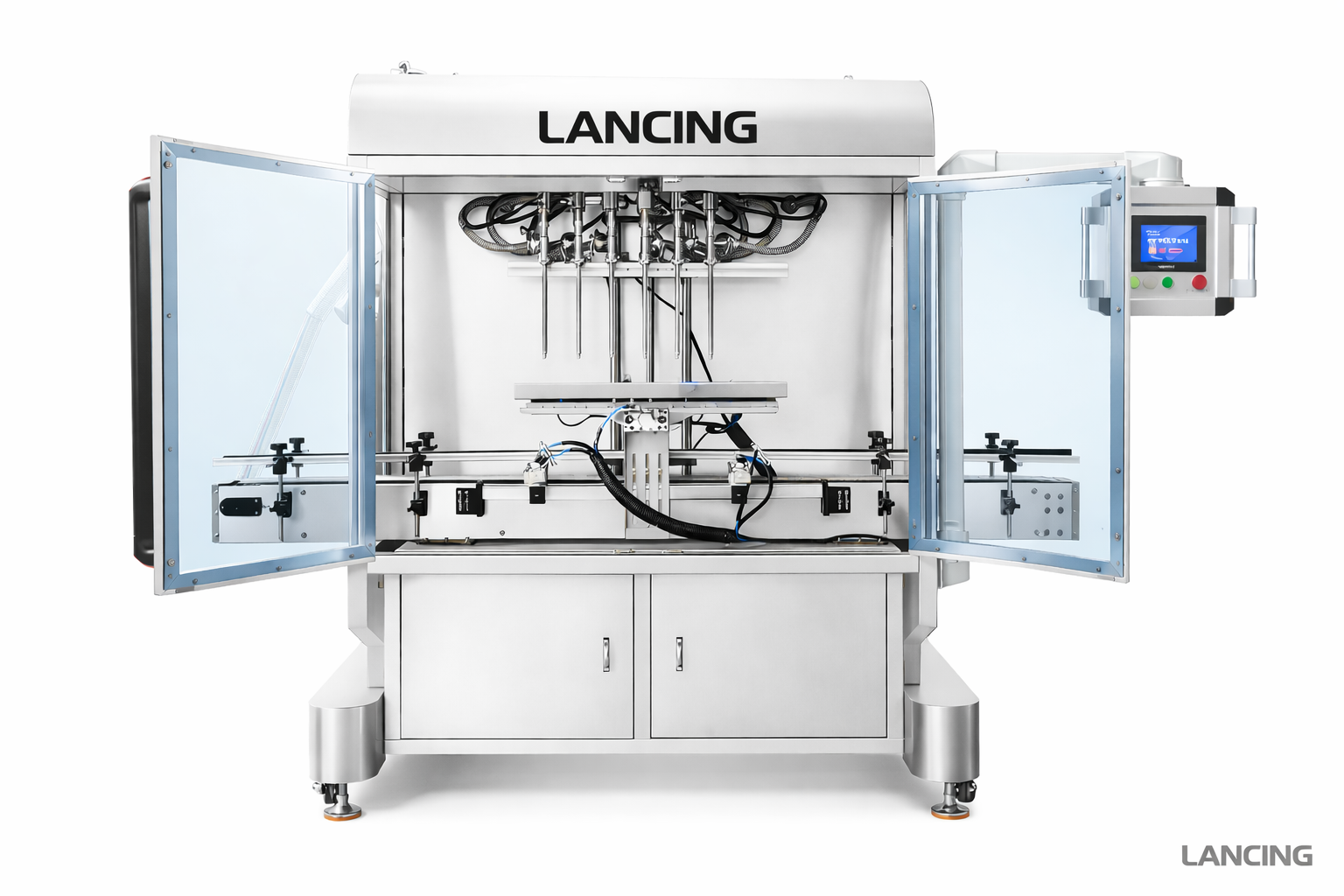
LU-CL6T
Six-head servo magnetic-pump filler for 500–5000 ml liquid products. Review 320 L tank, up to 42 bottles/min and automatic-line integration.
See machine details
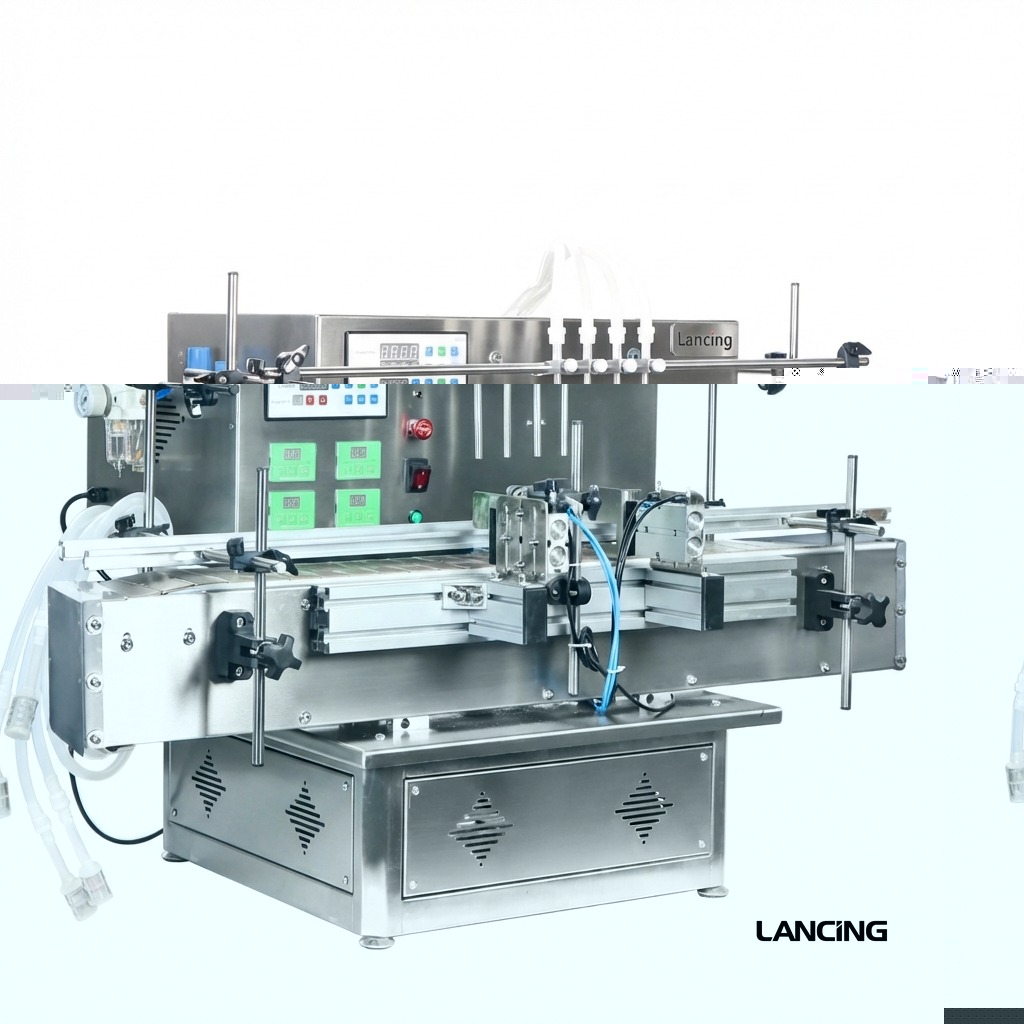
LU-DTPP4C
Four-channel peristaltic filling machine for small liquid doses, e-liquid, lotions and clean-change applications. Review flow, tubing and output.
See machine details
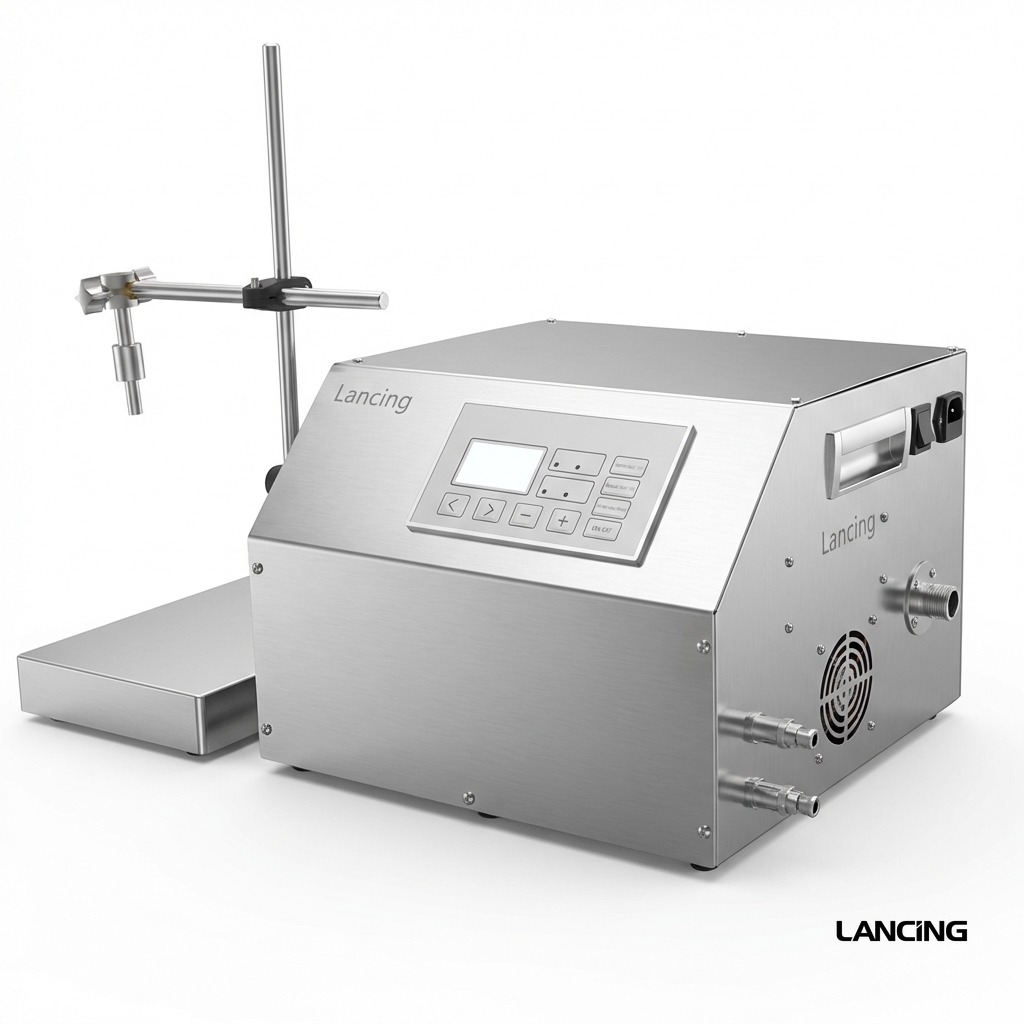
LU-GP261W
Semi-automatic gear-pump filler with weighing control for edible oil, engine oil, hydraulic fluid and compatible viscous liquids. Request a trial.
See machine detailsCompare your options
Bottle filling machines for liquids, sauces, creams, powders and granules. Plan container handling, fill method, capping, labelling and output.
See optionsCompare gear, rotor, magnetic, diaphragm and other pump filling machines for oils, detergents, sauces, gels and compatible chemical products.
See optionsPeristaltic filling machines for e-liquid, serums, laboratory liquids and small bottles. Compare tubing, flow range, nozzle count and line integration.
See optionsWeigh filling machines for oils, liquids, powders and granules. Compare net-weight, pump-and-scale and multihead weighing around accuracy and output.
See optionsChemical filling machines for detergents, cleaners, acids, alkalis, solvents and compatible industrial liquids. Plan materials, ATEX and containment.
See optionsQuick answers
Typical applications include water-like liquids and beverages, edible oil, lubricants and syrups, detergents, sanitisers and cleaning products. The final decision depends on the real product, dose, container and target output.
Start with the product behaviour, fill range, pack format and sustainable output. Then compare the dosing principle, contact materials, changeover and cleaning against repeatable liquid dosing with clean container handling.
Yes. Filling can be planned with container infeed, conveyors, capping or closing, labelling, coding, sealing, inspection, accumulation and end-of-line handling.
Send product details and safety data where relevant, fill volumes, container and closure samples or drawings, target output, utilities, cleaning needs, footprint and any existing equipment to be integrated.
Ready to discuss your application?
Tell us what you fill, your fill range, container and target output. We will help you narrow the practical machine options before quotation.
Liquid-filling selection matrix
Liquid filling equipment must move the product consistently, stop it cleanly and present the container correctly. The likely principle can change across one product range, so the thinnest, thickest, foamiest and most temperature-sensitive liquids should be considered together.
| Observed behaviour | Routes worth comparing | Trial focus |
|---|---|---|
| Free-flowing and stable | Gravity, timed flow, pump, volumetric piston or other controlled-flow systems depending on dose and pack. | Feed pressure, cut-off, smallest dose, container entry and sustainable cycle. |
| Foams or traps air | Controlled pump or piston filling with reduced velocity, diving or bottom-up nozzle movement where suitable. | Foam height, settling time, headspace, nozzle travel and the trade-off between quality and speed. |
| Oily or prone to dripping | Compatible pump, piston or weigh-controlled routes with positive shut-off and careful hose routing. | Tail formation, bottle contamination, label area, product recovery and cleaning. |
| Small, high-value dose | Peristaltic, piston, syringe or compatible precision-pump comparison according to product and range. | Prime stability, tubing or seal compatibility, minimum dose, nozzle alignment and measurement method. |
| Corrosive or chemically demanding | A material-compatible filling route selected from verified product and safety data. | Wetted materials, seals, ventilation or containment, product feed and the complete site risk assessment. |
| Visible fill level is critical | Vacuum or overflow level filling may be compared with volumetric or weight methods. | Container volume variation, neck seal, return product, foam and legal net-content requirements. |
Trial the complete operating range
Use the actual product temperature, feed arrangement and containers. Test the minimum and maximum doses and any product that changes viscosity, foams or leaves residue. Record nozzle height, fill time, cut-off, settling and the agreed method of measuring the result.
Specialist liquid route
Once a liquid route is confirmed, liquidfillers.co.uk provides the deeper Lancing liquid-filling range. Use the nozzle guide for product-to-container detail and the bottle filling guide when closing and labelling are part of the same project.
Request a liquid-filler reviewFurther buyer questions
These answers clarify the practical boundaries that should be checked before a machine is selected or quoted.
Possible measures include reducing product velocity, filling below the liquid surface, using a diving nozzle, controlling feed pressure and allowing enough container headspace. The best combination depends on the product, dose, neck opening and required output.
A common platform may cover part of the range, but the pump, piston size, tubing, valves, nozzle bore and cleaning method must suit both extremes. Trialling the thinnest and thickest products is more useful than testing only a mid-range sample.