Semi-automatic level filling
An operator presents bottles to one or more vacuum nozzles for flexible batch production.
Explore this route
Fill-to-level technology
Vacuum and overflow fillers return excess product from a special nozzle so successive bottles finish at a consistent visible level. This can be valuable where glass or moulded containers vary internally, but the system is not the same as dispensing an exact volume. Product foaming, bottle rigidity and neck geometry all influence the result.
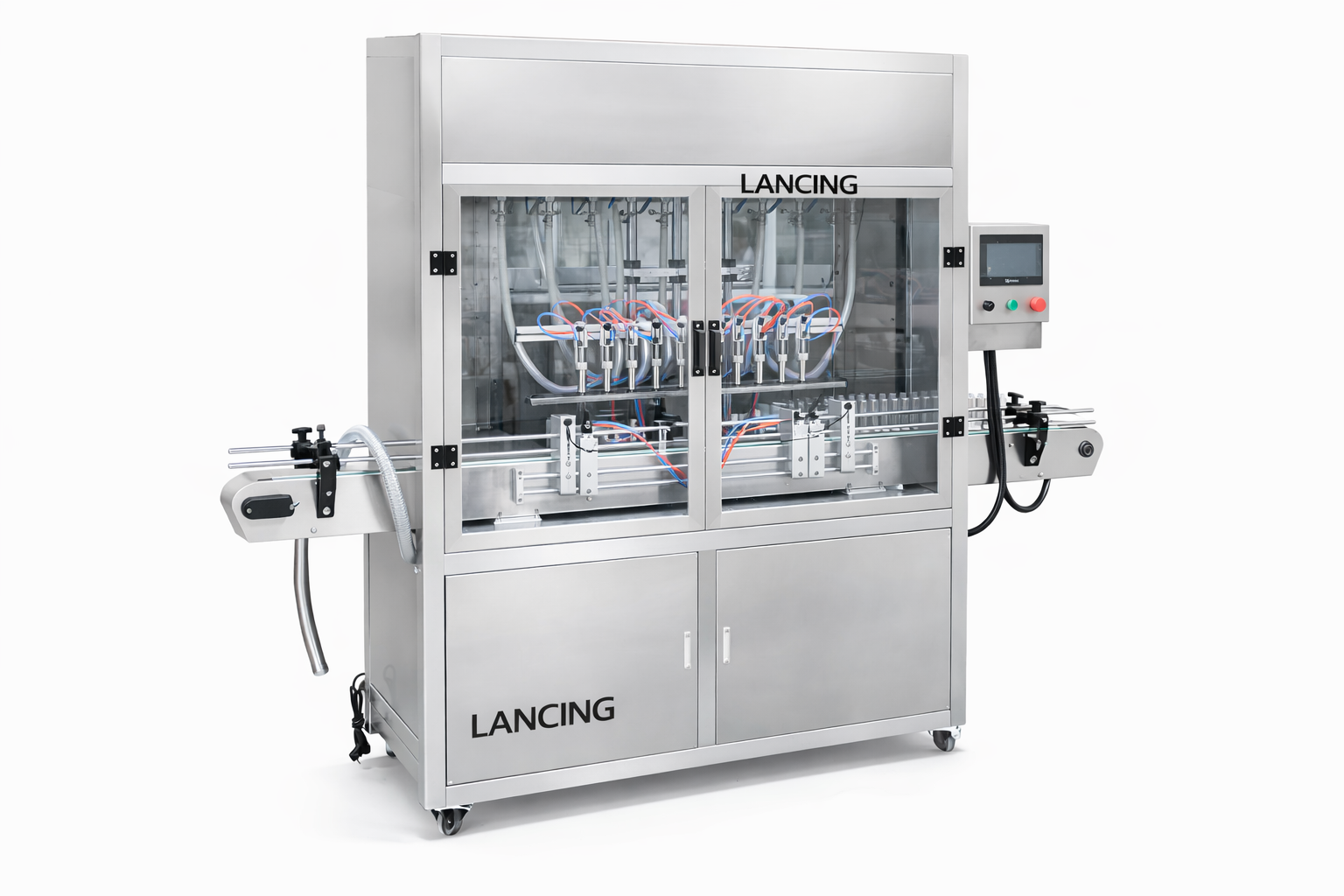
Typical products and packs
Compare the principles
Several dosing methods may fill the same nominal product. The practical choice is driven by accuracy, cut-off, cleaning, format range and sustained output.
An operator presents bottles to one or more vacuum nozzles for flexible batch production.
Explore this routeConveyor gating and several nozzles support continuous bottle production.
Explore this routeUse measured volume when dose quantity matters more than visible level.
Explore this routeUse gravimetric feedback where product must be controlled by mass.
Explore this routeBefore quotation
Beyond the filler
Machines you can compare
Specifications are reference points. Confirm the operating window using the intended product, container and line arrangement.
Compare your options
Specify liquid filling machines for water-like products, oils, detergents, chemicals and beverages. Compare pump, piston, peristaltic and level filling.
See optionsBottle filling machines for liquids, sauces, creams, powders and granules. Plan container handling, fill method, capping, labelling and output.
See optionsCompare volumetric filling machines using piston, pump or cup dosing for liquids, pastes, sauces, creams and granules. UK advice from Lancing Ltd.
See optionsFood and beverage filling machinery for oils, sauces, honey, powders, granules, still drinks and carbonated products. Plan hygiene and line integration.
See optionsQuick answers
Typical applications include water-like and low-viscosity liquids, glass bottles where visual level consistency matters, fragrances, spirits and selected beverages. The final decision depends on the real product, dose, container and target output.
Start with the product behaviour, fill range, pack format and sustainable output. Then compare the dosing principle, contact materials, changeover and cleaning against consistent visible fill level across variable-volume containers.
Yes. Filling can be planned with container infeed, conveyors, capping or closing, labelling, coding, sealing, inspection, accumulation and end-of-line handling.
Send product details and safety data where relevant, fill volumes, container and closure samples or drawings, target output, utilities, cleaning needs, footprint and any existing equipment to be integrated.
Ready to discuss your application?
Tell us what you fill, your fill range, container and target output. We will help you narrow the practical machine options before quotation.
Method boundary
A vacuum or overflow system is normally selected to create a repeatable visible level in suitable rigid bottles. A gravity filler may use controlled flow from a supply tank and can target a timed, measured or level-based result depending on the design. The buyer should define whether appearance, volume, mass or another quantity is the governing acceptance requirement.
Container internal volume varies but the visible liquid line needs to remain consistent, and the bottle and product are compatible with the vacuum or overflow method.
The liquid flows predictably and the project needs controlled delivery from a defined source. Supply head, valve timing and refill condition must be proved.