
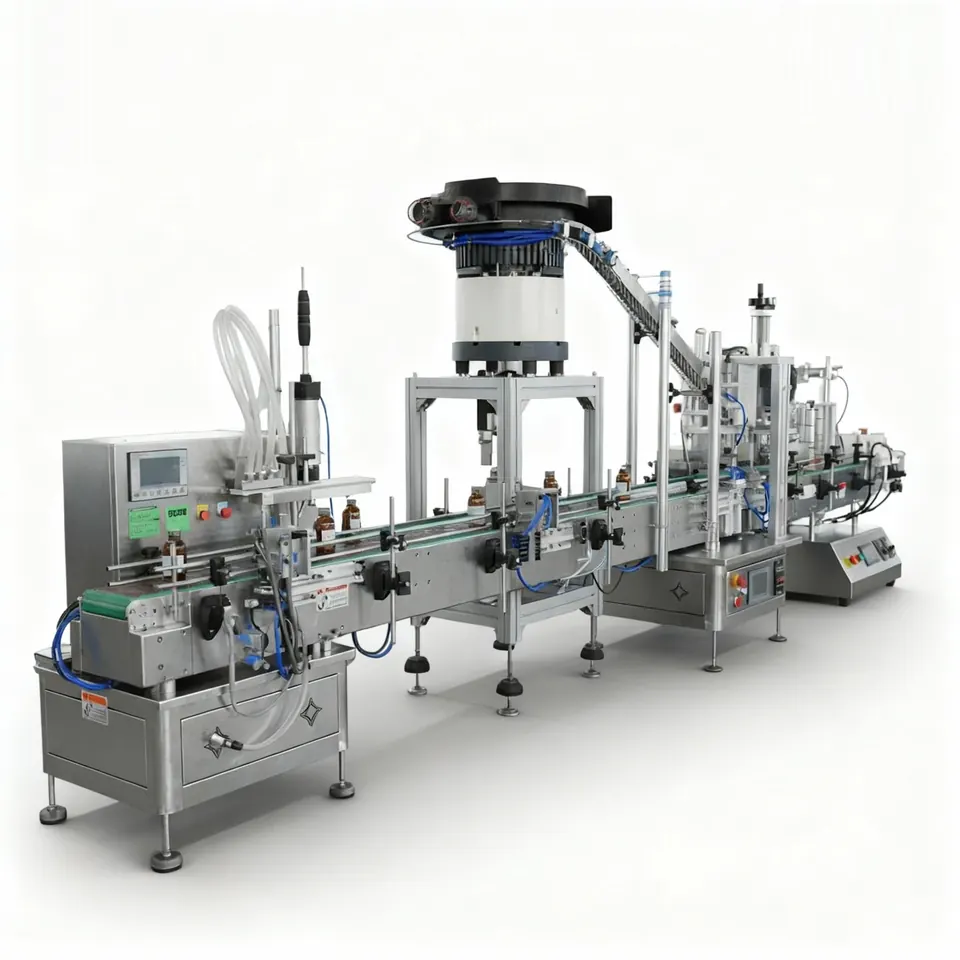
Compact filling lines
A smaller footprint can combine tabletop or narrow-frame machines for growing production.
Explore this routeIntegrated production systems
A filling line should be designed as a production system, not a row of independently fast machines. Product supply, container infeed, filler cycle, cap presentation, label application, coding, inspection and discharge must be balanced. Controls and accumulation help the line recover from short stops without creating spills, jams or damaged packs.

Typical products and packs
Compare the principles
Several dosing methods may fill the same nominal product. The practical choice is driven by accuracy, cut-off, cleaning, format range and sustained output.
A smaller footprint can combine tabletop or narrow-frame machines for growing production.
Explore this routeConveyor-linked machines with shared control, guarding and accumulation.
Explore this routePlan infeed, filling, cap handling, labelling and finished-pack discharge around the actual bottle.
Explore this routeUse a structured URS, layout and acceptance process before ordering equipment.
Explore this routeBefore quotation
Beyond the filler
Machines you can compare
Specifications are reference points. Confirm the operating window using the intended product, container and line arrangement.

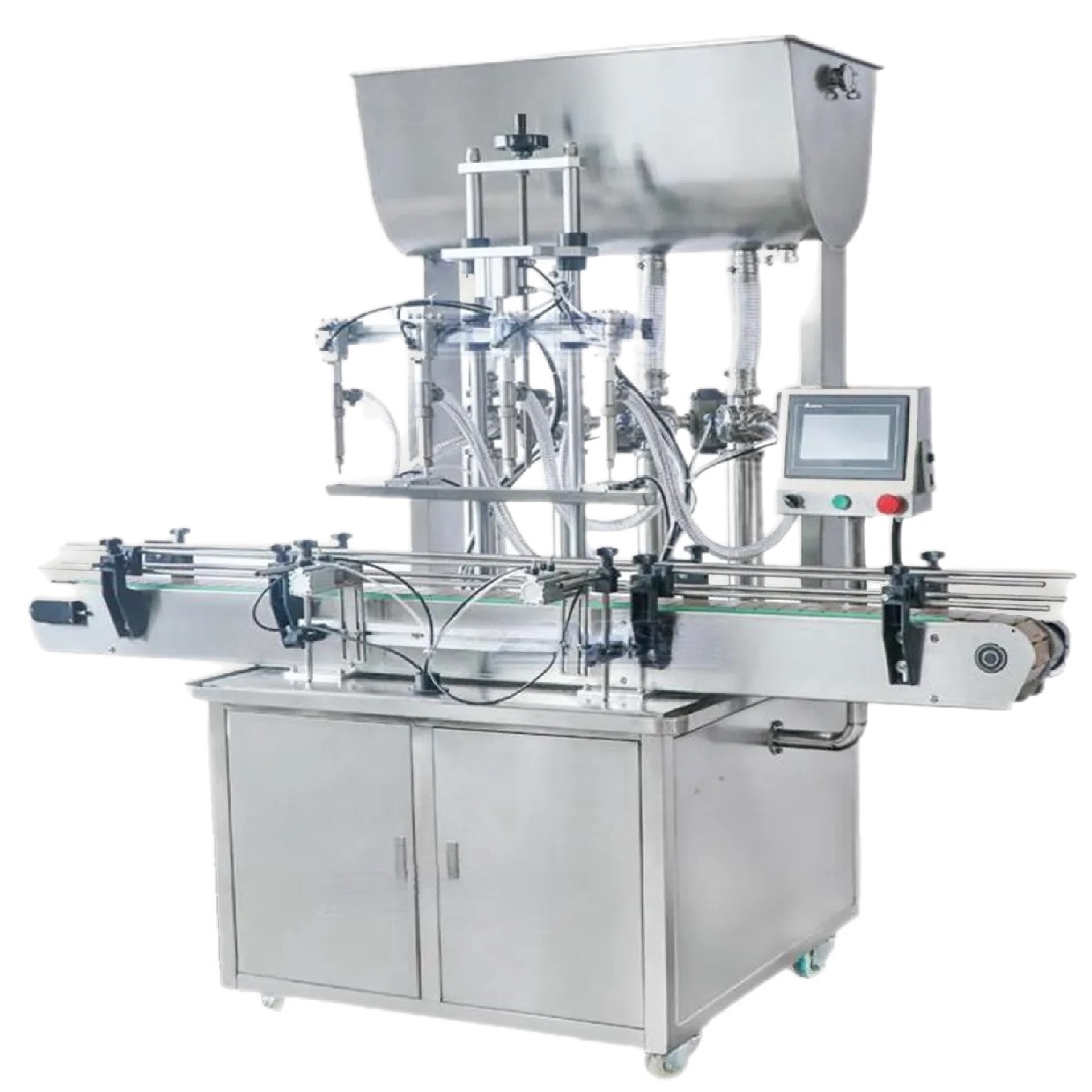
Automatic Volumetric 4-Nozzle
Four-nozzle automatic volumetric piston filler for sauces, honey, creams and lotions. Compare fill modules, anti-drip nozzles and line options.
See machine details
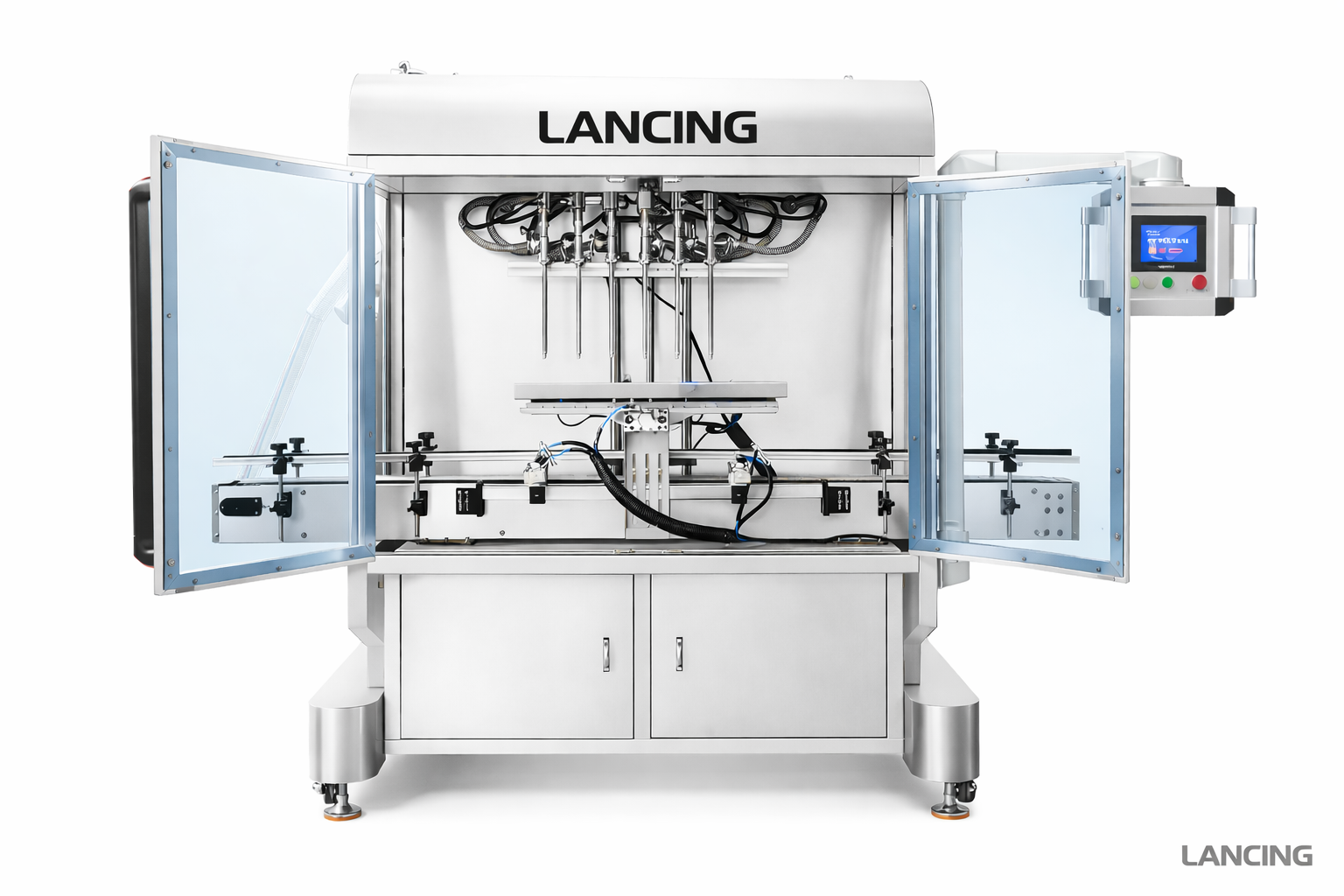
LU-CL6T
Six-head servo magnetic-pump filler for 500–5000 ml liquid products. Review 320 L tank, up to 42 bottles/min and automatic-line integration.
See machine details
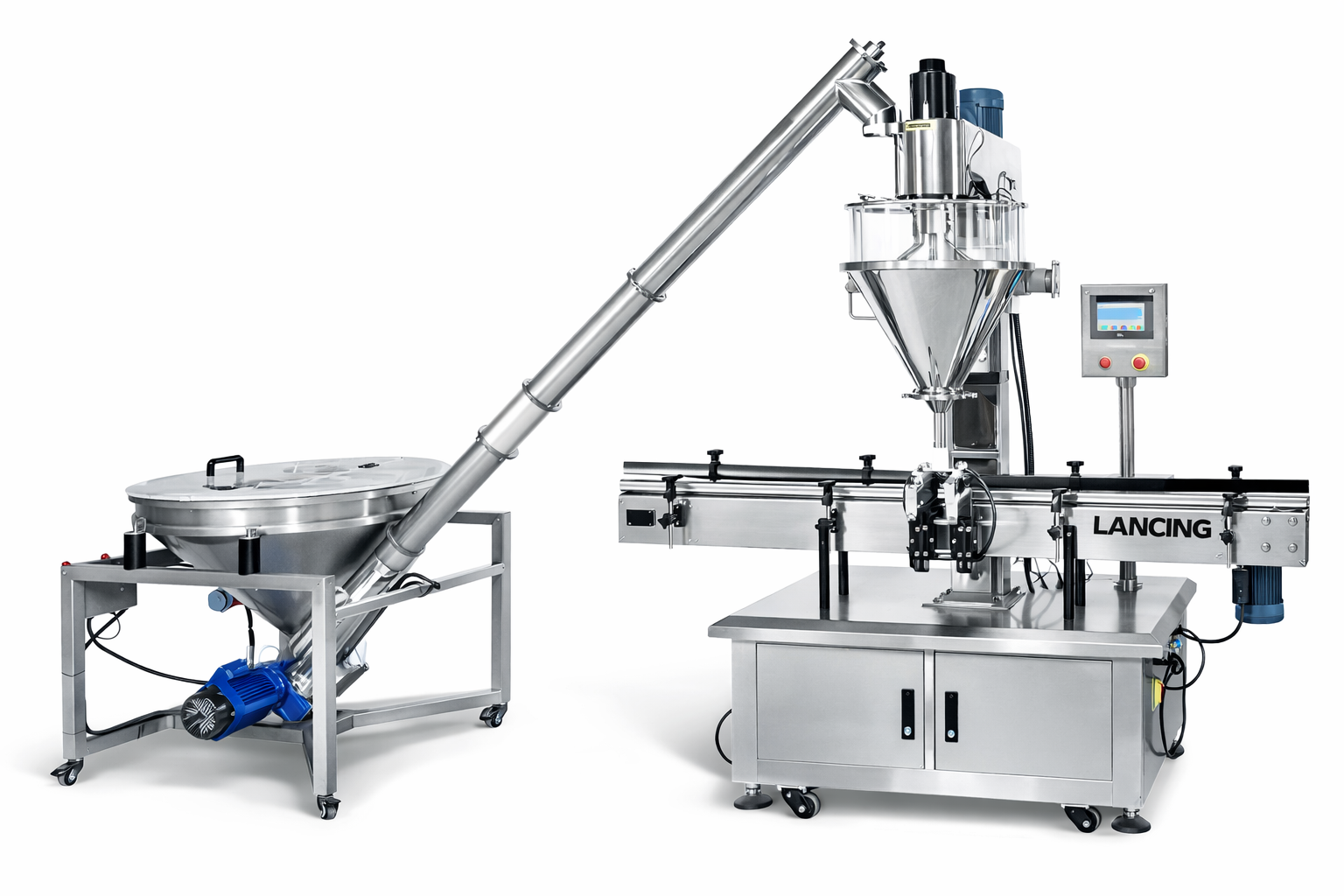
LU-FM5A
Servo auger powder filler with automatic screw feeder for jars and containers. Review 10–500 g reference range, hopper, utilities and output.
See machine detailsCompare your options
Automatic filling machines for liquid, paste, powder and specialist applications. Compare multi-head fillers, conveyors, controls and line integration.
See optionsBottle filling machines for liquids, sauces, creams, powders and granules. Plan container handling, fill method, capping, labelling and output.
See optionsPlan filling line integration across infeed, filling, capping, labelling, coding, inspection, conveyors, controls, FAT, SAT and production handover.
See optionsUse this filling machine enquiry checklist to supply product, fill, container, output, utility, cleaning and line-integration data for a useful quote.
See optionsQuick answers
Typical applications include bottle fill-cap-label lines, jar and tub filling with lid or cap closing, powder and granule container lines. The final decision depends on the real product, dose, container and target output.
Start with the product behaviour, fill range, pack format and sustainable output. Then compare the dosing principle, contact materials, changeover and cleaning against line balance, controls, changeover and acceptance as one joined-up project.
Yes. Filling can be planned with container infeed, conveyors, capping or closing, labelling, coding, sealing, inspection, accumulation and end-of-line handling.
Send product details and safety data where relevant, fill volumes, container and closure samples or drawings, target output, utilities, cleaning needs, footprint and any existing equipment to be integrated.
Ready to discuss your application?
Tell us what you fill, your fill range, container and target output. We will help you narrow the practical machine options before quotation.
Define every interface
Each machine can perform correctly and the project can still fail at the interfaces. A written schedule should identify who supplies, connects, controls, guards, tests and documents every boundary from product preparation to packed output.
| Interface | Items to define | Acceptance evidence |
|---|---|---|
| Product supply | Tank or hopper, transfer pump, pipework, level control, temperature, return and cleaning boundary. | Stable supply at the required condition without starving or over-pressurising the filler. |
| Container flow | Infeed height, speed, guide rails, gating, puck or neck handling, backlog and restart behaviour. | Representative containers transfer without unacceptable jams, damage or loss of position. |
| Mechanical transfer | Conveyor heights, gaps, dead plates, accumulation, reject points and guarding interfaces. | Safe, stable movement across each station and recovery after normal stops. |
| Electrical and controls | Power, isolators, field signals, permissives, speed references, recipes, alarms and data ownership. | Documented signal test and controlled start, stop, fault and restart sequence. |
| Safety | Risk boundaries, guard overlap, emergency stops, safety circuits and responsibilities for final assessment. | Agreed safety function test for the completed installed scope. |
| Documentation and handover | Drawings, manuals, parts lists, training, FAT, SAT, open items and change control. | Controlled document set and signed acceptance against the agreed requirement. |
Balance the process
Define the product, dose, pack, closure and run duration, then record good packs, rejects, minor stops and replenishment. A buffer can help with short interruptions, but it should not hide a persistent mismatch between filling, capping or labelling.
Use the integration guide for the detailed control and acceptance workflow and the automatic filling page for multi-head dosing considerations.
Integrated project review
Provide the process sequence, equipment to retain, layout constraints, utilities and required responsibility boundaries. Where continuous automation is confirmed, the specialist range at Automatic Filling Machines UK can be reviewed alongside the wider packaging machinery scope.
Discuss a complete filling lineFurther buyer questions
These answers clarify the practical boundaries that should be checked before a machine is selected or quoted.
The project should identify one agreed owner for every mechanical, electrical, control, safety, product and documentation interface. Unclear battery limits are a common cause of omissions even when each individual machine is suitable.
Acceptance should use representative products and packs, an agreed sustained run, defined quality checks, recorded faults and a clear method for handling planned stops or replenishment. Factory and site tests should reflect the final scope rather than an isolated machine cycle.