Food and beverage filling machines
Food and beverage filling machinery for oils, sauces, honey, powders, granules, still drinks and carbonated products. Plan hygiene and line integration.
See options
Filling machinery by sector
Products with the same nominal volume can require very different filling systems. Compare application routes for food and drink, cosmetics, chemicals, oils, pharmaceutical products, adhesives and small bottles.
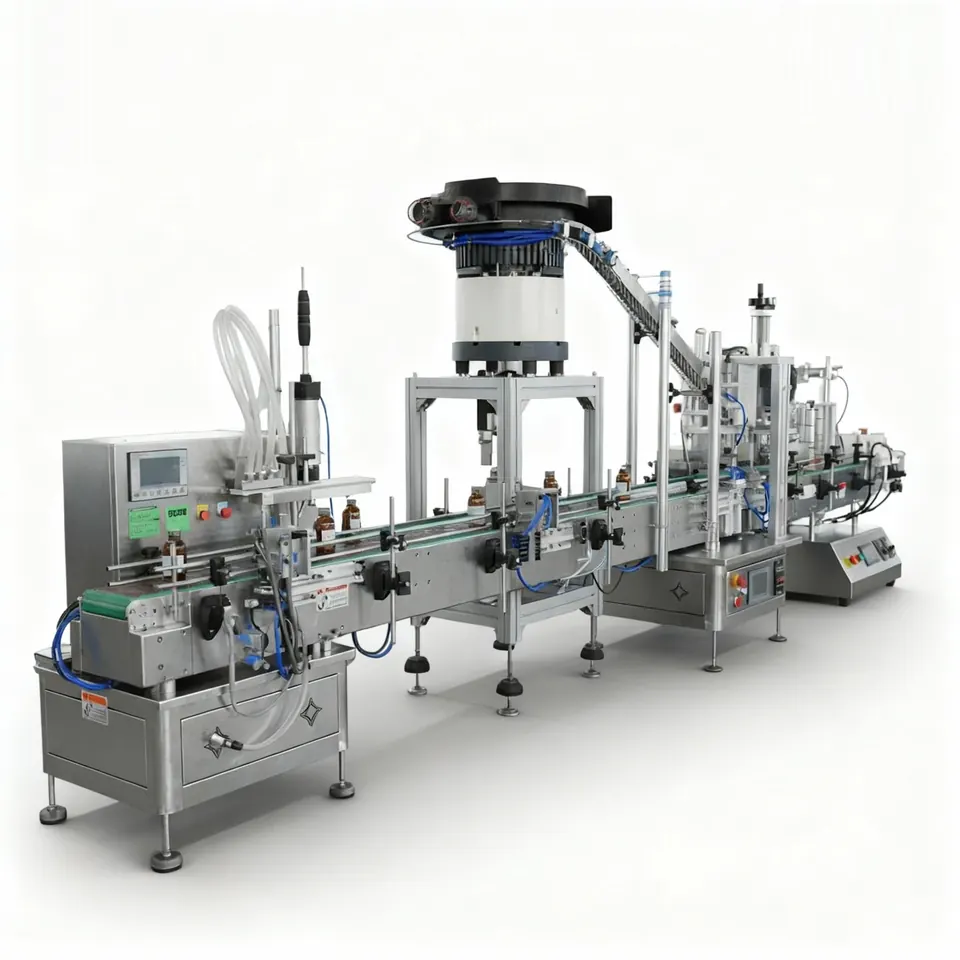
Application library
Each application page focuses on product behaviour, contact materials, cleaning, pack handling and the machine routes worth testing.
Food and beverage filling machinery for oils, sauces, honey, powders, granules, still drinks and carbonated products. Plan hygiene and line integration.
See optionsSpecify filling machines for sauces, ketchup, honey, jam, chutney and dressings. Compare piston, rotor-pump, heated hopper and nozzle options.
See optionsCosmetic filling machines for creams, lotions, gels, shampoo, serums and fragrances. Compare piston, peristaltic, pump and complete bottle lines.
See optionsChemical filling machines for detergents, cleaners, acids, alkalis, solvents and compatible industrial liquids. Plan materials, ATEX and containment.
See optionsFilling machines for edible oils, engine oil, hydraulic fluid and lubricants. Compare gear pump, weight, high-flow and large-container systems.
See optionsPharmaceutical and nutraceutical filling machinery for liquids, serums, powders and supplements. Plan dose control, cleanability, packs and records.
See optionsFilling machines for adhesives, sealants, glues, greases and waxes. Compare piston and rotor-pump routes, materials, nozzles and cleaning.
See optionsSmall-bottle and e-liquid filling machines using peristaltic, piston and pump dosing. Plan droppers, tips, caps, labels and high-changeover production.
See optionsCommon data
Machine routes
Specify liquid filling machines for water-like products, oils, detergents, chemicals and beverages. Compare pump, piston, peristaltic and level filling.
See optionsCompare piston, servo and rotor-pump paste filling machines for sauces, honey, creams, gels, adhesives and other viscous products in the UK.
See optionsCompare powder filling machines using auger, weigh and dosing systems for food, supplement, cosmetic and chemical powders. UK specification advice.
See optionsWeigh filling machines for oils, liquids, powders and granules. Compare net-weight, pump-and-scale and multihead weighing around accuracy and output.
See optionsReady to discuss your application?
Tell us what you fill, your fill range, container and target output. We will help you narrow the practical machine options before quotation.
Application engineering
Two products sold into the same market can require different filling principles, while products from different industries may behave similarly in the machine. Use the application name to identify hygiene, safety and documentation expectations, then define the physical filling task in engineering terms.
| Application question | Effect on machinery selection | Evidence to provide |
|---|---|---|
| How does the product move? | Influences piston, pump, peristaltic, gravity, vacuum, auger or weigh comparisons and the design of the feed system. | Viscosity or flow description at filling temperature, foam, particles, stringing, dust, settling and safety data where relevant. |
| How is the dose accepted? | Determines whether the key result is volume, mass or visible level and how the machine should be tested. | Target fills, tolerances, measurement method, sample size and treatment of start-up or rejected packs. |
| What is the pack route? | Defines nozzle entry, container support, indexing, closing, sealing, labelling and coding requirements. | Representative packs, closures, drawings, dimensional range and finished-pack presentation requirements. |
| What hygiene or containment is needed? | Affects contact materials, guarding, extraction, cleanability, product recovery and operator access. | Cleaning method, changeover frequency, segregation needs and any documented site standards supplied by the buyer. |
| What output is sustainable? | Sets the automation level and number of parallel operations only after upstream and downstream limits are understood. | Required good packs per hour, shift pattern, batch size, changeover profile and current process data. |
| What must integrate with the filler? | Changes the line layout, controls, buffer strategy and battery limits. | Existing equipment details, interface signals, utilities, footprint, access and responsibility schedule. |
Use the closest specialist owner
Once the physical route is clear, use the relevant specialist Lancing resource. Liquid projects can continue at Liquid Fillers UK, viscous products at Paste Fillers UK, dry products at Powder Fillers UK, and measured-volume systems at Volumetric Fillers UK.
Before requesting a quote
Include the thickest or foamiest product, the smallest opening, the largest dose, the least stable pack and the fastest required line condition. Those edge cases often determine whether one machine can cover the whole application range.
Define the application in four layers
An application page can identify a useful starting family, but the final machine is selected from the interaction between four layers. Recording each layer separately stops an industry label from hiding the condition that actually controls the project.
Describe flow, viscosity, foam, particles, fibres, dust, aeration, settling, temperature sensitivity and material compatibility. Include variation across batches and the product condition at the moment it reaches the filler.
Record opening size, rigidity, stability, dimensional variation, closure route and the areas that must remain clean for sealing, capping, coding or labelling. The most difficult pack may determine the support and nozzle arrangement.
Define product supply, utilities, access, extraction or containment needs, cleaning method, operator movement, available footprint and the equipment that must remain in the existing line.
State what makes a pack acceptable, how it will be measured and how start-up, stops, rejects and changeovers are treated. Separate legal or site requirements supplied by the buyer from assumptions made during machine selection.
Look for boundary cases
The normal product in the normal pack may not reveal the real constraint. Use the following boundary cases to decide which samples, drawings and operating conditions belong in the application review.
| Boundary case | Selection tension | What to establish |
|---|---|---|
| One formulation fills at several temperatures | Flow, density, foam, pump load and cut-off may change through production. | The intended temperature window, acceptance basis and whether settings or hardware change across that window. |
| One machine must cover very different pack openings | A nozzle suitable for the larger opening may not enter the smaller pack or may require different support and movement. | Nozzle and guide changes, container location, changeover steps and the result at both pack extremes. |
| Frequent product changes share a contact path | Cleaning time, retained product, cross-contamination control and first-good-pack checks may govern usable capacity. | The cleaning boundary, parts removed, product recovery, line clearance and restart evidence. |
| A filler is added to an existing capping or labelling line | The nominal filler speed may not match transfer heights, buffers, signals or the stop-and-restart behaviour of retained equipment. | Mechanical and control interfaces, sustainable line balance and ownership of modifications. |
| The accepted dose is by weight but the preferred route is volumetric | Density changes can alter mass even when delivered volume is repeatable. | Product-condition controls, the measurement plan and whether a weigh-based route or verification step should remain in the comparison. |
| A dry product changes bulk density during handling | Aeration, settling, bridging or segregation can affect dose and pack presentation. | Representative product conditioning, feeder behaviour, refill method, settling and the agreed measurement point. |
Application boundary cases
Some applications are not adequately described by industry alone. Temperature, aeration, pack variety and the commercial operating model can change the suitable equipment and acceptance method.
Review bulk preparation, transfer, nozzle movement, headspace, settling and closure as one process.
Plan a foam-control trialDefine the validated product temperature profile, pack response, closing sequence, cooling and operator controls.
Review hot-fill requirementsCreate a controlled capability matrix for products, packs, cleaning categories, recipes and trial status.
Plan flexible fillingWhere products are hazardous, corrosive, flammable, hot, dusty or exposure-sensitive, provide current product information and the site process. The safety and risk-assessment guide identifies machinery, product and workplace boundaries that need competent review.
Quantity is only one result. Check neck cleanliness, foam, dust, closure area, deformation, labelability, stability and downstream transfer with production components. Record acceptable and unacceptable examples during the trial.
Additional industrial application
Paint and coating projects can combine changing viscosity, pigment or solids behaviour, wide cans or pails, lid-area cleanliness, product recovery and solvent or exposure controls. The machine route should be selected from the actual formulation and pack rather than a generic “paint filler” label.
Review pump, piston, flowmeter, gravity and weigh options with representative product. Where dangerous substances are present, the final safeguards depend on the site’s competent DSEAR assessment.