Liquid filling machines
Specify liquid filling machines for water-like products, oils, detergents, chemicals and beverages. Compare pump, piston, peristaltic and level filling.
See options
Chemical and household products
Chemical filling must begin with the formulation and risk assessment. Detergents may foam; acids and alkalis demand compatible contact materials; solvents may introduce hazardous-area requirements. The correct filler also needs spill control, ventilation, safe product supply and a closure route that prevents leaks.
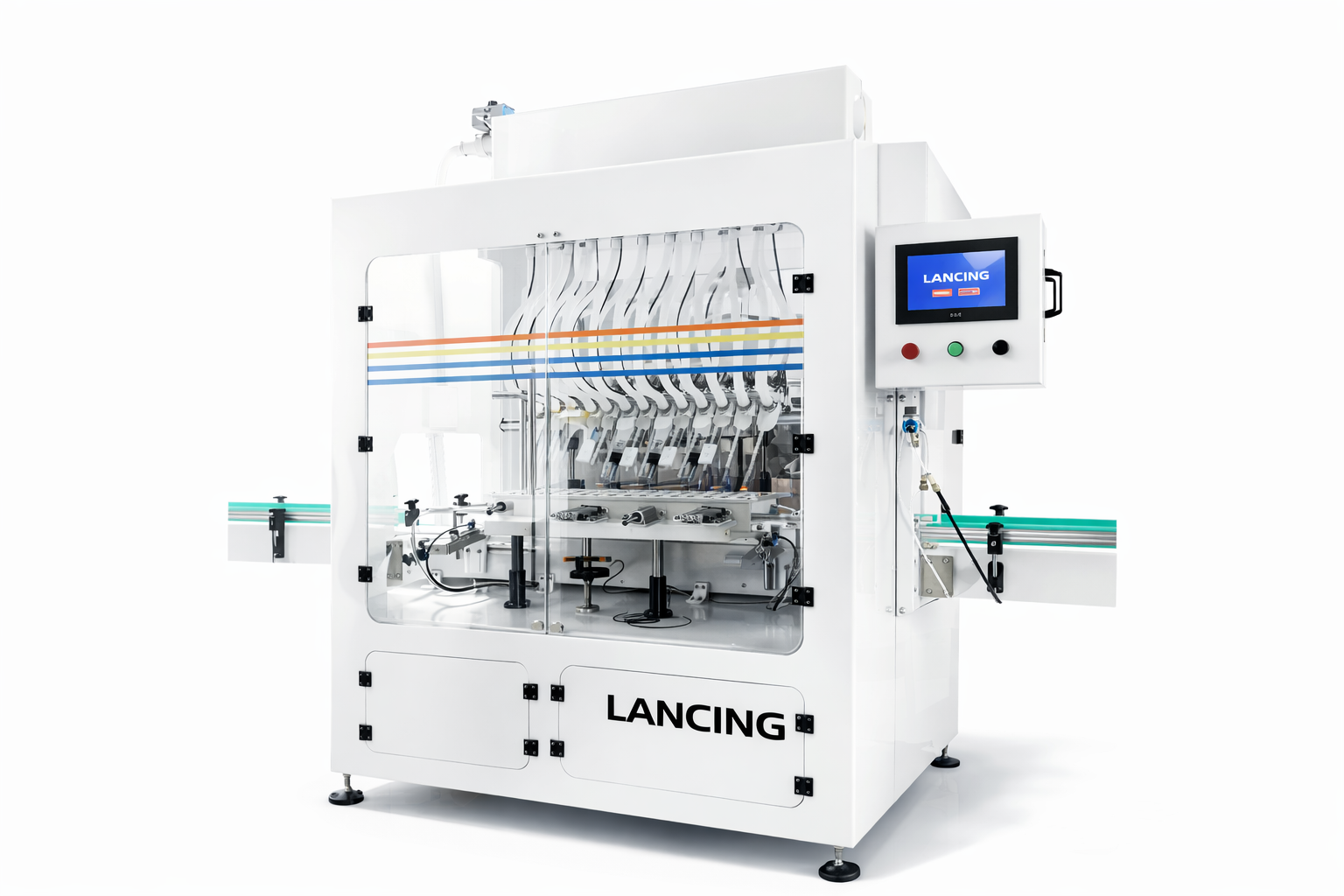
Application routes
Specify liquid filling machines for water-like products, oils, detergents, chemicals and beverages. Compare pump, piston, peristaltic and level filling.
See optionsCompare gear, rotor, magnetic, diaphragm and other pump filling machines for oils, detergents, sauces, gels and compatible chemical products.
See optionsATEX filling machinery for solvents, fuels and flammable liquids. Plan zoning, equipment category, earthing, ventilation, materials and line controls.
See optionsLarge-container filling machines for jerrycans, pails, drums and IBC-related projects. Compare weight, pump, ATEX, nozzle and handling requirements.
See optionsProduct and pack risks
Project method
Record concentration, temperature, viscosity, vapour, incompatibilities and cleaning chemicals.
A corrosive product is not automatically flammable; address both risks where they apply.
Choose PP, stainless or other compatible materials across tank, pump, hose, valve and nozzle.
Include drip trays, extraction, spill response, cap control, seal verification and reject handling.
Machine options
LU-XAF16
Automatic PP anti-corrosion filler for compatible acids, alkalis, oxidisers and foaming liquids. Review materials, head count, output and safety.
See machine details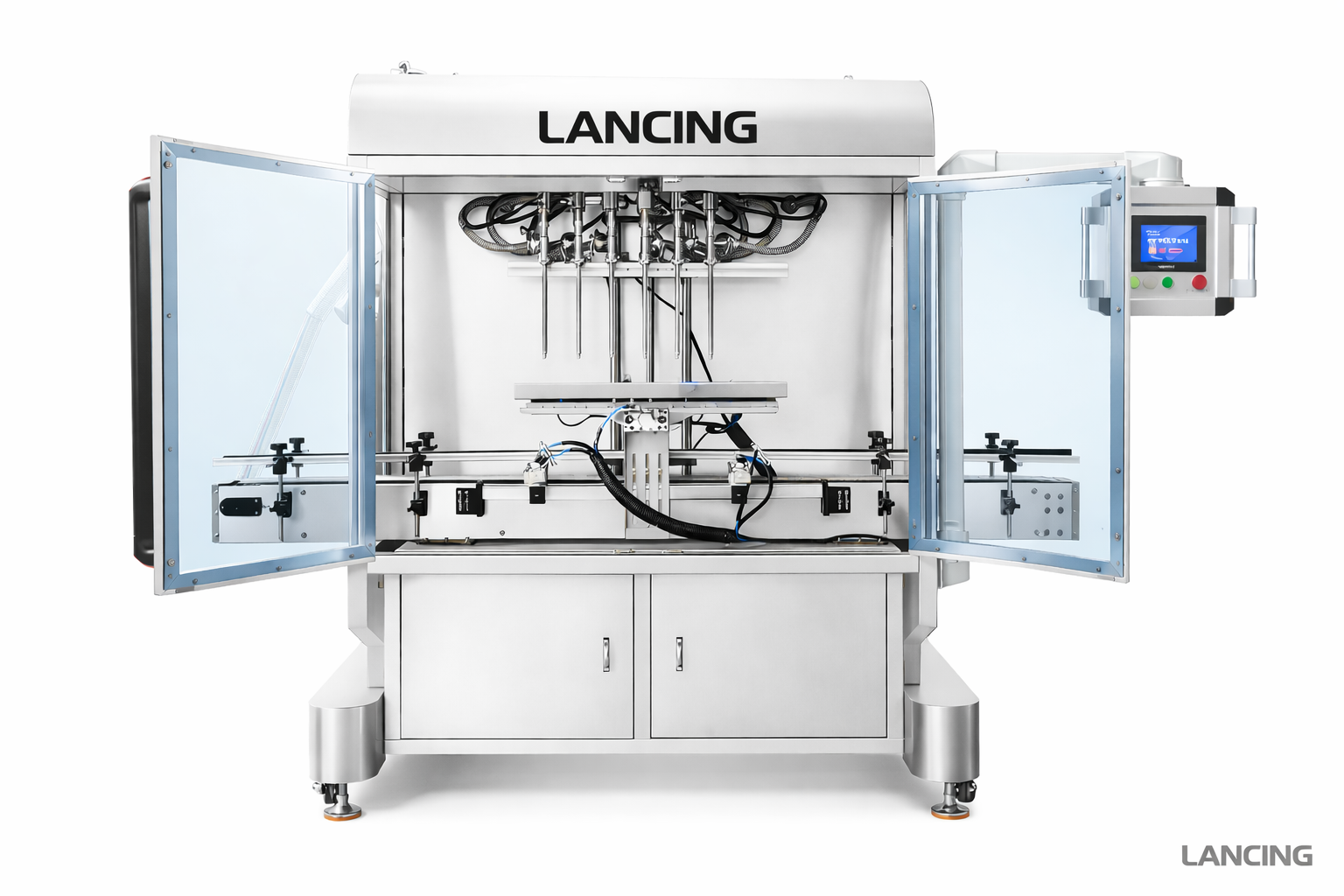
LU-CL6T
Six-head servo magnetic-pump filler for 500–5000 ml liquid products. Review 320 L tank, up to 42 bottles/min and automatic-line integration.
See machine details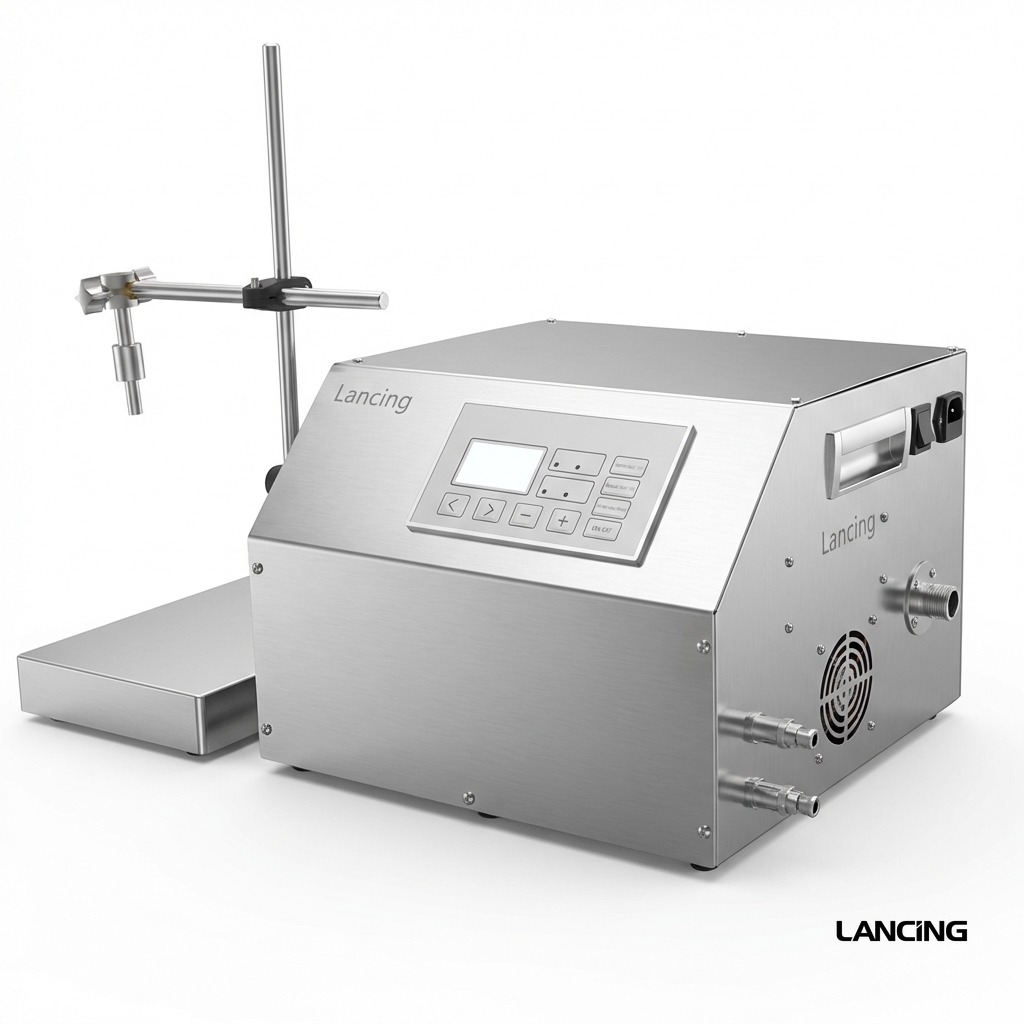
LU-GP261W
Semi-automatic gear-pump filler with weighing control for edible oil, engine oil, hydraulic fluid and compatible viscous liquids. Request a trial.
See machine detailsRelated research
Filling machines for edible oils, engine oil, hydraulic fluid and lubricants. Compare gear pump, weight, high-flow and large-container systems.
See optionsBottle filling machines for liquids, sauces, creams, powders and granules. Plan container handling, fill method, capping, labelling and output.
See optionsPlan filling line integration across infeed, filling, capping, labelling, coding, inspection, conveyors, controls, FAT, SAT and production handover.
See optionsQuick answers
There is no single correct filler. The shortlist depends on product flow, dose, container, cleaning, accuracy, target output and any sector-specific safety or documentation requirements.
Usually yes. Bottle or container stability, closure presentation and downstream speed can affect the filling layout, so the complete pack route should be reviewed early.
A product and container review is the strongest route to a realistic proposal. Discuss sample quantities, safety information and the acceptance criteria needed for a useful trial.
Send product details, fill range, pack and closure data, target output, planned shifts, utilities, footprint, cleaning method and any existing machinery that must be retained.
Ready to discuss your application?
Tell us what you fill, your fill range, container and target output. We will help you narrow the practical machine options before quotation.
Chemical application evidence
A chemical product name is not enough to specify the contact path or site controls. Provide current safety data, composition information available for engineering review, concentration, temperature, viscosity and the expected transfer and cleaning sequence.
| Review area | Information required | Decision affected |
|---|---|---|
| Product hazards | Current safety data, exposure routes, flammability/corrosivity and incompatible substances. | Containment, ventilation, hazardous-area assessment and operating procedure. |
| Material compatibility | Full product and cleaning chemical sequence, temperature and contact duration. | Pump, valves, seals, tubing, hoses, nozzles, coatings and recovery system. |
| Bulk transfer | Vessel, pump, pressure, pipework, connection, return and spill route. | Prime stability, loss of containment and replenishment method. |
| Pack and closure | Container material, opening, headspace, cap/trigger/pump and leak test. | Nozzle, support, neck cleanliness and downstream closure. |
| Cleaning/change | Recovery, purge, flush, waste/effluent and verification. | Access, drain-down, change parts, exposure controls and restart. |
| Site integration | Layout, segregation, extraction, drainage, emergency response and retained machinery. | Installation scope and competent site risk assessment. |
Use the safety and risk-assessment guide and cleaning/changeover guide to prepare the review. Exact material and hazardous-area suitability must be confirmed for the selected machine and the site-specific application; it should not be inferred from a general product category.
Related industrial formulations
Paint, coating and ink projects can share pump, weigh, flowmeter or piston technology with other industrial liquids, but viscosity, thixotropy, pigments, settling, lid-area cleanliness and solvent controls create a distinct application. Treat the safety data, site release scenario and production pack as primary inputs.