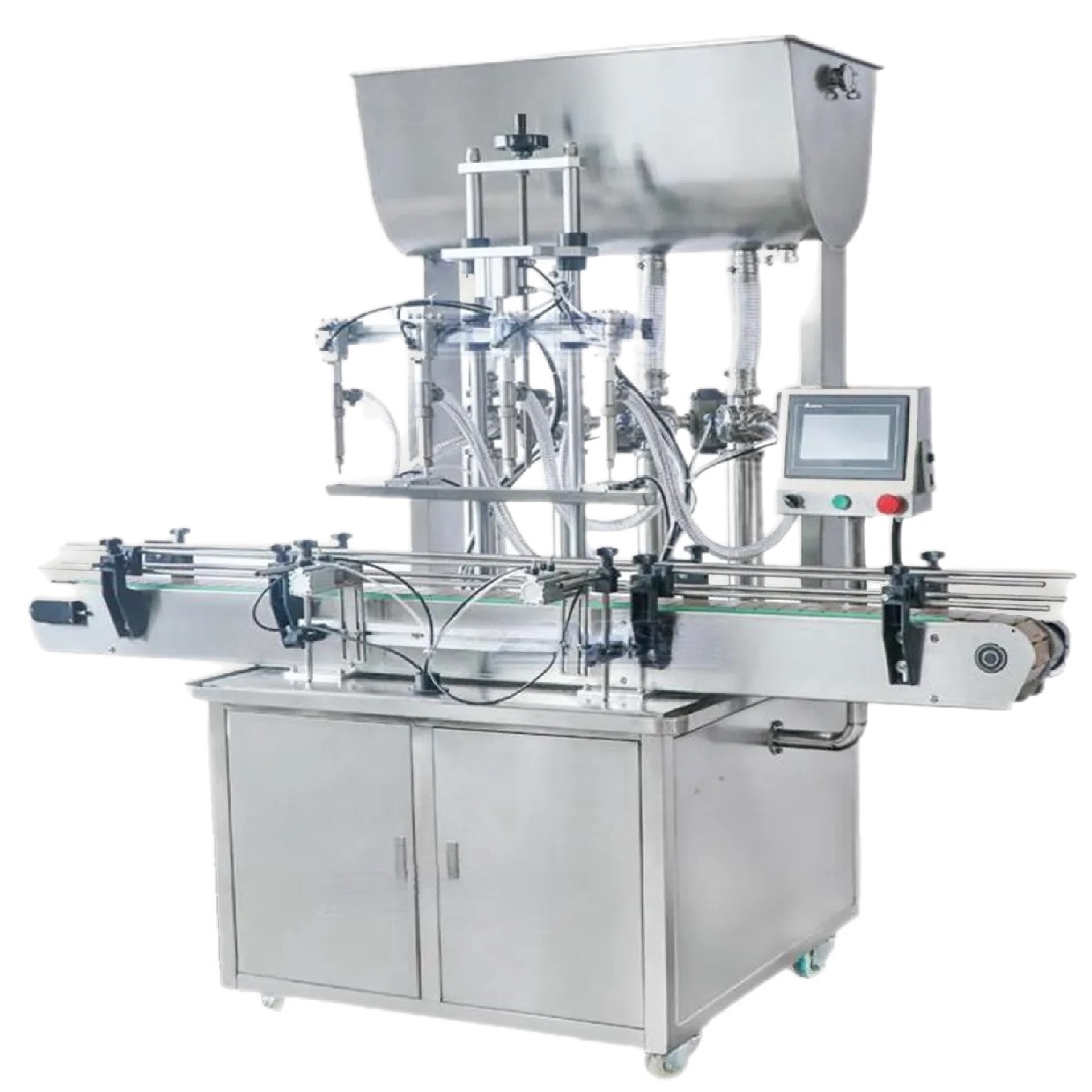
Automatic Volumetric 4-Nozzle
Automatic Volumetric 4-Nozzle Filling Machine
Four-nozzle automatic volumetric piston filler for sauces, honey, creams and lotions. Compare fill modules, anti-drip nozzles and line options.
See machine details
Representative filling equipment
Use these equipment pages to compare dosing principles, nozzle formats and operating ranges. They are not a substitute for product trials: final performance must be confirmed with the intended formulation, pack, output and line conditions.
Equipment comparison
Each page records source-path imagery, reference specifications, application notes and the project data needed before quotation.
Automatic Volumetric 4-Nozzle
Four-nozzle automatic volumetric piston filler for sauces, honey, creams and lotions. Compare fill modules, anti-drip nozzles and line options.
See machine details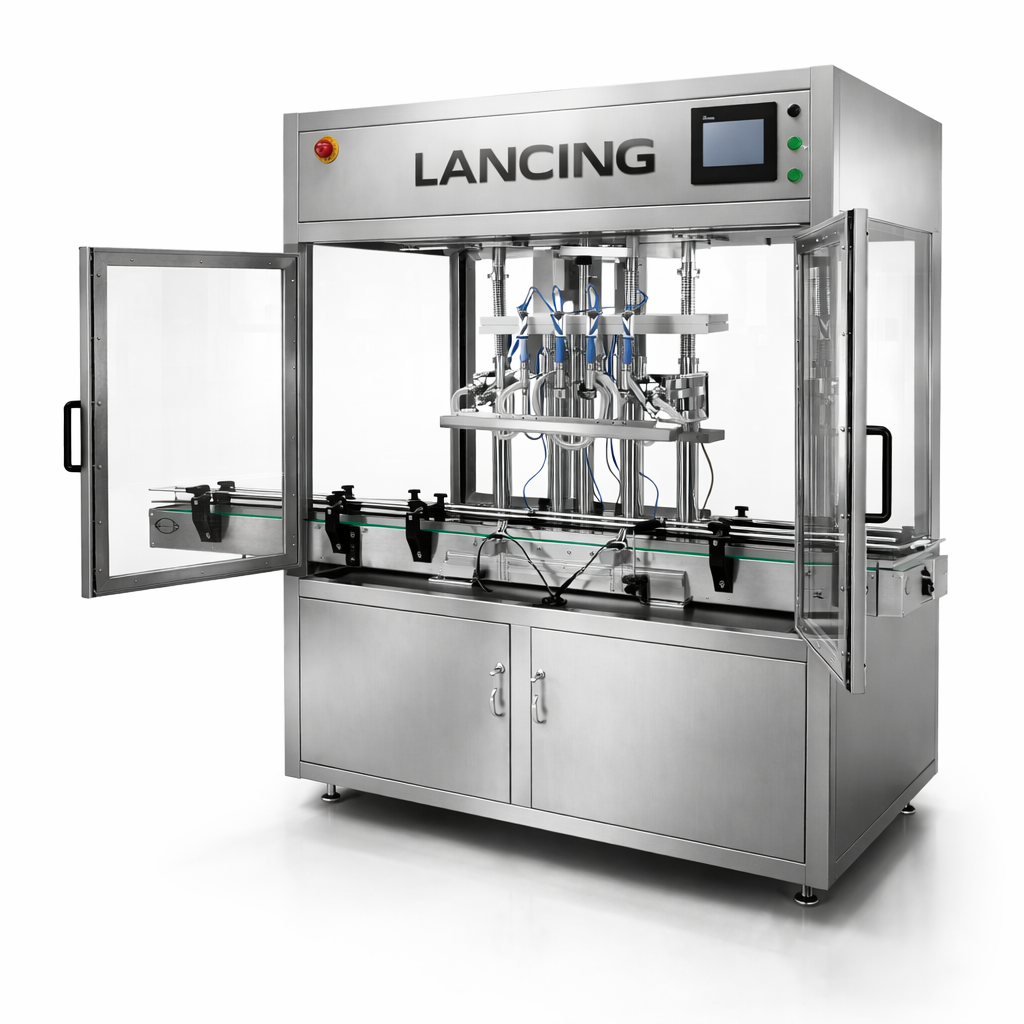
LU-YT6T-6P
Six-nozzle pneumatic piston filling machine for viscous liquids and pastes including honey, syrup, sauces and gels. Discuss range and configuration.
See machine details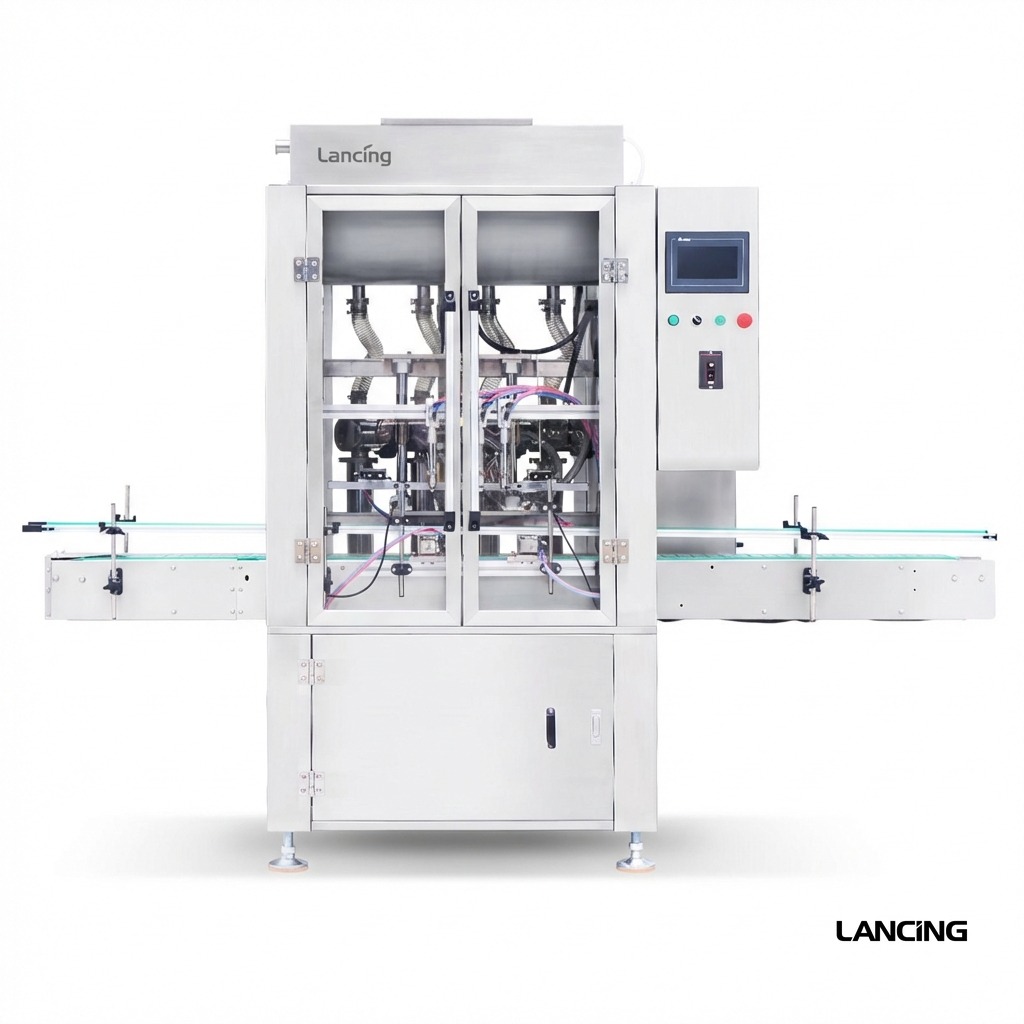
LU-SV4P
Four-head servo piston filling machine for honey, syrup, lotion and cream. Review fill range, bottle limits, accuracy and automatic-line integration.
See machine details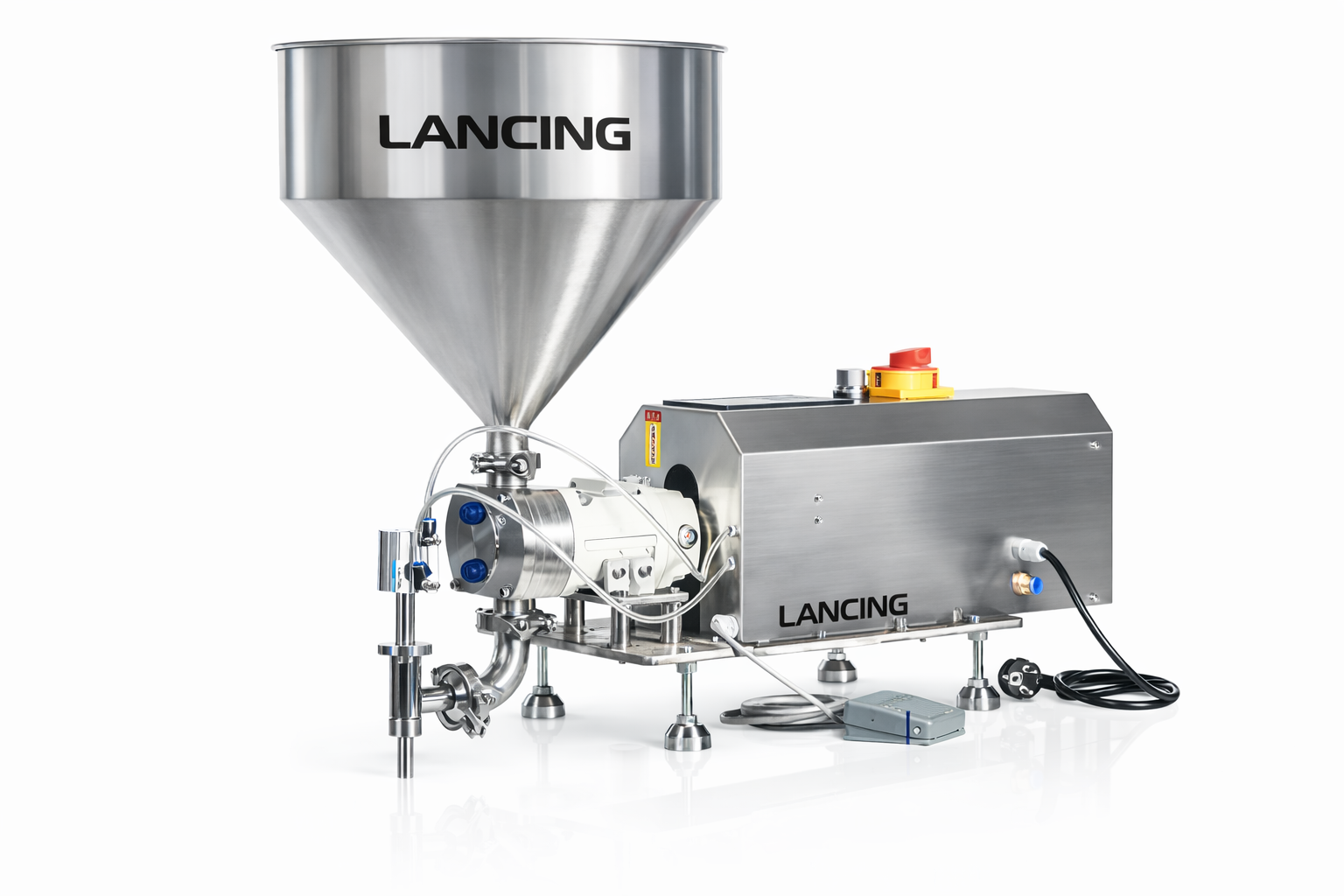
LU-RPGT900 / LU-RPG900
Semi-automatic rotor pump filler for jam, paste, sauces and products with suitable particles. Review 5–5000 ml range, hopper and speed guidance.
See machine details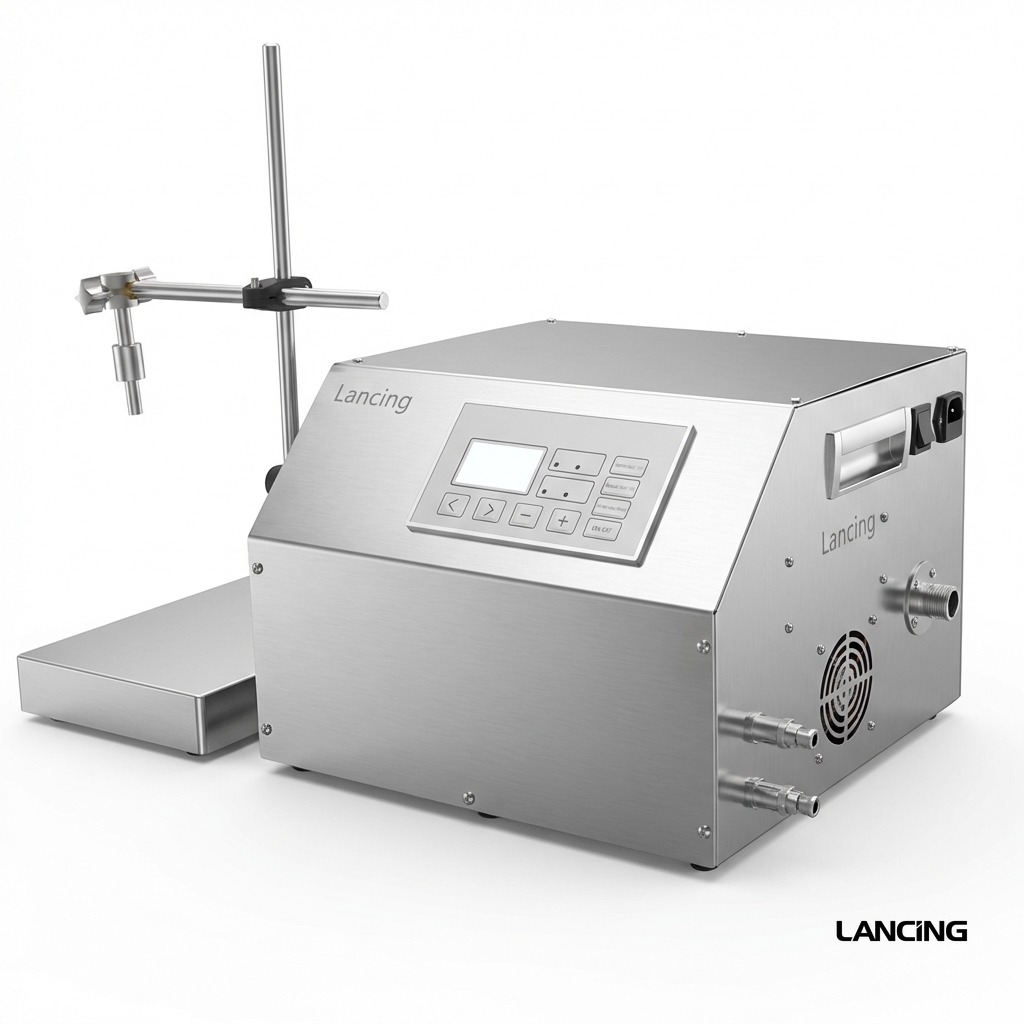
LU-GP261W
Semi-automatic gear-pump filler with weighing control for edible oil, engine oil, hydraulic fluid and compatible viscous liquids. Request a trial.
See machine details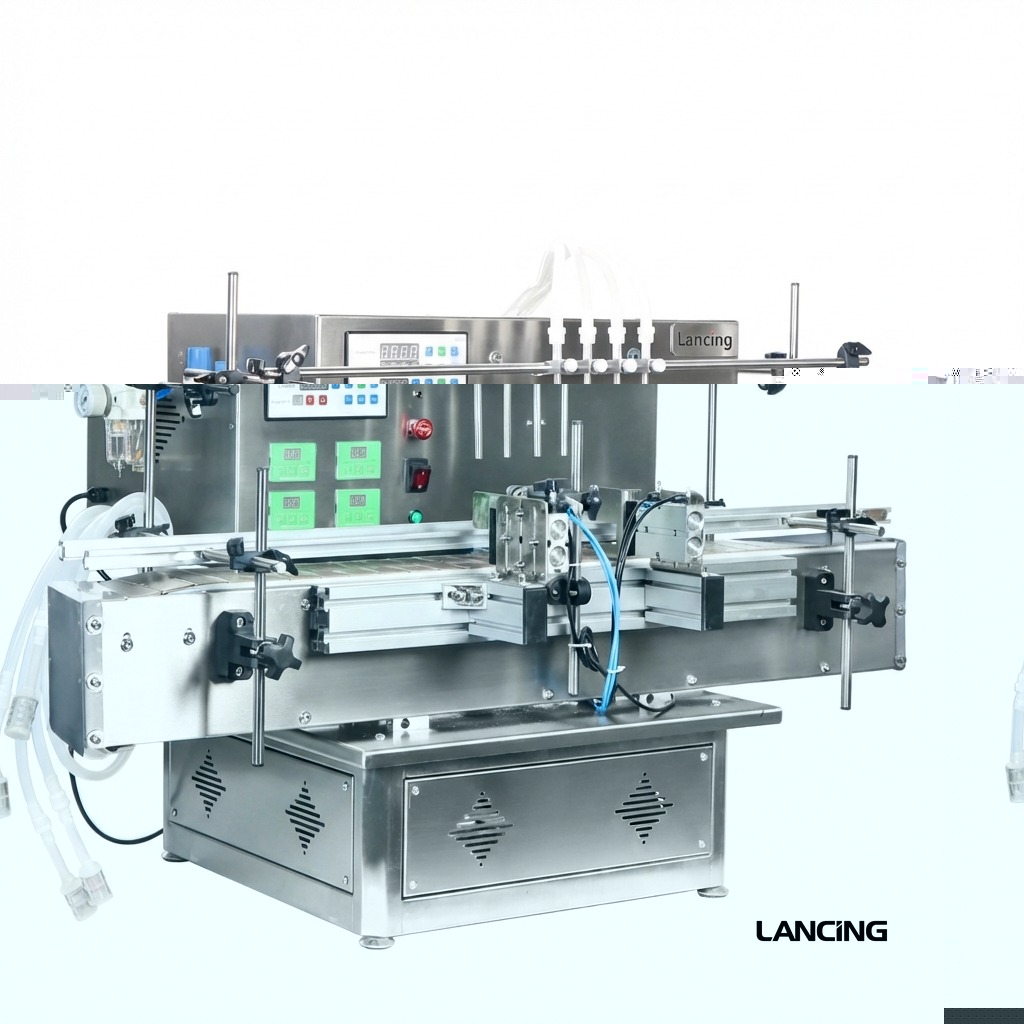
LU-DTPP4C
Four-channel peristaltic filling machine for small liquid doses, e-liquid, lotions and clean-change applications. Review flow, tubing and output.
See machine details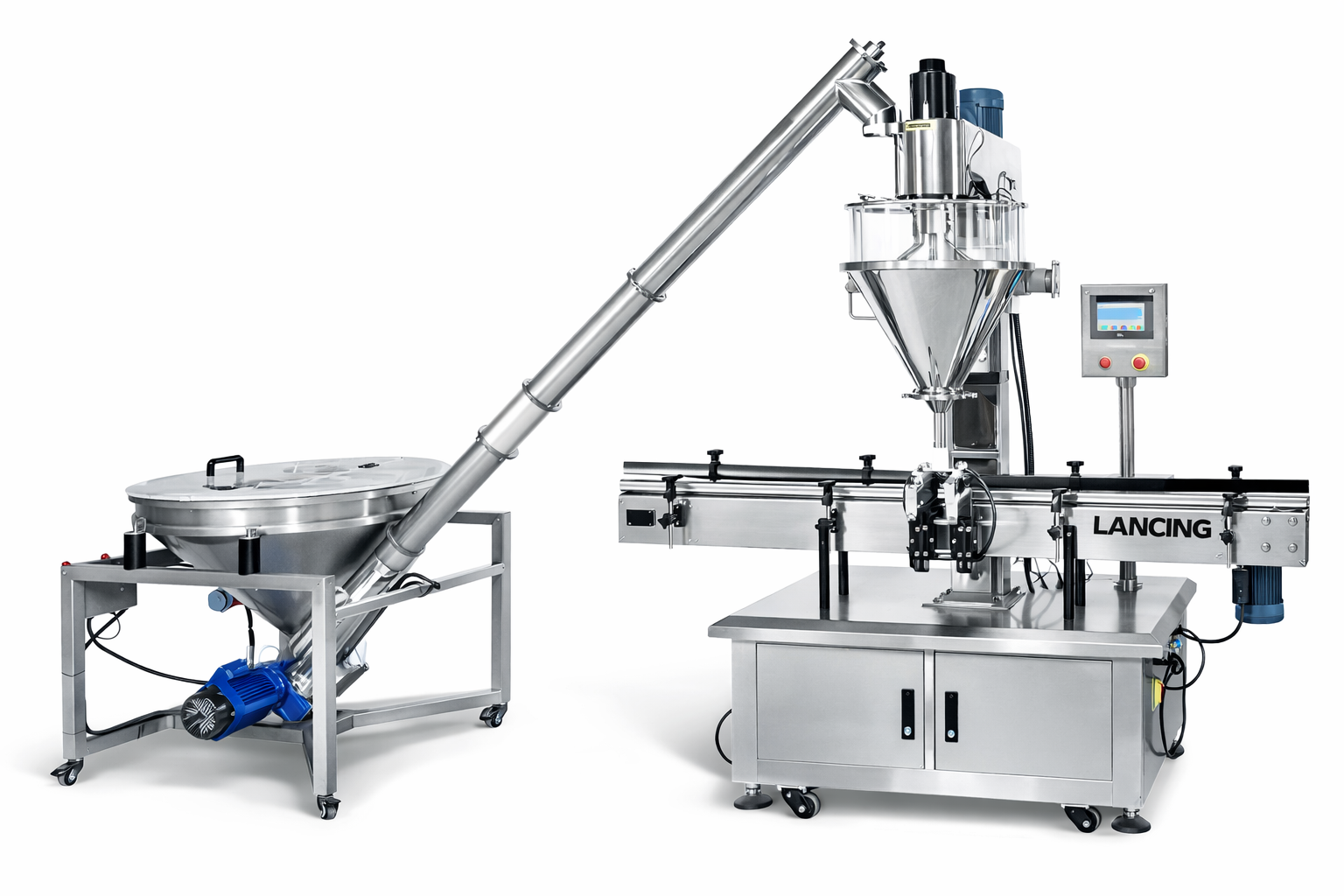
LU-FM5A
Servo auger powder filler with automatic screw feeder for jars and containers. Review 10–500 g reference range, hopper, utilities and output.
See machine details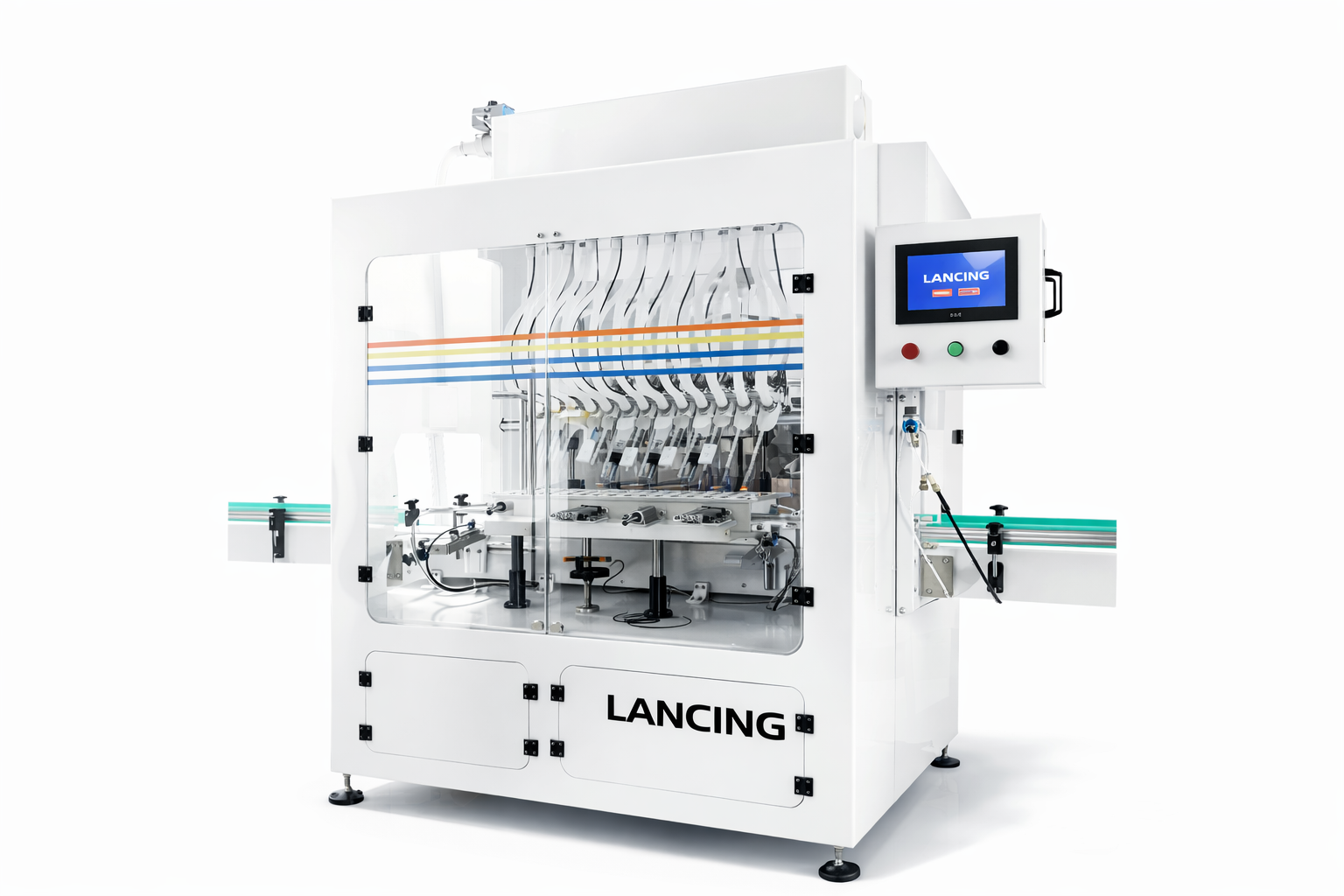
LU-XAF16
Automatic PP anti-corrosion filler for compatible acids, alkalis, oxidisers and foaming liquids. Review materials, head count, output and safety.
See machine details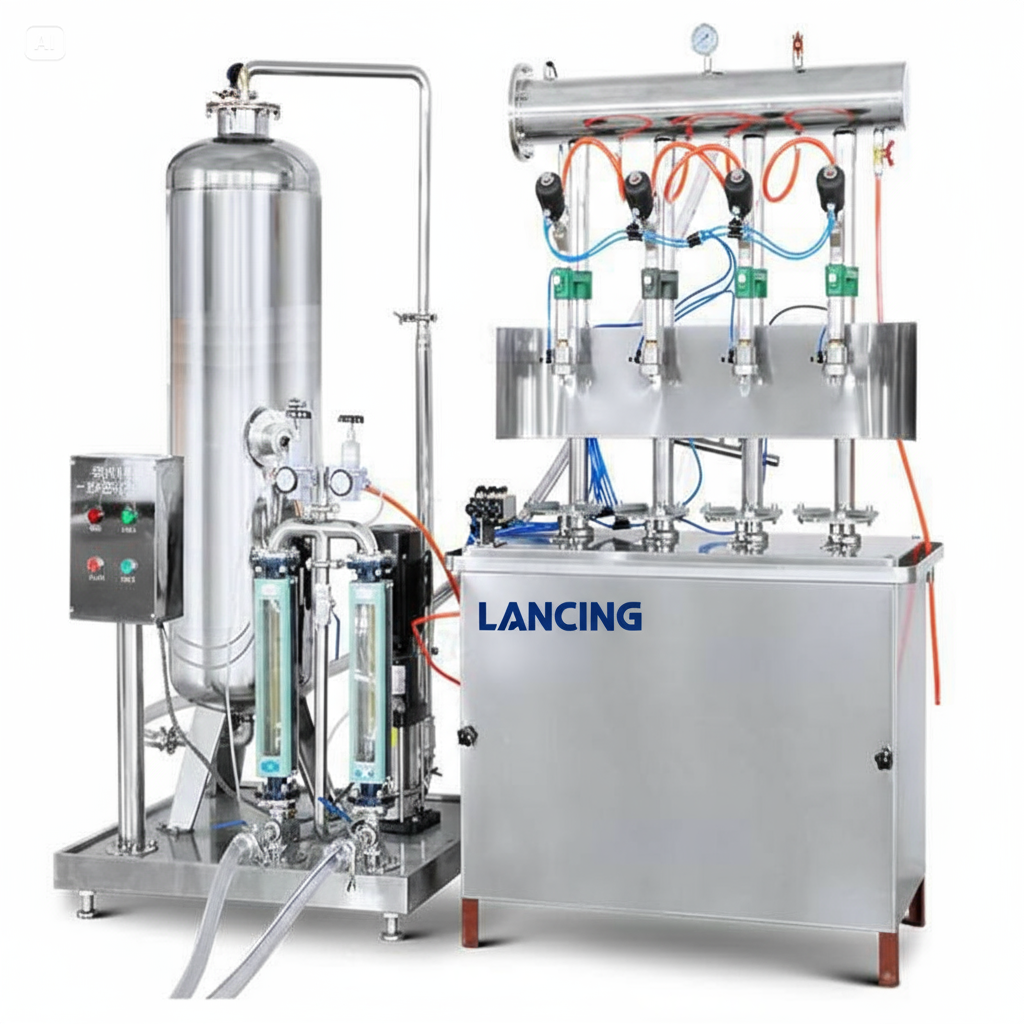
LUCF4A
Four-head counter-pressure can filler with mixer for soda, sparkling drinks and RTD products. Review 330–500 ml formats and 240–400 CPH.
See machine details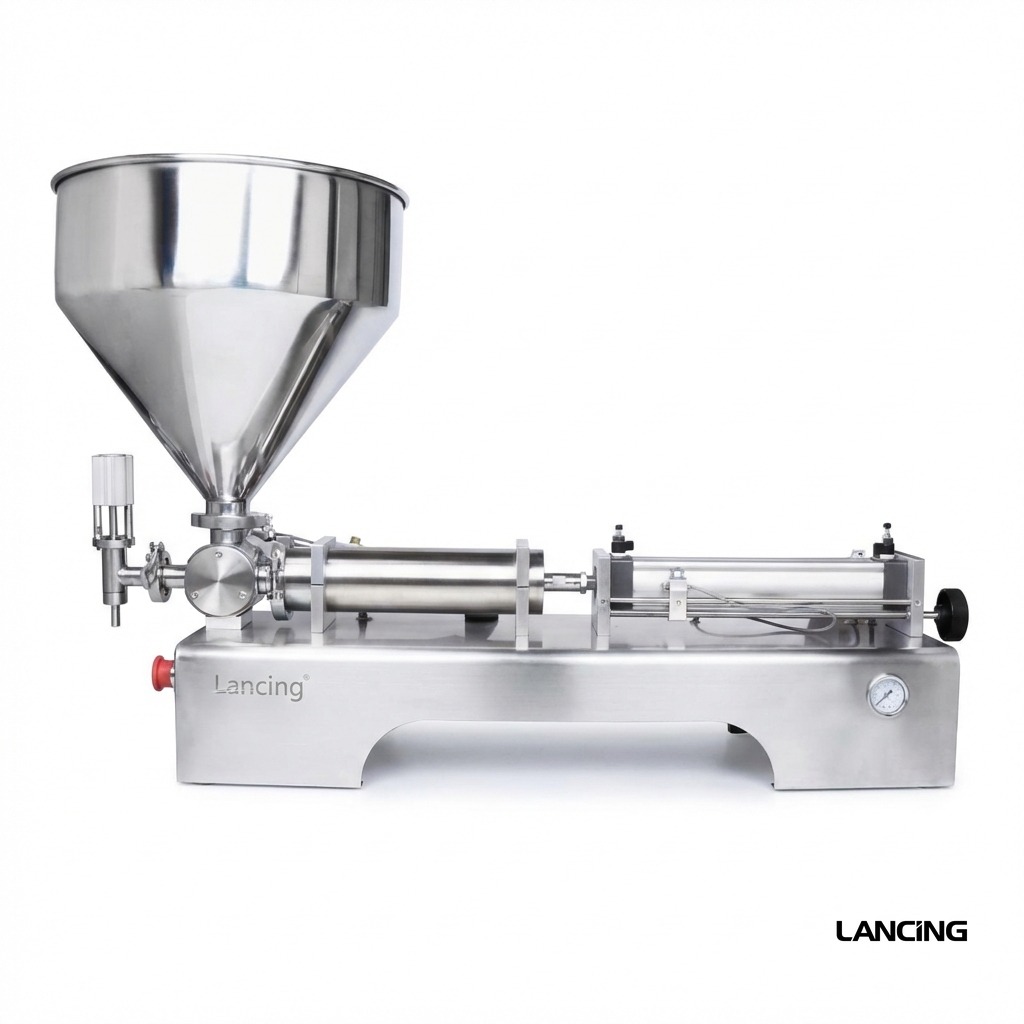
LU-GT1
Semi-automatic pneumatic piston filler for gel, shampoo, sauces, honey and viscous liquids. Review 10–5000 ml modules and operator output.
See machine details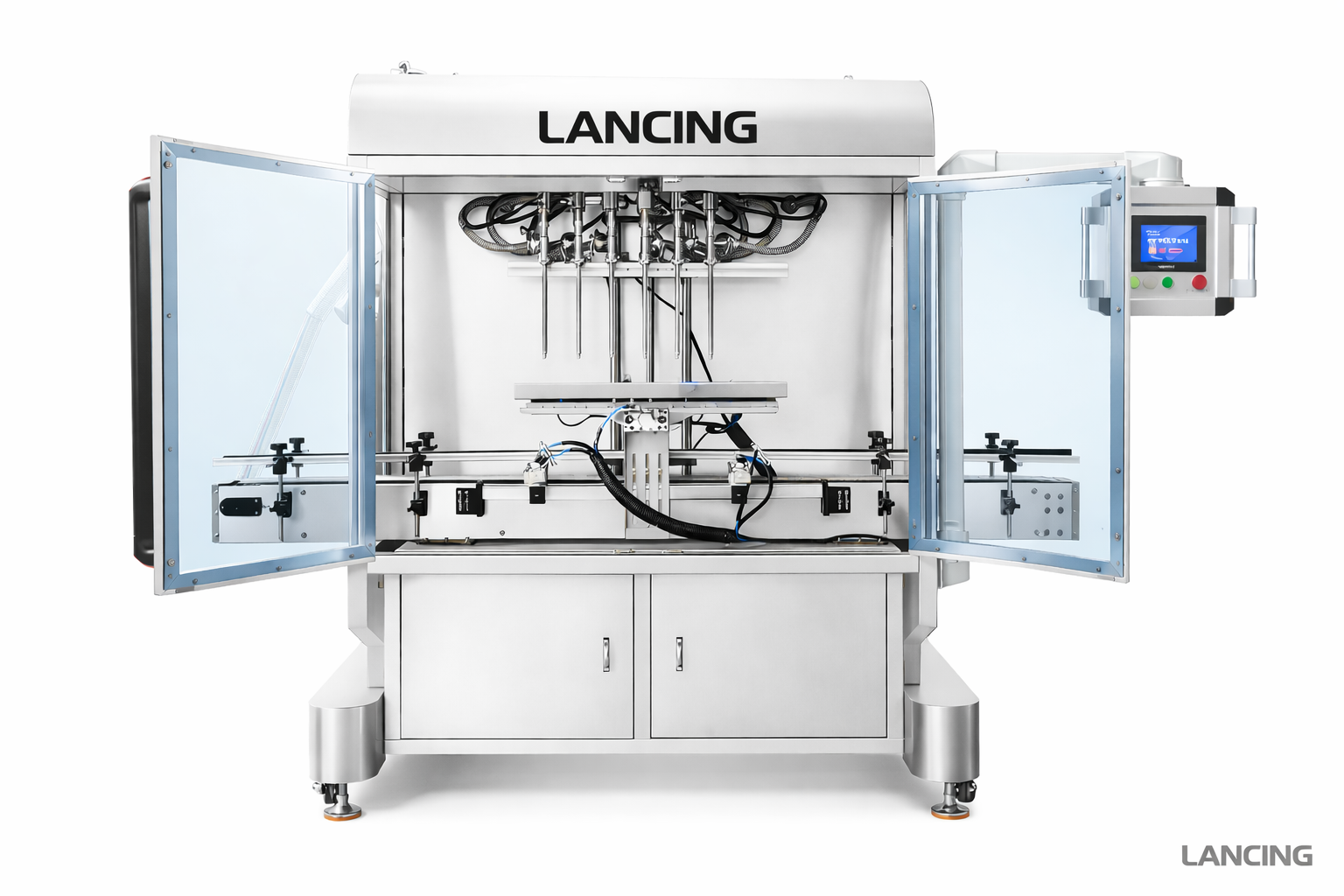
LU-CL6T
Six-head servo magnetic-pump filler for 500–5000 ml liquid products. Review 320 L tank, up to 42 bottles/min and automatic-line integration.
See machine detailsSearch by machine family
Specify liquid filling machines for water-like products, oils, detergents, chemicals and beverages. Compare pump, piston, peristaltic and level filling.
See optionsCompare piston, servo and rotor-pump paste filling machines for sauces, honey, creams, gels, adhesives and other viscous products in the UK.
See optionsCompare volumetric filling machines using piston, pump or cup dosing for liquids, pastes, sauces, creams and granules. UK advice from Lancing Ltd.
See optionsPiston filling machines for repeatable volumetric dosing of sauces, honey, creams, gels, oils and viscous liquids. Compare pneumatic and servo options.
See optionsCompare gear, rotor, magnetic, diaphragm and other pump filling machines for oils, detergents, sauces, gels and compatible chemical products.
See optionsPeristaltic filling machines for e-liquid, serums, laboratory liquids and small bottles. Compare tubing, flow range, nozzle count and line integration.
See optionsCompare powder filling machines using auger, weigh and dosing systems for food, supplement, cosmetic and chemical powders. UK specification advice.
See optionsAuger filling machines for powders in jars, bottles, tubs, bags and pouches. Compare screw tooling, feeders, dust control, accuracy and automation.
See optionsWeigh filling machines for oils, liquids, powders and granules. Compare net-weight, pump-and-scale and multihead weighing around accuracy and output.
See optionsCounter-pressure and isobaric filling machines for soda, sparkling drinks, beer and RTD products. Plan temperature, CO₂, cans, bottles and closing.
See optionsATEX filling machinery for solvents, fuels and flammable liquids. Plan zoning, equipment category, earthing, ventilation, materials and line controls.
See optionsPlan complete filling lines for bottles, jars, cans, pouches and larger containers. Integrate filling, capping, labelling, coding and conveyors.
See optionsNominal outputs, fill ranges and accuracy figures are application-dependent. Product behaviour, dose size, nozzle bore, pack handling, operator workflow, utilities and downstream constraints all influence the final result. The commercial specification and acceptance test take precedence over website data.
Ready to discuss your application?
Tell us what you fill, your fill range, container and target output. We will help you narrow the practical machine options before quotation.
Use model examples correctly
Model pages are useful for understanding possible layouts, dosing principles and levels of automation. They do not remove the need to confirm product suitability, pack handling, utilities, change parts and the conditions behind any reference data.
| Evidence to request | Why it changes the selection | What a useful record contains |
|---|---|---|
| Representative product trial | Flow, foam, particles, stringing, dust and temperature can change fill quality and cycle time. | Product condition, dose, settings, nozzle or tooling, observations and measured results. |
| Pack-handling trial | Container instability or a tight opening can limit nozzle entry and automatic indexing. | Smallest and largest packs, closure route, guide settings, reject causes and change parts. |
| Output basis | An isolated dosing cycle may not equal sustainable filled and closed packs. | Product, dose, pack, run duration, replenishment, operator tasks and connected equipment. |
| Cleaning and changeover method | Access and product recovery affect downtime, cross-contamination risk and staffing. | Parts removed, tools, flush or manual steps, drain points, recipes and restart checks. |
| Scope and battery limits | The filler may depend on tanks, pumps, conveyors, cap equipment, guarding or controls outside the core machine. | Clear inclusion, exclusion and interface schedule covering mechanical, electrical and control responsibilities. |
Shortlist in a controlled sequence
List every product, dose and pack, then identify the most difficult combination rather than designing around an easy average.
Use the filling technology overview and selection guide to keep viable alternatives open.
Separate the need for repeatable dosing from the need for automatic container handling. The semi-automatic versus automatic guide helps make that boundary explicit.
Test the products and packs most likely to expose foam, cut-off, dust, stability or changeover limitations.
Record product feed, filling, closing, labelling, guarding, controls, documentation, installation and acceptance before final quotation comparison.
Read model data in context
Machine data is most useful when every supplier describes it on the same basis. A range, output or accuracy statement can be valid for a particular product and setup while remaining unsuitable for a different pack or operating condition. Convert each model page into a comparison record that separates published reference information from application-specific proof.
| Reference item | What the headline may not show | Comparable project record |
|---|---|---|
| Fill range | One cylinder, pump, tube, auger or weighing arrangement may not cover the complete stated range with the same resolution, speed or changeover method. | Minimum, maximum and important intermediate doses, with the required change parts and settings identified. |
| Accuracy or repeatability | The result can depend on product condition, feed stability, dose, sample method, container handling and whether the result is measured by mass, volume or level. | Target, tolerance, measurement method, sample basis, product condition and treatment of start-up or rejected packs. |
| Output | An isolated machine cycle may exclude product replenishment, container loading, settling, closure application, checks, stops and changeovers. | Sustainable good packs over an agreed run, with operator tasks and connected equipment stated. |
| Number of filling heads | More heads do not automatically increase completed-pack output if product supply, indexing, closing or pack handling becomes the governing constraint. | Line balance showing the required head count, fill time, index time and downstream capacity. |
| Product-contact materials | A general material description may not define every seal, hose, tube, valve, pump, gasket or surface that touches the product. | A contact-parts schedule reviewed against product information and the intended cleaning method. |
| Container range | Height and diameter limits do not prove stability, nozzle access, guide adjustment or closure-ready presentation. | Approved pack drawings or samples, guide and support concept, change parts and acceptance observations. |
| Utilities | Nominal electrical or air data may exclude ancillary pumps, heaters, extraction, compressors, conveyors or product-feed equipment. | A complete utility schedule with connection points, responsibility and simultaneous demand considered. |
| Automation and controls | Terms such as automatic, recipe control or line-ready can cover very different container handling, signal, data and operator functions. | A functional description of normal running, changeover, faults, reset, interfaces, permissions and records. |
Give every claim a status
Reference data helps create the first shortlist. A qualification states the conditions or exclusions behind that data. Verification comes from supplied documentation, drawings or a representative test. Anything not yet closed should remain an open test point rather than being treated as confirmed.
Keep the shortlist controlled
Use the thickest, foamiest, dustiest or most particle-laden product; the smallest opening; the largest and smallest dose; and the least stable pack to test the edges of the required range. Review the selection process and the evidence checklist before asking for a final model recommendation.
Review the model comparisonSelect by process risk
Different products and packs can sit within the same broad machine family. Use the questions below to decide which pages and tests should lead the application review.
Compare positive displacement, pump, peristaltic, level, auger and weigh routes before choosing a model family.
Decide whether volume or direct mass is the more relevant controlled variable.
Trace upstream air, nozzle profile, headspace and settling through to closure.
Include product temperature, contact materials, pack response, closure and cooling.
Define an approved operating envelope, changeover method and trial route.
Test pitch, support, nozzle alignment, transfer, accumulation and recovery.
When a machine appears suitable, continue to trial planning, quantity acceptance and project acceptance before the application is treated as proved.