Peristaltic filling machines
Peristaltic filling machines for e-liquid, serums, laboratory liquids and small bottles. Compare tubing, flow range, nozzle count and line integration.
See options
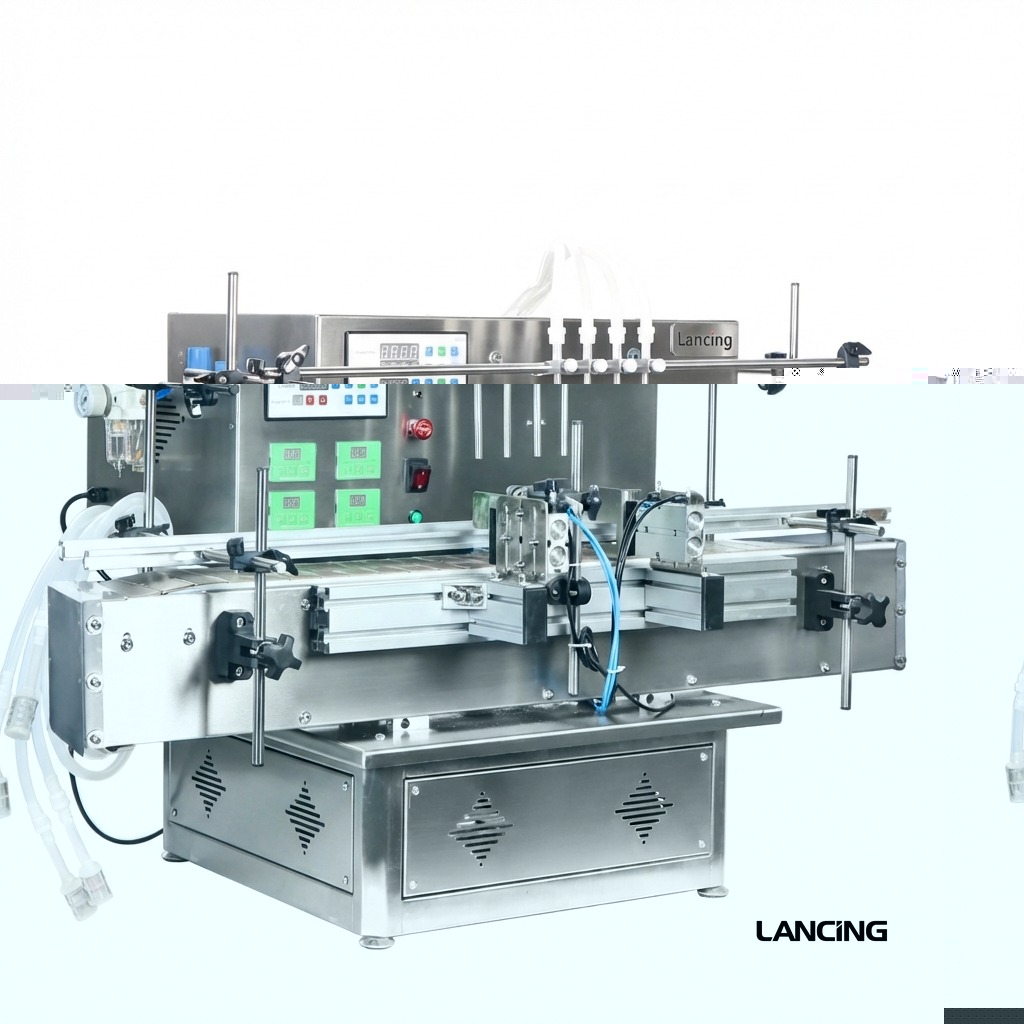
Model LU-DTPP4C
The LU-DTPP4C uses four peristaltic pump channels so product remains inside replaceable tubing. That makes it relevant where rapid product changeover, a simple contact path or small-bottle liquid dosing is more important than handling high-viscosity products.
Published figures are application-dependent reference data and must be confirmed during specification or product trials.
Typical duties
Machine format
Reference specification
| Model | LU-DTPP4C |
|---|---|
| Filling heads | 4 |
| Maximum reference flow | Up to 2500 ml/min per nozzle based on water |
| Indicative speed | 30–50 bottles/min, product and pack dependent |
| Power supply | 110/220 V, 50–60 Hz, 60 W per pump |
| Air pressure | 0.3–0.4 MPa |
Selection note
Tube material, bore, pump speed and chemical compatibility determine actual performance. Peristaltic filling is normally compared with piston, diaphragm or gear-pump routes when the product viscosity or target dose is close to a technology boundary.
Prepare the project dataRelated machine families
Peristaltic filling machines for e-liquid, serums, laboratory liquids and small bottles. Compare tubing, flow range, nozzle count and line integration.
See optionsSpecify liquid filling machines for water-like products, oils, detergents, chemicals and beverages. Compare pump, piston, peristaltic and level filling.
See optionsBottle filling machines for liquids, sauces, creams, powders and granules. Plan container handling, fill method, capping, labelling and output.
See optionsQuick answers
The machine is normally shortlisted for e-liquid and flavour concentrates, laboratory and small-bottle liquids, cosmetic serums and light lotions. Final suitability depends on product behaviour, materials compatibility, fill range and the intended container.
No. Published figures are reference conditions. Real throughput depends on product viscosity or flow, dose size, container handling, operator workflow, changeovers and downstream equipment.
Integration can be assessed with conveyors, container handling, capping, labelling, coding, sealing and accumulation. The control and layout scope should be agreed before order.
Send the product data, fill volumes, container samples or drawings, target output, utilities, cleaning method, available footprint and details of any upstream or downstream machinery.
Ready to discuss your application?
Tell us what you fill, your fill range, container and target output. We will help you narrow the practical machine options before quotation.
Application verification
Peristaltic filling keeps product within the tubing path, but application performance depends on tubing material and size, compression, product condition, dose range, nozzle arrangement and the controlled tube-change method.
| Verification area | Evidence to collect | Decision supported |
|---|---|---|
| Tubing compatibility | Supplier information, product and cleaner exposure, temperature and observed condition. | Approved tube material and replacement control. |
| Dose calibration | Sequential results by head at the required dose range and after tube installation. | Calibration method and head-specific settings. |
| Tube life indicators | Change in result, visible wear, compression history and production duty. | Inspection and replacement procedure without inventing a universal life. |
| Product change | Removal, disposal, new-tube fitting, prime, line clearance and first-off approval. | Controlled clean-change workflow and operator training. |
| Nozzle/pack fit | Opening clearance, drips, product contact and container position. | Nozzle and pack-handling arrangement. |
Use the cleaning and changeover guide to define the complete path beyond the tube, and the measurement guide to compare heads and recalibration states.