
Key takeaways
What this guide helps you decide
- Issue the same requirement to every supplier
- Separate reference speeds from trialled output
- Make exclusions and interfaces visible
- Evaluate lifetime labour, waste and changeover—not only capex
Create a common user requirement
Build a concise user requirement specification listing products, packs, dose range, tolerances, output, utilities, cleaning, materials and line interfaces. Ask every supplier to respond against the same document.
Include future SKUs only where they are credible and define whether they are mandatory or optional. An unrealistically wide range can force an expensive compromise machine.
Compare the filling principle
Piston filling is a positive-displacement route for liquids and pastes. Pump filling covers several technologies for compatible liquid and viscous products. Peristaltic systems keep product in tubing. Augers meter powders, while cup and weigh systems serve different dry products.
Ask why the proposed principle fits the product and what alternatives were considered. A good proposal should explain the application logic, not merely repeat a model description.
Interrogate output and accuracy
Request the basis of every speed and accuracy claim: product, dose, container, number of heads and test method. Confirm whether figures are peak, nominal or guaranteed at acceptance.
Accuracy should be expressed with a test protocol and sample size. Include warm-up, refills, changeovers and the measurement method where those factors affect normal production.
Expose the complete scope
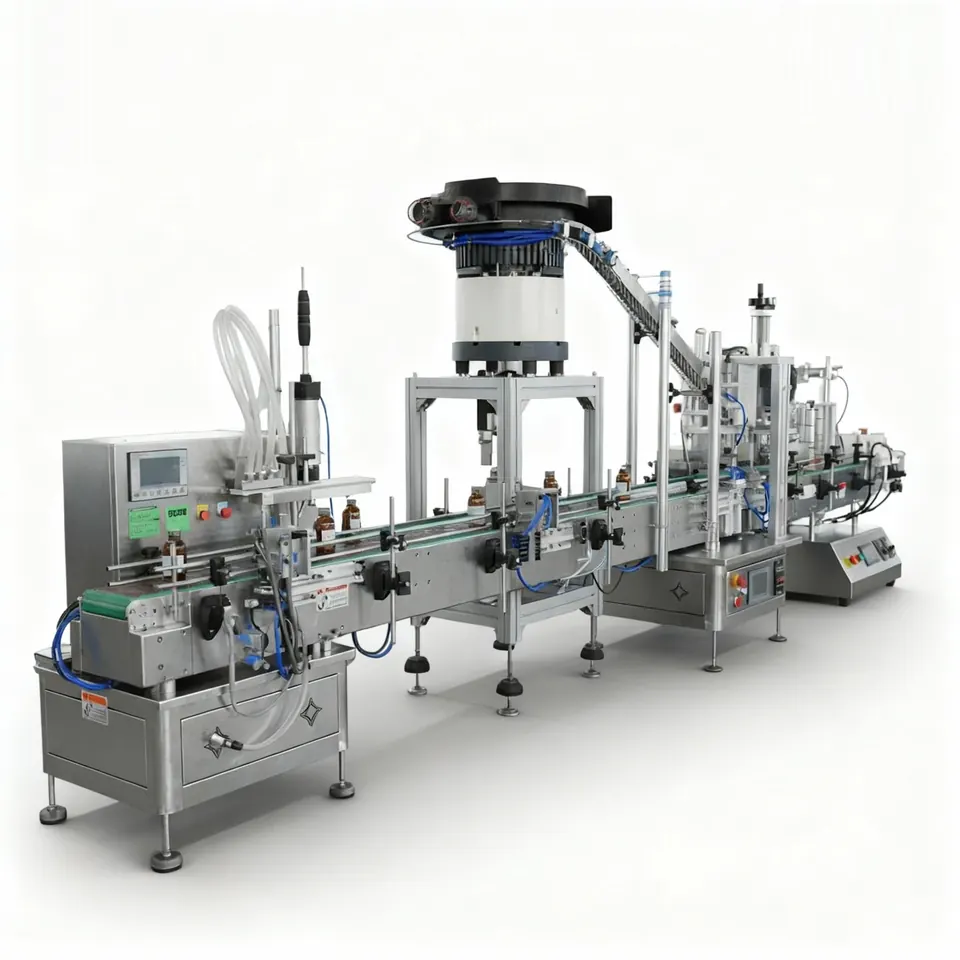
List product tanks, pumps, feeders, conveyors, guarding, change parts, capping, labelling, coding, inspection, installation, training, freight and utilities. Mark each item as included, optional or by others.
Define control interfaces and responsibilities where new machinery connects to retained equipment. Missing conveyors, cap feeds or services often appear late unless the battery limits are clear.
Plan acceptance and aftercare
Agree what will be tested at FAT and SAT, who supplies product and packaging, how rejects are handled and what records will be signed. Include training, manuals, spare parts and support response routes.
Compare warranty scope, service access and the availability of change parts and consumables. The maintainability of the selected machine is part of its production value.
Project checklist
- URS and product/pack matrix
- Supplier response and deviations list
- Trial report with product and container
- Layout, utilities and battery limits
- Itemised commercial scope
- FAT/SAT protocol and acceptance values
- Training, manuals, spares and warranty
- Lifecycle cost and planned upgrade route