
Key takeaways
What this guide helps you decide
- Semi-automatic is not inherently low quality
- Automatic lines need stable infeed and downstream balance
- Operator tasks determine real semi-auto output
- Future growth should be planned without over-automating today
Where semi-automatic machines fit
Semi-automatic fillers meter a controlled dose while an operator loads, triggers or removes the pack. They suit lower volumes, frequent changes, irregular containers and businesses that need flexibility more than continuous output.
The workstation should be time-studied. Product refill, container presentation, cap placement, wiping, label application and packing can become the true bottleneck.
Where automatic machines fit
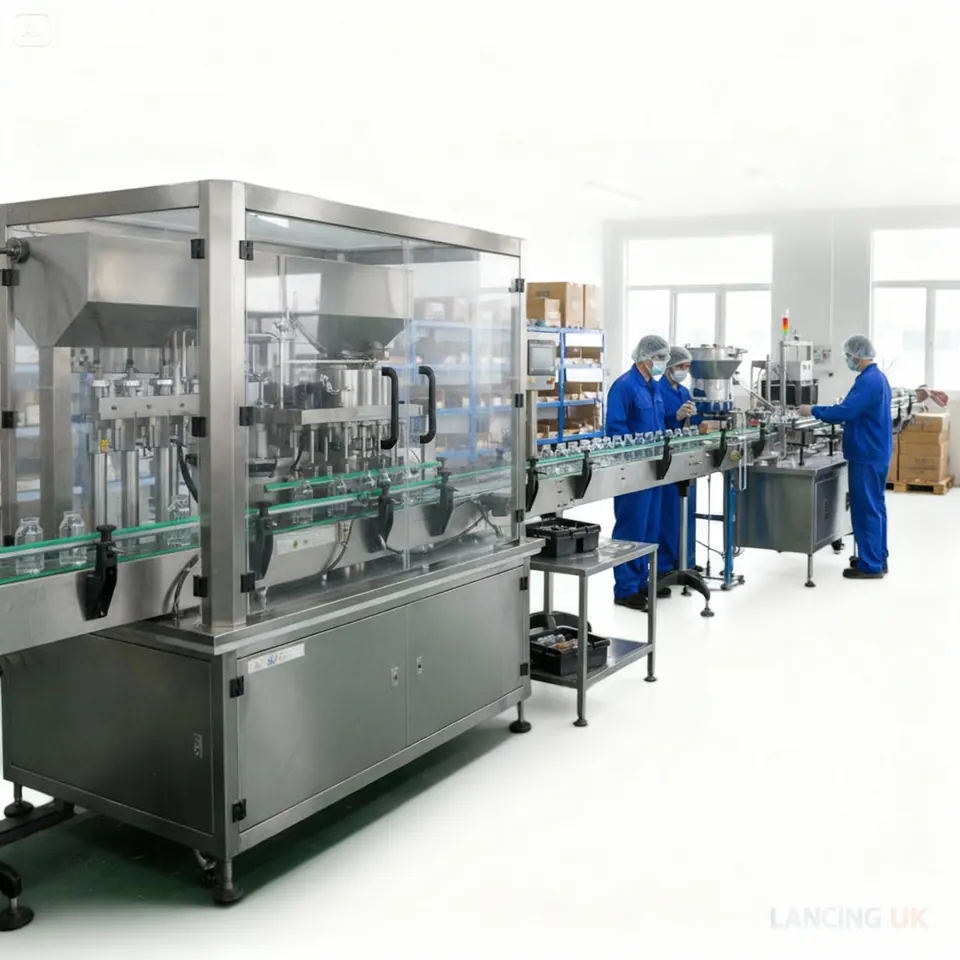
Automatic fillers use conveyors, sensors and gating to handle containers through one or more fill heads. They suit repeat production where product feed, bottles, closures and downstream equipment can run at a balanced rate.
Automation usually brings guarding, recipes, fault recovery and more change parts. It also requires disciplined infeed, maintenance and operator training.
Compare labour and output honestly
Calculate packs per labour-hour rather than machine cycles alone. Include operators needed for infeed, caps, labels, replenishment, inspection and case packing.
For automatic systems, use sustained production including minor stops and changeovers. For semi-automatic systems, include the ergonomics and pace a trained operator can maintain safely.
Use a staged automation route
A semi-automatic filler can be paired with a powered capper, labeller or short conveyor. Later, sensors, automatic infeed or a larger filler can be added if the first equipment and factory layout leave an upgrade path.
Compact lines can bridge the gap by linking smaller automatic machines without the footprint or capex of a high-output pro line.
Decision triggers
Automatic filling becomes more attractive when demand is stable, labour is a persistent constraint, pack formats are controlled and the downstream line is ready. Semi-automatic remains attractive when batches are small, SKUs change often or the product requires close operator attention.
A time-and-motion study using the real pack often provides a clearer decision than a generic bottles-per-minute target.
Project checklist
- Current packs per hour and labour input
- Batch size and number of changeovers
- Bottle and closure consistency
- Product refill and cleaning time
- Downstream capping and labelling method
- Available footprint and utilities
- Growth forecast and upgrade route
- Budget and required payback period