Single-head piston filler
A flexible starting point for liquids and pastes with controlled measured doses.
Explore this route
Practical first automation step
The best first filling machine removes the most expensive or inconsistent manual task without adding more complexity than the business can support. Semi-automatic equipment is often the right starting point, but the choice still depends on product, dose, container and cleaning. An upgrade path matters when demand is growing.
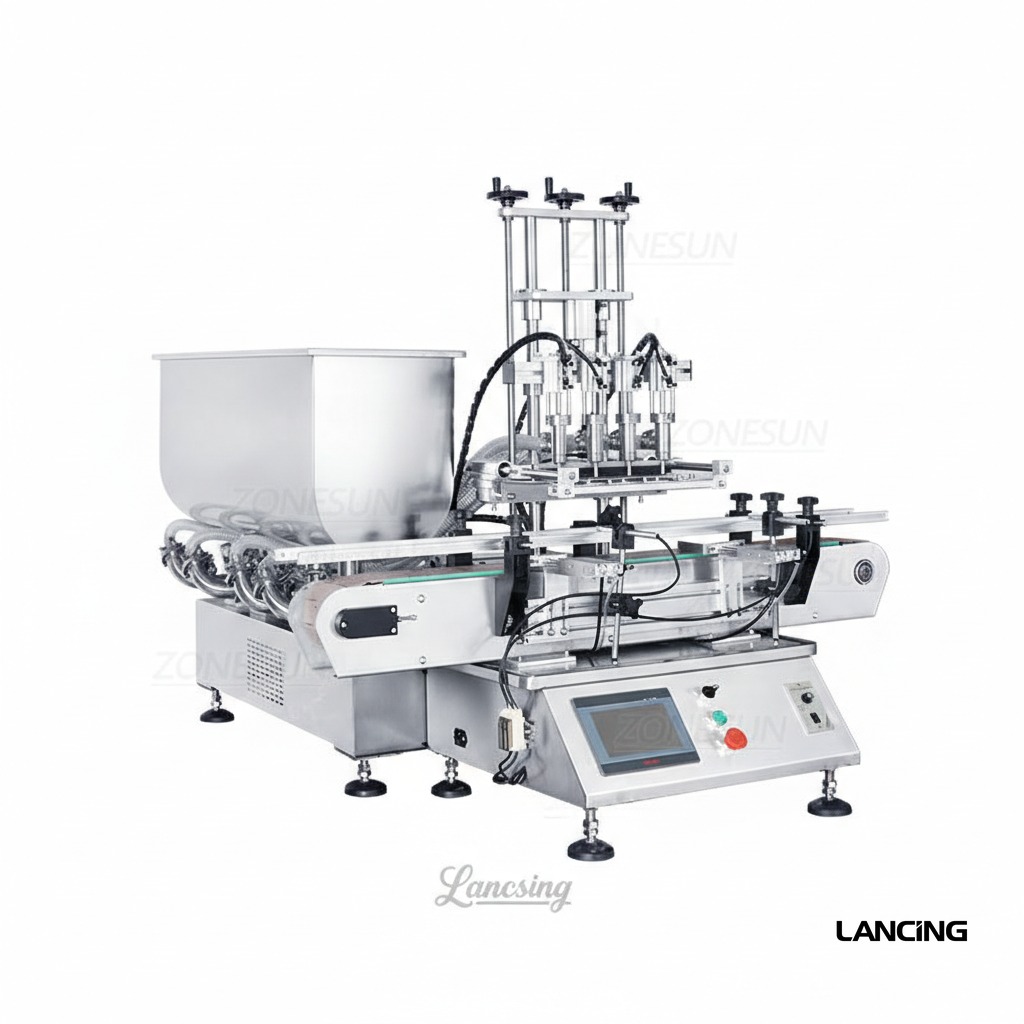
Typical products and packs
Compare the principles
Several dosing methods may fill the same nominal product. The practical choice is driven by accuracy, cut-off, cleaning, format range and sustained output.
A flexible starting point for liquids and pastes with controlled measured doses.
Explore this routeUseful for small liquid doses and quick tubing changeovers.
Explore this routeSemi-automatic auger or weigh systems improve dry-product repeatability.
Explore this routeShort conveyors, cappers and labellers can be added as output grows.
Explore this routeBefore quotation
Beyond the filler
Machines you can compare
Specifications are reference points. Confirm the operating window using the intended product, container and line arrangement.
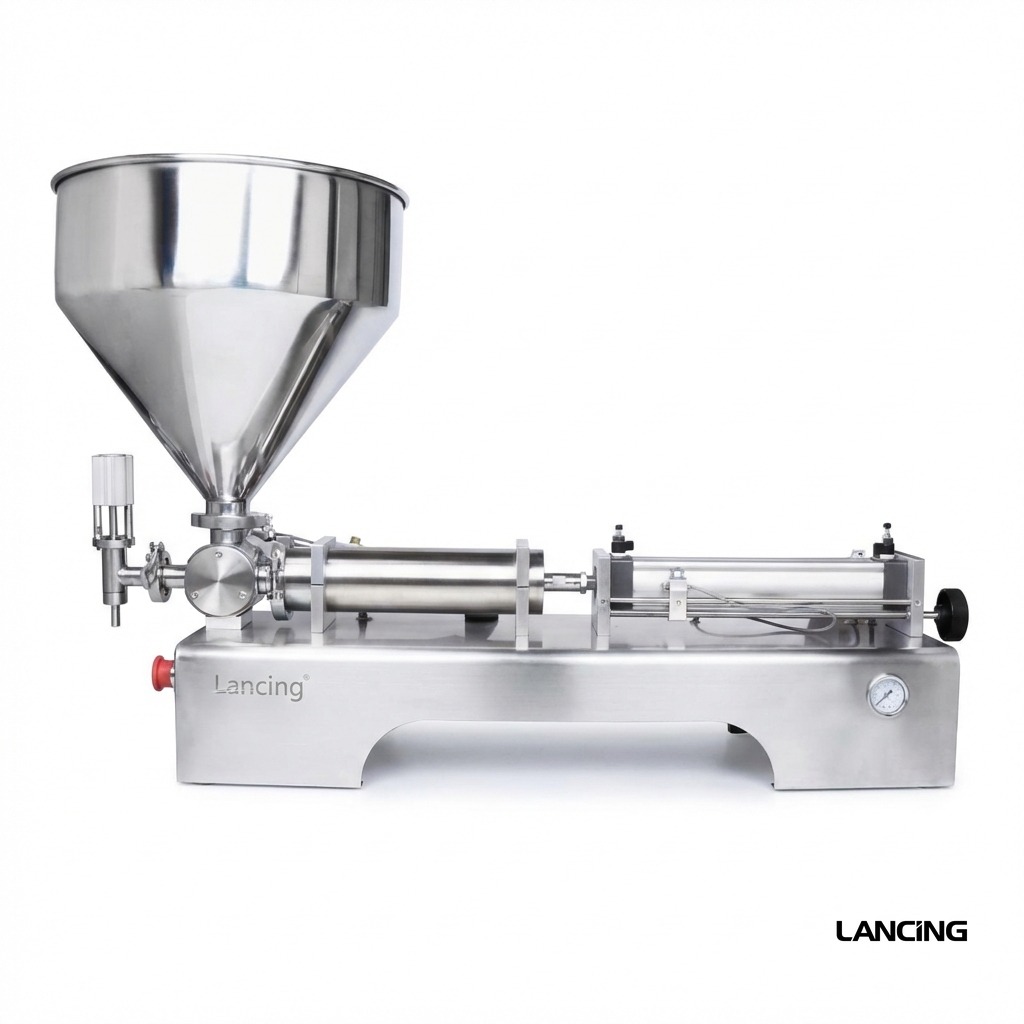
LU-GT1
Semi-automatic pneumatic piston filler for gel, shampoo, sauces, honey and viscous liquids. Review 10–5000 ml modules and operator output.
See machine details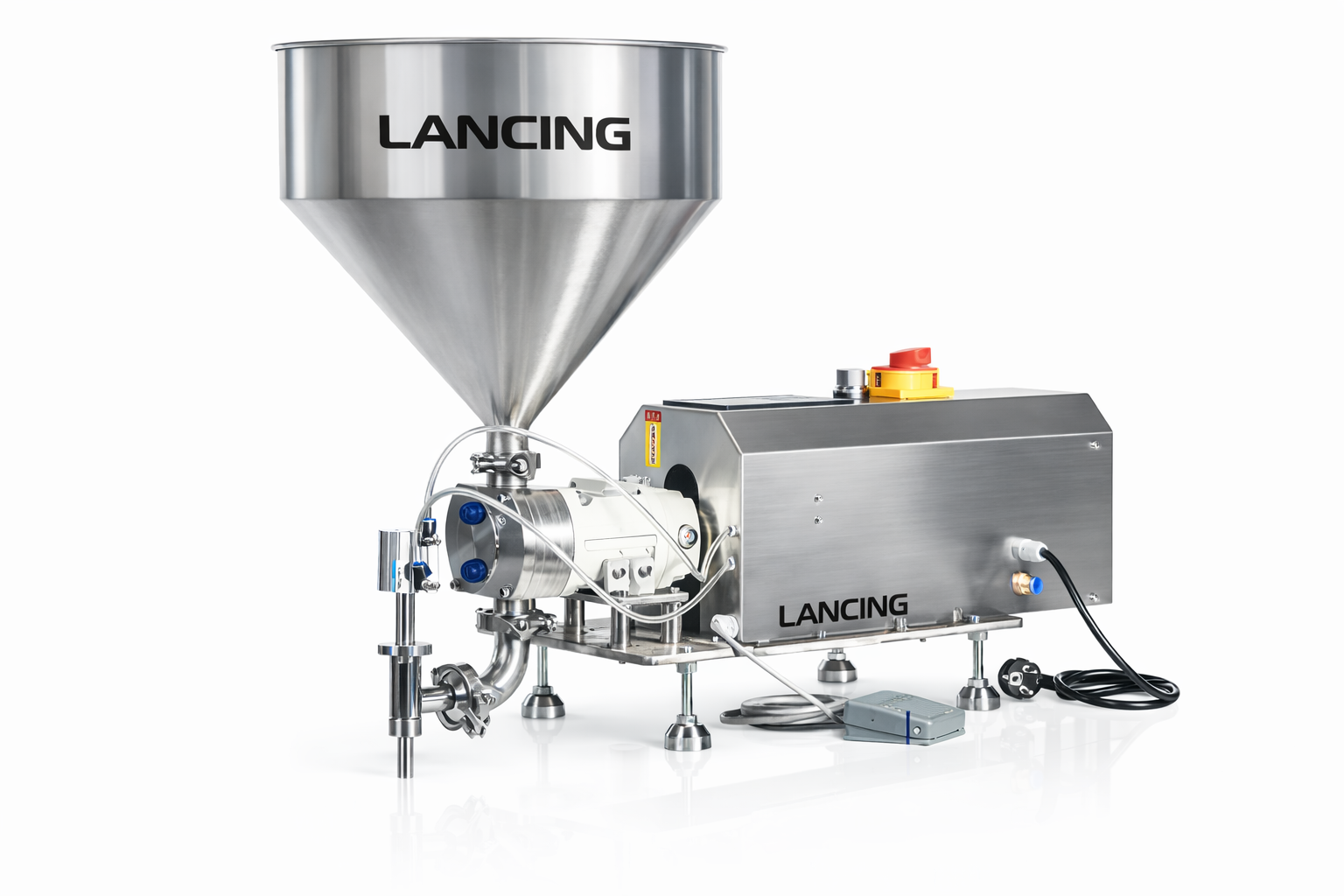
LU-RPGT900 / LU-RPG900
Semi-automatic rotor pump filler for jam, paste, sauces and products with suitable particles. Review 5–5000 ml range, hopper and speed guidance.
See machine details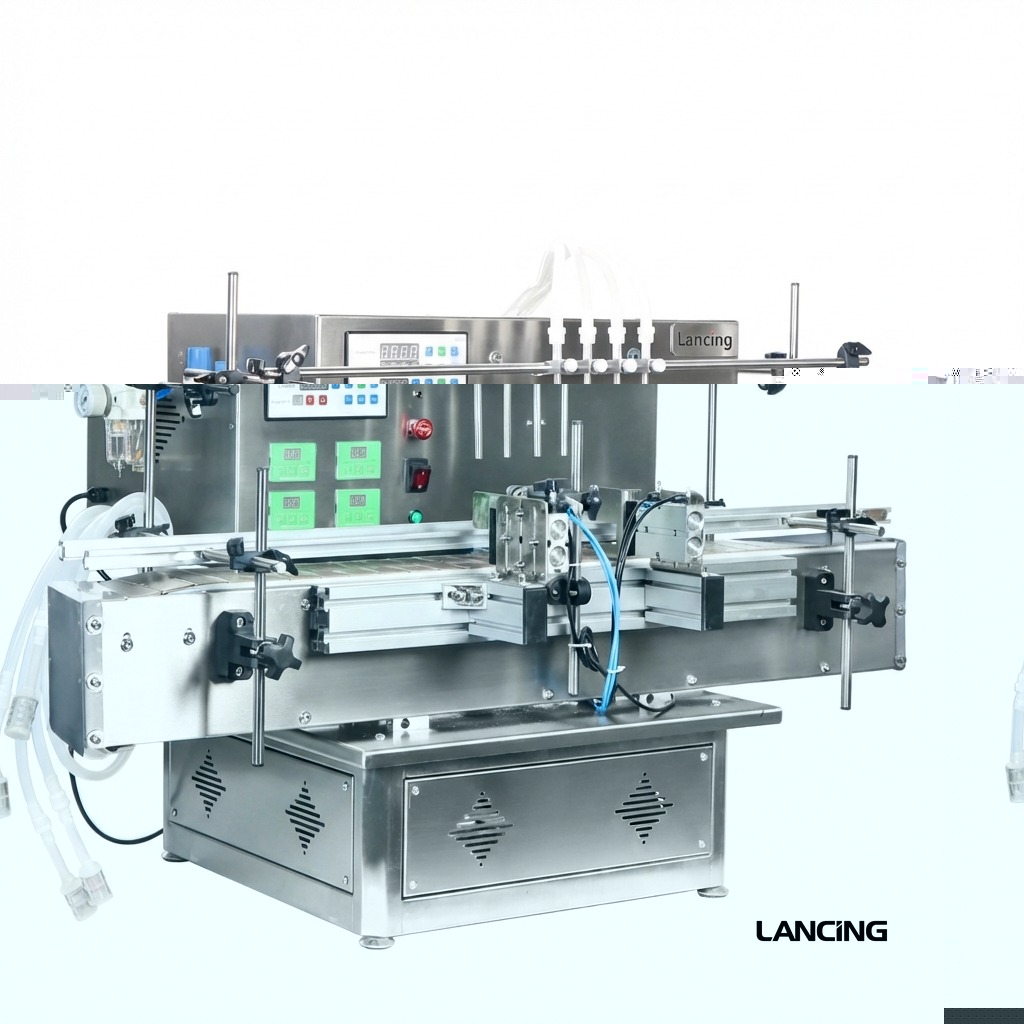
LU-DTPP4C
Four-channel peristaltic filling machine for small liquid doses, e-liquid, lotions and clean-change applications. Review flow, tubing and output.
See machine detailsCompare your options
Semi-automatic filling machines for liquids, pastes, powders and larger containers. Compare operator workflow, output, changeover and upgrade paths.
See optionsCompare semi-automatic and automatic filling machines by output, labour, flexibility, footprint, changeover, cost and future production growth.
See optionsUnderstand filling machine cost drivers in the UK, including dosing technology, automation, heads, product feed, change parts, guarding and integration.
See optionsUse this filling machine enquiry checklist to supply product, fill, container, output, utility, cleaning and line-integration data for a useful quote.
See optionsQuick answers
Typical applications include start-ups moving away from hand filling, seasonal and short-run production, frequent product and pack changes. The final decision depends on the real product, dose, container and target output.
Start with the product behaviour, fill range, pack format and sustainable output. Then compare the dosing principle, contact materials, changeover and cleaning against a controlled first automation step with a realistic growth path.
Yes. Filling can be planned with container infeed, conveyors, capping or closing, labelling, coding, sealing, inspection, accumulation and end-of-line handling.
Send product details and safety data where relevant, fill volumes, container and closure samples or drawings, target output, utilities, cleaning needs, footprint and any existing equipment to be integrated.
Ready to discuss your application?
Tell us what you fill, your fill range, container and target output. We will help you narrow the practical machine options before quotation.
A controlled growth path
A small manufacturer does not need to imitate a high-volume factory. The better route is to stabilise the most difficult operation, keep changeovers practical and leave a clear boundary for later additions.
Replace hand pouring or scooping with a repeatable piston, pump, peristaltic, auger, weigh or other suitable dosing method while the operator presents the pack.
Add a practical hopper, tank, transfer pump or feed arrangement so replenishment does not disrupt the fill cycle or introduce air and inconsistency.
Address cap, plug, pump, trigger, foil or seal application when it becomes the next quality or labour constraint.
Use simple transfer or accumulation only where it improves ergonomics, handling or connection between stable operations.
Protect the label area from product residue and confirm pack stability before adding automatic application or coding.
Move to automatic container handling when products and packs are sufficiently stable and the complete line requirement justifies it.
Avoid premature complexity
Short runs can be dominated by setup, product recovery, cleaning and line clearance. Compare usable production time and operator workload rather than selecting equipment only from maximum speed.
The semi-automatic range, automation comparison and cost guide support a staged decision.
First machinery brief
Include products, doses, packs, daily or weekly batches, current staffing, available space and the step causing the most problems. The recommendation can then focus on practical improvement rather than unnecessary automation.
Discuss a first filling machineFurther buyer questions
These answers clarify the practical boundaries that should be checked before a machine is selected or quoted.
Automate the operation that causes the greatest repeatability, hygiene, ergonomic or capacity problem, while keeping the surrounding work cell practical. Filling is often a useful first step, but capping, labelling or product preparation may be the real bottleneck.
Choose around the likely product and pack family, available utilities, cleaning routine and realistic growth path. Confirm which parts are adjustable, which require change parts and which future automation steps would need a different machine.
Scale with evidence
Automation level should follow the operating model, not the assumption that a larger machine is automatically better.
For a small business, the most useful capacity measure is often accepted packs per working session with the available operator, product preparation and cleaning time. A flexible semi-automatic route may outperform a larger automatic system when formats change frequently or feeds remain manual.
Plan the next step without over-automating the present one. Record which task currently limits production and which future demand or quality requirement would justify a conveyor, additional head or automatic handling.
Include the complete operator cycle, cleaning and replenishment.
Read the guideDefine recovery, cleaning, tooling and first-off approval.
Read the guideUse real product and packs to close the main technical risk.
Read the guide