
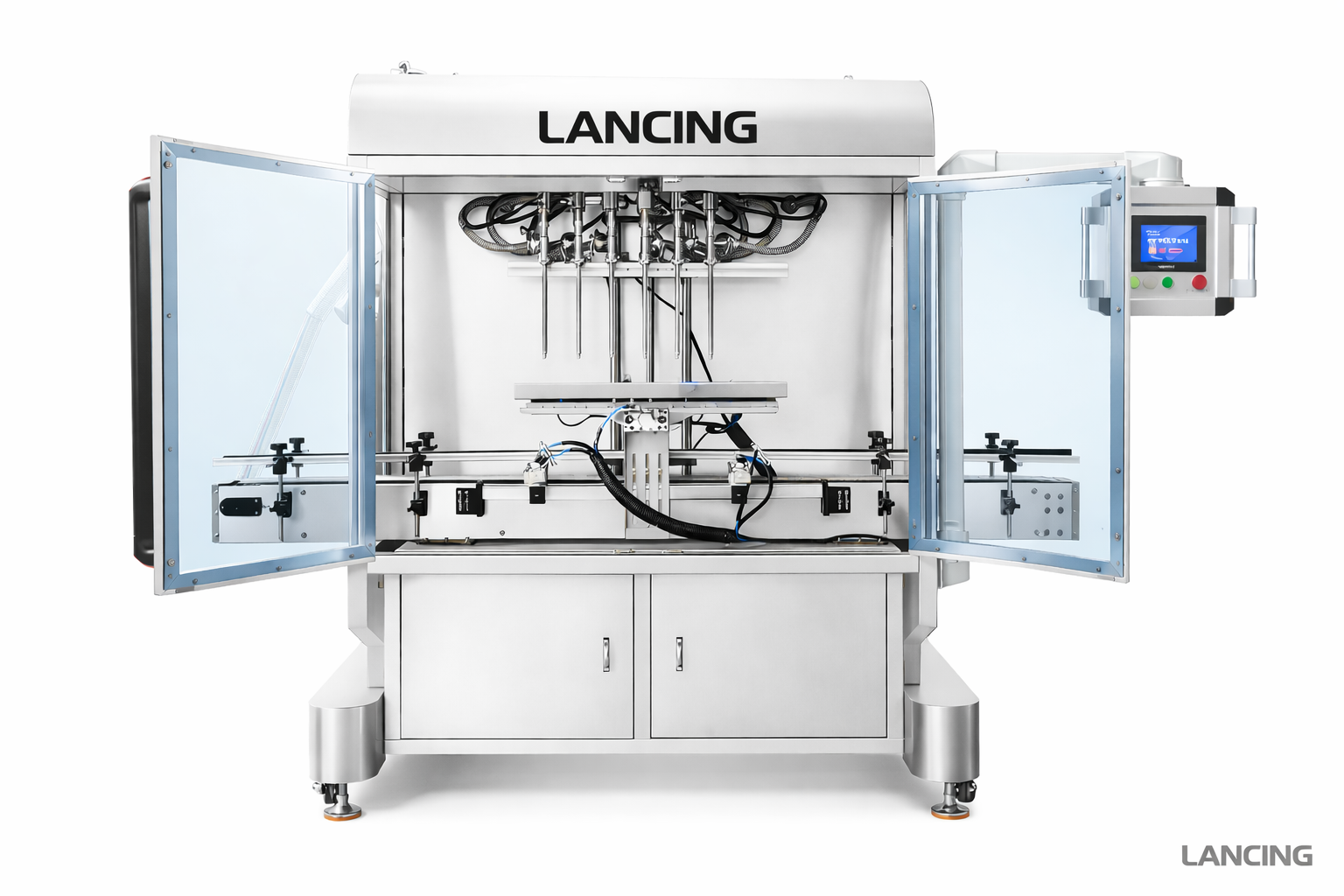
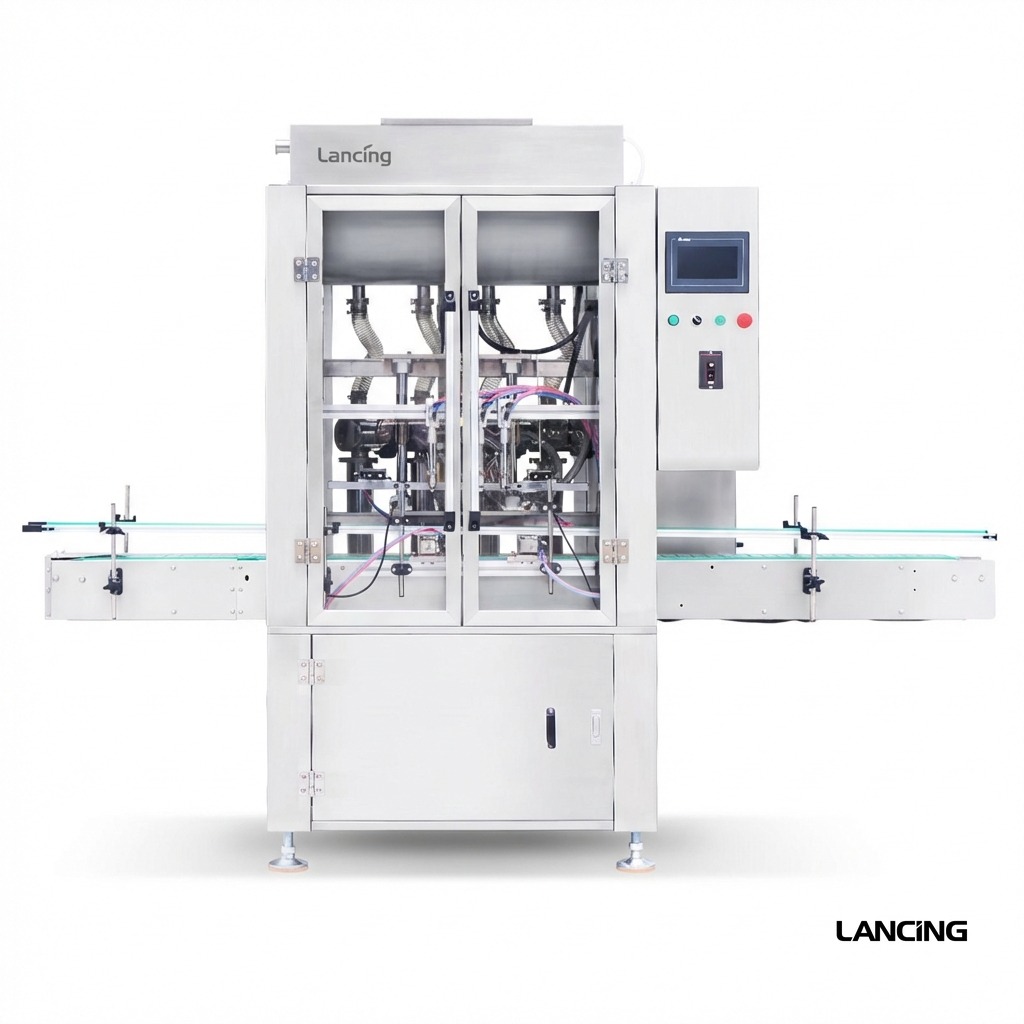
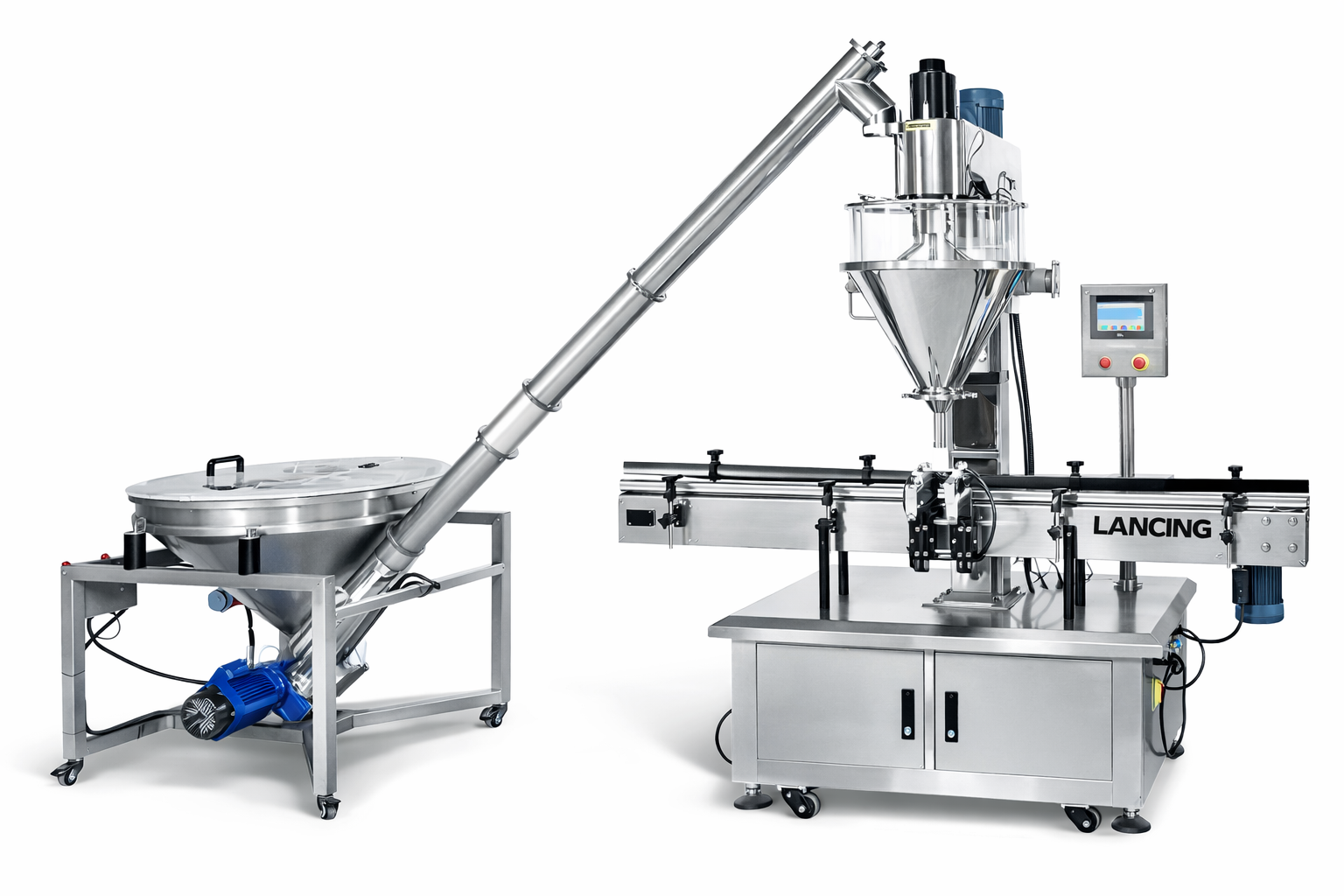
Automatic liquid filling
Multi-head pump, piston, peristaltic or level systems selected around product flow.
Explore this routeConveyor-based automation
Automatic filling machines control container flow, detect each pack and coordinate several nozzles or dosing heads with a conveyor. The filler is only one part of the capacity calculation: infeed, product supply, cap presentation, labelling, accumulation and changeovers must all support the same sustainable line rate.

Typical products and packs
Compare the principles
Several dosing methods may fill the same nominal product. The practical choice is driven by accuracy, cut-off, cleaning, format range and sustained output.
Multi-head pump, piston, peristaltic or level systems selected around product flow.
Explore this routeServo or pneumatic piston systems with controlled product feed and nozzle cut-off.
Explore this routeServo auger or weigh systems with feeders and dust controls.
Explore this routeConnect infeed, filling, closing, labelling, coding, inspection and end-of-line equipment.
Explore this routeBefore quotation
Beyond the filler
Machines you can compare
Specifications are reference points. Confirm the operating window using the intended product, container and line arrangement.

LU-CL6T
Six-head servo magnetic-pump filler for 500–5000 ml liquid products. Review 320 L tank, up to 42 bottles/min and automatic-line integration.
See machine details
LU-SV4P
Four-head servo piston filling machine for honey, syrup, lotion and cream. Review fill range, bottle limits, accuracy and automatic-line integration.
See machine details
LU-FM5A
Servo auger powder filler with automatic screw feeder for jars and containers. Review 10–500 g reference range, hopper, utilities and output.
See machine detailsCompare your options
Plan complete filling lines for bottles, jars, cans, pouches and larger containers. Integrate filling, capping, labelling, coding and conveyors.
See optionsSpecify liquid filling machines for water-like products, oils, detergents, chemicals and beverages. Compare pump, piston, peristaltic and level filling.
See optionsCompare piston, servo and rotor-pump paste filling machines for sauces, honey, creams, gels, adhesives and other viscous products in the UK.
See optionsCompare powder filling machines using auger, weigh and dosing systems for food, supplement, cosmetic and chemical powders. UK specification advice.
See optionsCompare semi-automatic and automatic filling machines by output, labour, flexibility, footprint, changeover, cost and future production growth.
See optionsQuick answers
Typical applications include medium- and high-output manufacturing, stable repeat products and pack formats, multi-head liquid, paste or powder filling. The final decision depends on the real product, dose, container and target output.
Start with the product behaviour, fill range, pack format and sustainable output. Then compare the dosing principle, contact materials, changeover and cleaning against balanced, sustainable output across the whole production line.
Yes. Filling can be planned with container infeed, conveyors, capping or closing, labelling, coding, sealing, inspection, accumulation and end-of-line handling.
Send product details and safety data where relevant, fill volumes, container and closure samples or drawings, target output, utilities, cleaning needs, footprint and any existing equipment to be integrated.
Ready to discuss your application?
Tell us what you fill, your fill range, container and target output. We will help you narrow the practical machine options before quotation.
Automatic line capacity
Automatic filling equipment succeeds when container supply, dosing, closing, labelling and operator replenishment remain balanced. The number of heads should follow from the complete cycle and the slowest dependable station rather than being selected as a headline feature.
Confirm infeed, spacing, gating, neck or base support, nozzle clearance and recovery from a missing or unstable pack. The smallest and least stable container usually sets the handling boundary.
Allow for pump refill, piston recharge, powder feed, pressure stabilization, foam settling or nozzle travel. The dosing device must be ready for the next index without compromising quality.
Cap feeding, torque, sealing, labelling, coding and inspection may govern the accepted line rate. Define buffer or accumulation only after normal stop patterns are understood.
Record mechanical adjustments, change parts, recipes, cleaning, line clearance and the first-good-pack checks. Frequent changes can matter more than maximum speed.
Agree permissives, no-container-no-fill logic, reject handling, alarm reset, upstream and downstream handshakes, recipe access and data requirements.
Use representative products and packs over an agreed sustained period, with quality checks and treatment of planned replenishment, minor stops and rejects written in advance.
Line requirement
List required good packs per hour, cycle assumptions, normal replenishment, changeover pattern and known constraints for each station. The line integration guide explains battery limits and controls, while the complete filling lines page covers the wider process.
Specialist automatic route
Once continuous container handling is justified, automaticfillingmachines.co.uk is the preferred Lancing specialist resource for multi-head and integrated automatic systems.
Review an automatic-line requirementFurther buyer questions
These answers clarify the practical boundaries that should be checked before a machine is selected or quoted.
The answer depends on the sustainable dose cycle, container index time, product recovery, nozzle movement and the speed of capping, labelling and other connected equipment. More heads do not automatically improve the whole line if another station is the bottleneck.
Headline speed may describe an isolated cycle under favourable conditions. Sustainable output includes container supply, filling, closing, rejects, replenishment, changeovers and normal operator intervention. Both the test basis and the accepted line rate should be written into the project scope.