
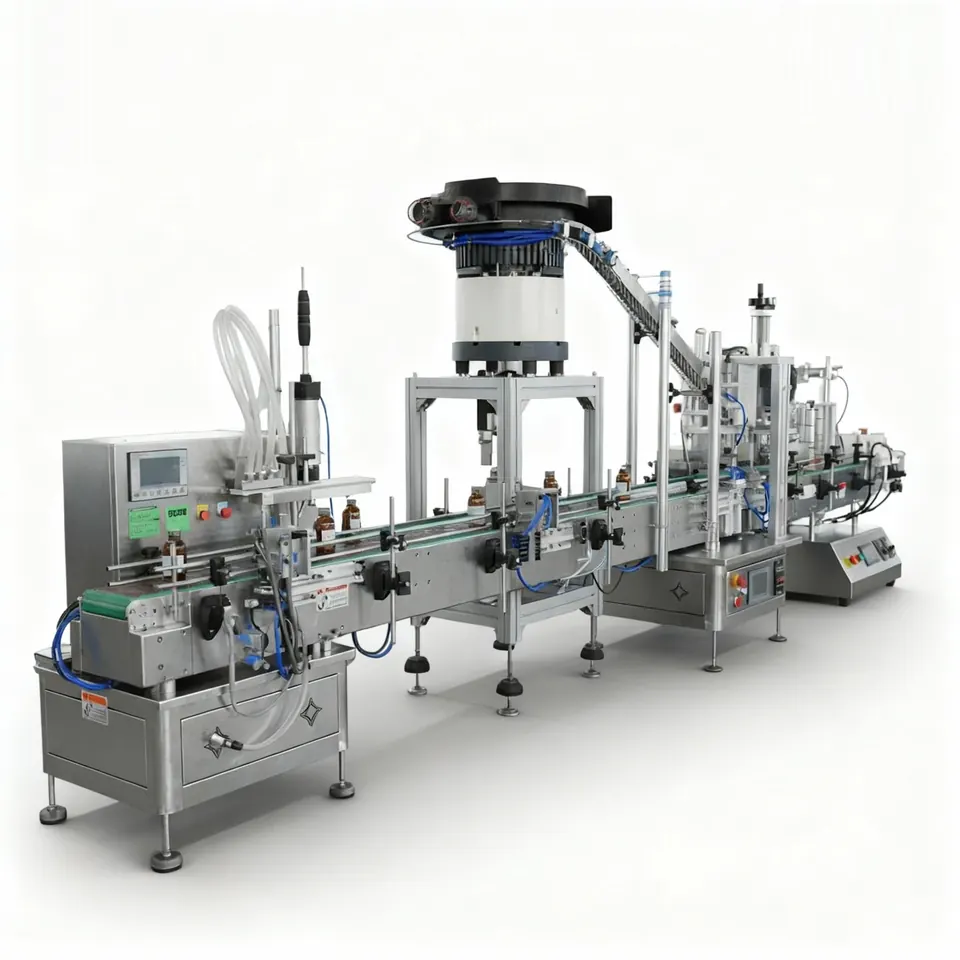
Direct answer
When is a filling machine retrofit worth assessing?
A filling machine retrofit is worth assessing when the mechanical base and product path remain suitable, but obsolete controls, unreliable sensors, limited recipes, poor container handling, recurring faults or a changed line interface prevent the machine meeting a defined production need. The decision should compare risk, downtime, remaining life and acceptance evidence with repair or replacement.
- Define the problem in measurable production terms.
- Record the installed mechanical, electrical, pneumatic and software baseline.
- Identify drawings, backups, spare availability and undocumented changes.
- Confirm whether the product, pack and output envelope has changed.
- Set normal, fault, restart and changeover acceptance criteria.
Compare repair, upgrade and replacement on the same requirement
| Route | Best fit | Main evidence required |
|---|---|---|
| Repair | The original function remains suitable and a defined fault or worn component can be restored. | Fault cause, part identity, machine condition and verification after repair. |
| Targeted upgrade | A bounded subsystem limits reliability, usability, data, changeover or integration. | Interface survey, drawings, software baseline, risk review and subsystem acceptance tests. |
| Wider retrofit | Several controls, handling or dosing functions require coordinated change but the base machine remains credible. | Full functional description, safety review, integration design, downtime plan and FAT/SAT scope. |
| Replacement | The machine cannot credibly cover the product, pack, output, cleaning, safety or lifecycle requirement. | New user requirement specification and a controlled migration or decommissioning plan. |
An apparently cheaper retrofit can become the higher-risk route if drawings are missing, mechanical condition is poor or the original sequence cannot be recovered. Conversely, replacing a sound machine solely because one control component is obsolete may ignore a practical targeted solution.
Define the complete modification boundary
A control-system change can affect drives, actuators, sensors, recipes, interlocks, reject tracking and connected equipment. A mechanical handling change can alter container pitch, nozzle timing and guarding. A new pump or nozzle can change product pressure, cleaning and fill cut-off. Map these interfaces before work begins.
Controls and electrical obsolescence
Record PLC, HMI, drive, safety device and network versions together with backups and licences where available. Define the required recipes, permissions, alarms, diagnostics, production data and recovery states. Do not assume that copying the old sequence is sufficient if the current process contains undocumented workarounds.
Dosing and product-path changes
Review pump, cylinder, auger, valve, hose and nozzle compatibility with the real product and cleaning method. A higher-output component may increase pressure, shear, foam, dust or nozzle shut-off difficulty. Product and pack trials should confirm the changed operating window.
Container handling and line interfaces
Check guides, stops, screws, sensors, transfer gaps, accumulation and the handshakes to capping, labelling, coding, inspection and conveyors. The retrofit must deal with starved, blocked, reject and restart states rather than only a continuous demonstration run.
Reassess machinery safety after modification
The organisation making or using a modification must consider how the change affects hazards, protective measures, instructions and the existing risk assessment. The scope is application-specific; changing a sensor, drive, access point, guard or sequence can alter more than the intended production function.
HSE training guidance on PUWER and machinery modifications highlights the need to evaluate modifications and control-system changes. Use competent, site-specific advice and do not treat this page as a conformity assessment.
Test the states that create production risk
Retrofit acceptance should cover more than a target speed. Test startup, normal running, pauses, replenishment, changeover, blocked outfeed, starved infeed, sensor faults, loss and restoration of utilities, reject tracking, recipe selection and controlled recovery of containers already inside the machine.
Carry the agreed requirement into a FAT and SAT plan. Record the software and settings released, open points, training and the machine configuration handed back to production.
Retrofit survey information
- Machine identity, age, installed options and production duty.
- Electrical, pneumatic, mechanical and layout drawings.
- PLC, HMI, drive and recipe backups where available.
- Products, fill range, packs, output and cleaning requirement.
- Fault, downtime, obsolescence and spare-parts history.
- Connected equipment and existing control handshakes.
- Photographs of guards, access, panels, sensors and product path.
- Required outcome, downtime window and acceptance method.