Single-nozzle piston filling
Flexible volumetric dosing for viscous products and broad fill ranges.
Explore this route
Operator-led filling
Semi-automatic filling separates dose control from container handling: the machine meters the product while an operator presents, removes or triggers each pack. This can be the right balance for start-ups, short runs, frequent changes and products that need close operator observation. The workstation must still be designed around realistic labour and refill tasks.
Typical products and packs
Compare the principles
Several dosing methods may fill the same nominal product. The practical choice is driven by accuracy, cut-off, cleaning, format range and sustained output.
Flexible volumetric dosing for viscous products and broad fill ranges.
Explore this routeA compact route for pastes and selected products containing particles.
Explore this routeOperator-led weight control for oils and compatible liquids.
Explore this routeCounter-pressure heads for small-batch canning and beverage trials.
Explore this routeBefore quotation
Beyond the filler
Machines you can compare
Specifications are reference points. Confirm the operating window using the intended product, container and line arrangement.
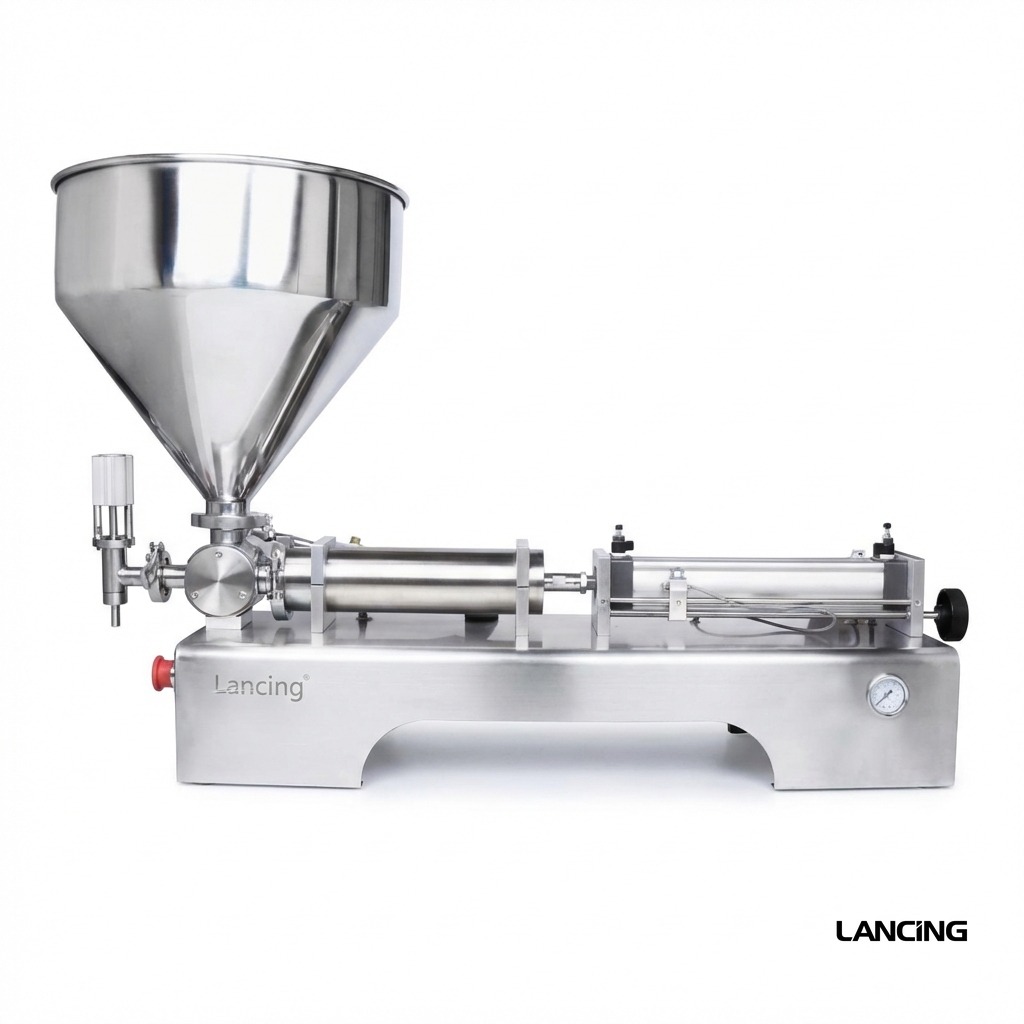
LU-GT1
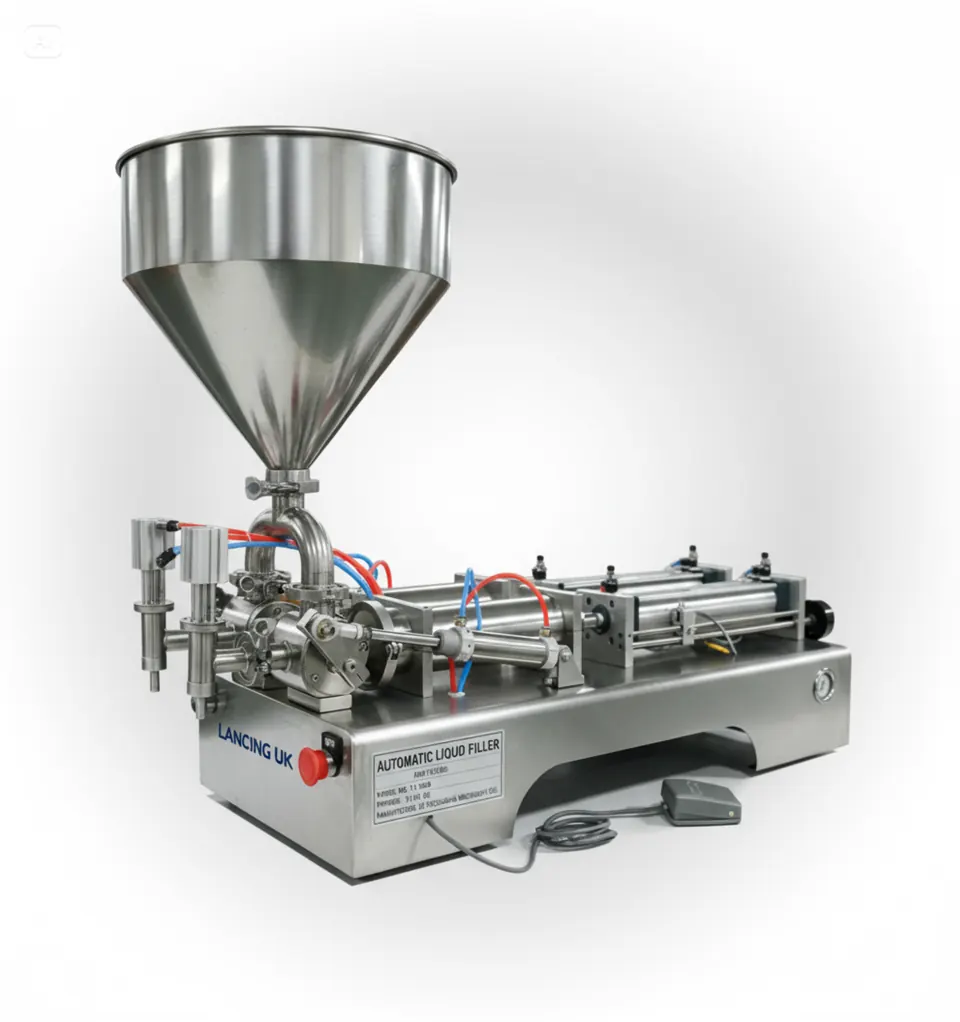
Semi-automatic pneumatic piston filler for gel, shampoo, sauces, honey and viscous liquids. Review 10–5000 ml modules and operator output.
See machine details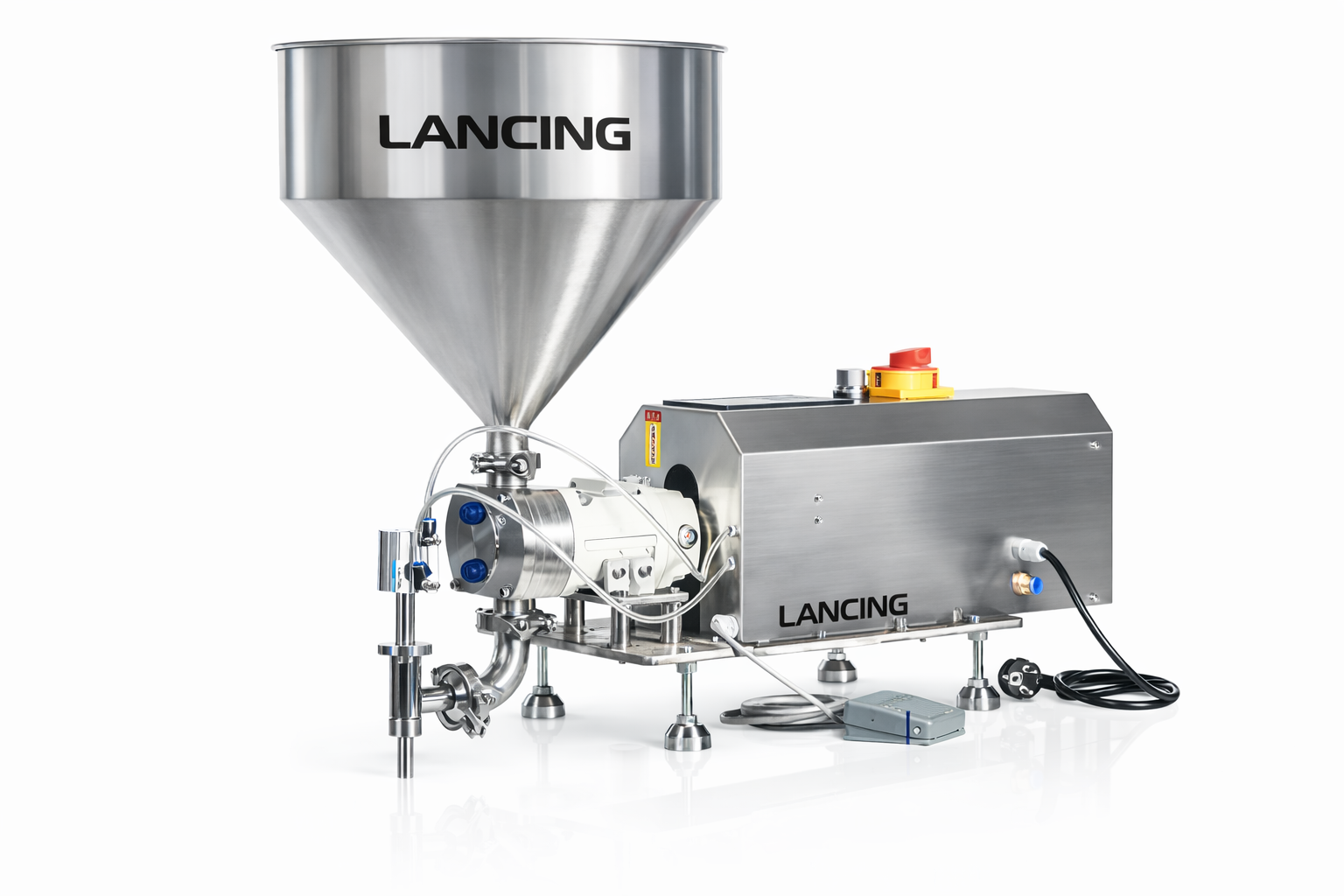
LU-RPGT900 / LU-RPG900
Semi-automatic rotor pump filler for jam, paste, sauces and products with suitable particles. Review 5–5000 ml range, hopper and speed guidance.
See machine details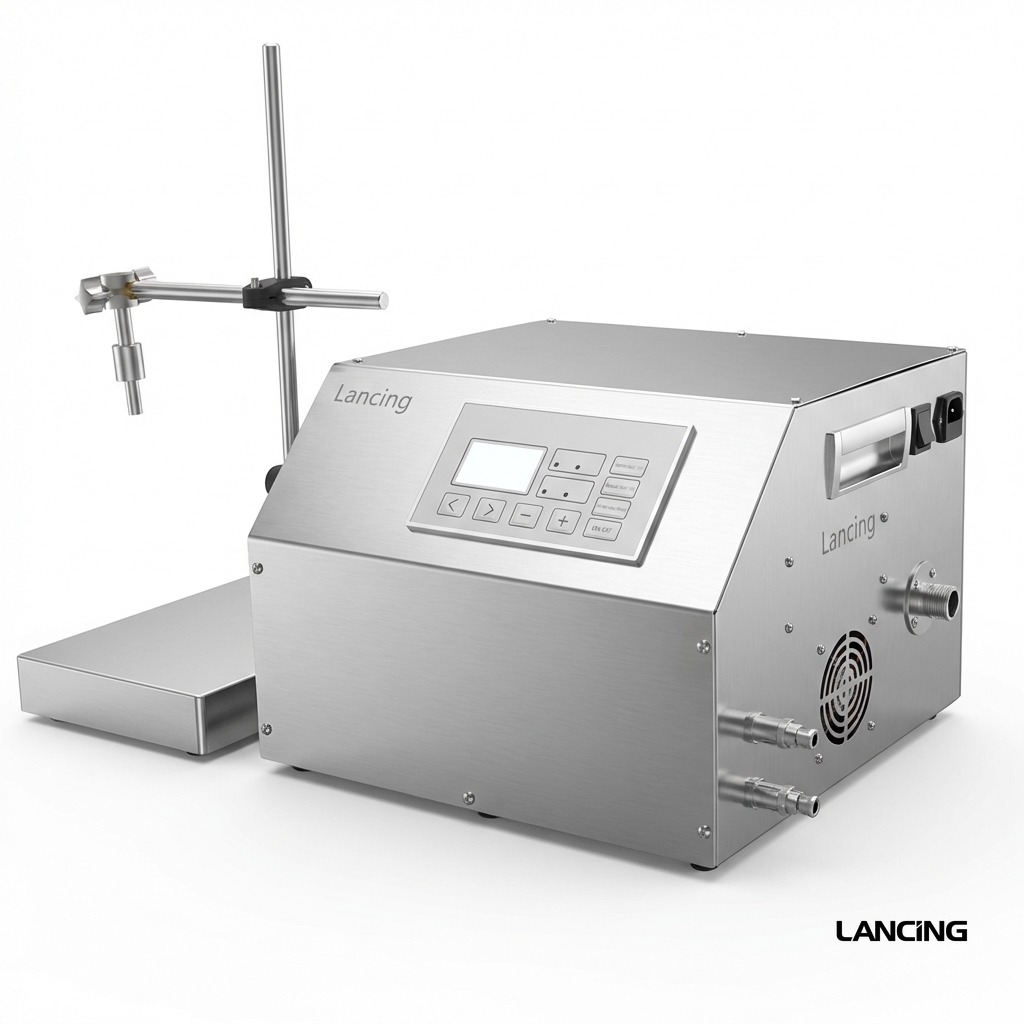
LU-GP261W
Semi-automatic gear-pump filler with weighing control for edible oil, engine oil, hydraulic fluid and compatible viscous liquids. Request a trial.
See machine detailsCompare your options
Automatic filling machines for liquid, paste, powder and specialist applications. Compare multi-head fillers, conveyors, controls and line integration.
See optionsChoose a filling machine for a small UK business. Compare hand filling, semi-automatic piston, pump, peristaltic, powder and upgrade-ready options.
See optionsCompare semi-automatic and automatic filling machines by output, labour, flexibility, footprint, changeover, cost and future production growth.
See optionsUse this filling machine enquiry checklist to supply product, fill, container, output, utility, cleaning and line-integration data for a useful quote.
See optionsQuick answers
Typical applications include start-ups and growing production, short runs and frequent sku changeovers, manual or batch-fed containers. The final decision depends on the real product, dose, container and target output.
Start with the product behaviour, fill range, pack format and sustainable output. Then compare the dosing principle, contact materials, changeover and cleaning against repeatable dosing while preserving operator flexibility.
Yes. Filling can be planned with container infeed, conveyors, capping or closing, labelling, coding, sealing, inspection, accumulation and end-of-line handling.
Send product details and safety data where relevant, fill volumes, container and closure samples or drawings, target output, utilities, cleaning needs, footprint and any existing equipment to be integrated.
Ready to discuss your application?
Tell us what you fill, your fill range, container and target output. We will help you narrow the practical machine options before quotation.
Design the whole work cell
Manual container presentation can preserve flexibility, but the work cell still needs controlled product supply, safe access, sensible reach distances and a repeatable method for moving filled packs to closing, labelling and packing.
| Work-cell element | Questions to resolve | Practical evidence |
|---|---|---|
| Container presentation | Are packs loaded one at a time, in trays or from a short conveyor, and can the operator position them consistently? | Container sample set, cycle observation and bench or floor layout. |
| Cycle initiation | Will the machine use a foot pedal, button, sensor or timed sequence, and how are hands kept clear? | Operator task analysis and the required guarding or control method. |
| Product replenishment | How is the hopper, pump or supply vessel refilled without interrupting the sequence or introducing air? | Batch size, transfer method, vessel height and normal replenishment interval. |
| Filled-pack transfer | Who applies the closure, wipes the pack, checks the result and moves it to the next operation? | Complete manual cycle and the expected staffing arrangement. |
| Changeover and cleaning | Which adjustments, parts, tools and cleaning steps are needed between products and packs? | SKU matrix, cleaning procedure and target changeover pattern. |
| Future growth | Can product feed, controls or short conveyors be retained, or would a separate automatic platform be needed? | Growth scenarios and a written boundary between upgradeable items and replacement equipment. |
Output comparison
Measure container pick-up, positioning, filling, removal, closing and packing over a representative run. Include product replenishment and normal interruptions. This gives a more useful capacity basis than multiplying a single fill cycle by an hour.
Compare the result with the semi-automatic versus automatic guide and the small-business filling guide.
Prepare the next step
Send the product range, dose matrix, packs, batch pattern, staffing and available space. Lancing can then compare a piston, pump, peristaltic, auger, weigh or other semi-automatic route without assuming full line automation is required.
Discuss a semi-automatic work cellFurther buyer questions
These answers clarify the practical boundaries that should be checked before a machine is selected or quoted.
Operator requirement depends on container presentation, product replenishment, cap handling, labelling, packing and the fill cycle. The complete work cell should be observed as one process rather than assuming the filler alone determines labour.
Yes, when utilities, product feed, bench layout, controls and container handling are planned with a future route in mind. Not every semi-automatic machine becomes a fully automatic line, so the intended upgrade path should be discussed before purchase.
Controlled semi-automatic work cell
Semi-automatic filling can provide flexible, controlled dosing when the operator presents or removes packs. The whole work cycle—including product replenishment, closure handling, quality checks and movement of finished packs—should be planned.
Run the intended cycle during the product and pack trial. A dosing rate demonstrated with another person feeding packs is not the same as sustainable one-operator output.
Check bench height, reach, container weight, foot or hand control, hose routes, lifting of product and the location of empty and finished packs. Define how product is replenished without losing prime or quantity control. Small infeed or outfeed tables may remove unnecessary handling without forcing a fully automatic line.
Where labour, format variety or campaign size is uncertain, use the semi-automatic versus automatic comparison and the contract-packing guide.
Flexible production
A single-head semi-automatic filler can be a deliberate engineering choice rather than an incomplete automatic machine. It concentrates the product path, reduces the number of components to clean and supports frequent product or pack changes. The operator cycle must still be measured from empty-container collection through filling, closing, inspection and finished-pack movement.