Semi-automatic can filling
Compact counter-pressure heads suit pilot, craft and lower-output production.
Explore this route
Counter-pressure beverage filling
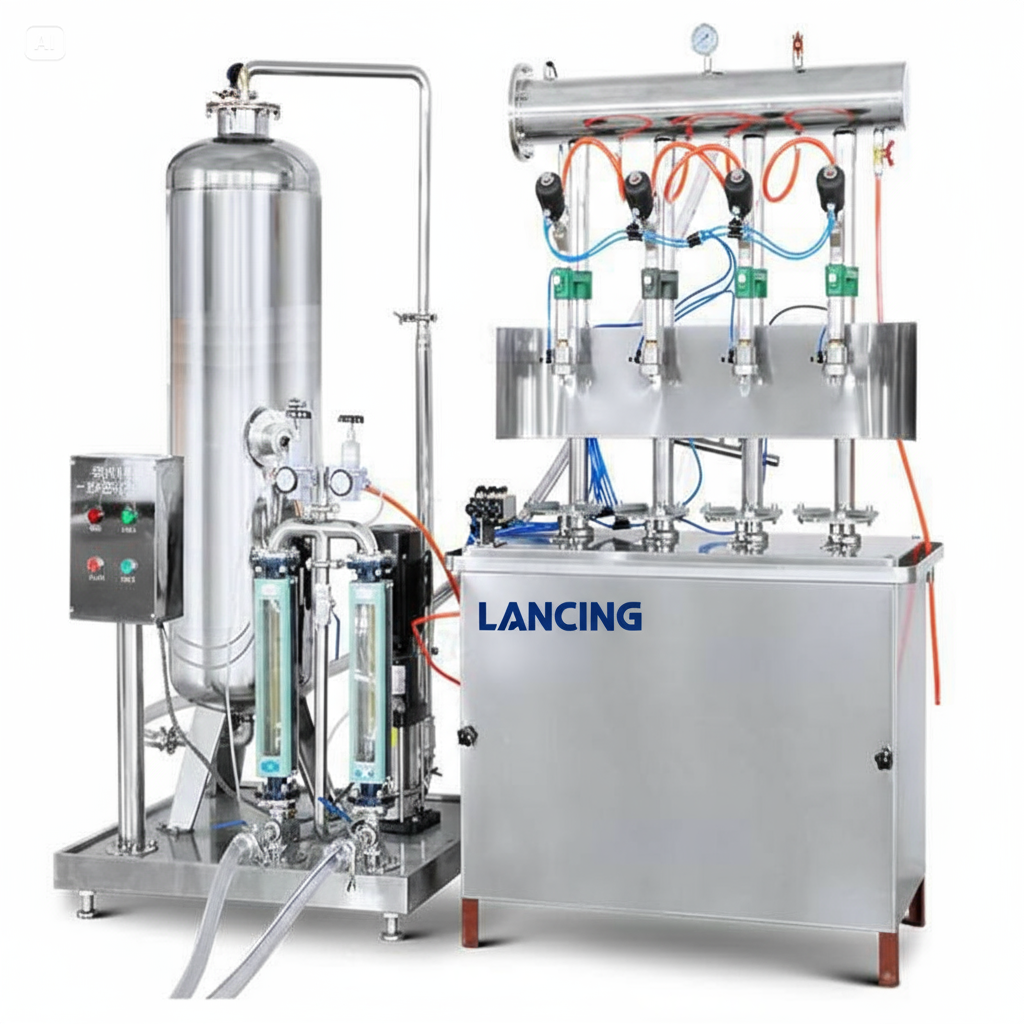
Carbonated products need pressure and temperature control to retain dissolved gas and limit foam. Isobaric or counter-pressure filling equalises pressure before product enters the can or bottle. The filler, chiller, carbonation system and closure stage must be planned as one process, because warm product or slow closing can undo a good fill.
Typical products and packs
Compare the principles
Several dosing methods may fill the same nominal product. The practical choice is driven by accuracy, cut-off, cleaning, format range and sustained output.
Compact counter-pressure heads suit pilot, craft and lower-output production.
Explore this routeRotary or inline pressure-rated systems are used for higher output.
Explore this routeThe seam or closure should follow filling quickly to preserve carbonation.
Explore this routeUse standard liquid routes where product is not under dissolved-gas pressure.
Explore this routeBefore quotation
Beyond the filler
Machines you can compare
Specifications are reference points. Confirm the operating window using the intended product, container and line arrangement.
LUCF4A
Four-head counter-pressure can filler with mixer for soda, sparkling drinks and RTD products. Review 330–500 ml formats and 240–400 CPH.
See machine detailsCompare your options
Food and beverage filling machinery for oils, sauces, honey, powders, granules, still drinks and carbonated products. Plan hygiene and line integration.
See optionsBottle filling machines for liquids, sauces, creams, powders and granules. Plan container handling, fill method, capping, labelling and output.
See optionsAutomatic filling machines for liquid, paste, powder and specialist applications. Compare multi-head fillers, conveyors, controls and line integration.
See optionsPlan complete filling lines for bottles, jars, cans, pouches and larger containers. Integrate filling, capping, labelling, coding and conveyors.
See optionsQuick answers
Typical applications include carbonated soft drinks and seltzer, beer and cider, application dependent, sparkling water and mixers. The final decision depends on the real product, dose, container and target output.
Start with the product behaviour, fill range, pack format and sustainable output. Then compare the dosing principle, contact materials, changeover and cleaning against temperature, pressure and immediate container closing.
Yes. Filling can be planned with container infeed, conveyors, capping or closing, labelling, coding, sealing, inspection, accumulation and end-of-line handling.
Send product details and safety data where relevant, fill volumes, container and closure samples or drawings, target output, utilities, cleaning needs, footprint and any existing equipment to be integrated.
Ready to discuss your application?
Tell us what you fill, your fill range, container and target output. We will help you narrow the practical machine options before quotation.