Piston volumetric filling
Positive displacement through a selected cylinder size for liquid and viscous products.
Explore this route
Measured-volume dosing
A volumetric filling machine dispenses a controlled volume rather than filling to a visible level or directly to a target weight. The term includes several technologies: piston cylinders for liquids and pastes, pump-based dosing for flowing products and measuring cups for free-flowing granules. The correct route depends on product behaviour, not the label “volumetric” alone.
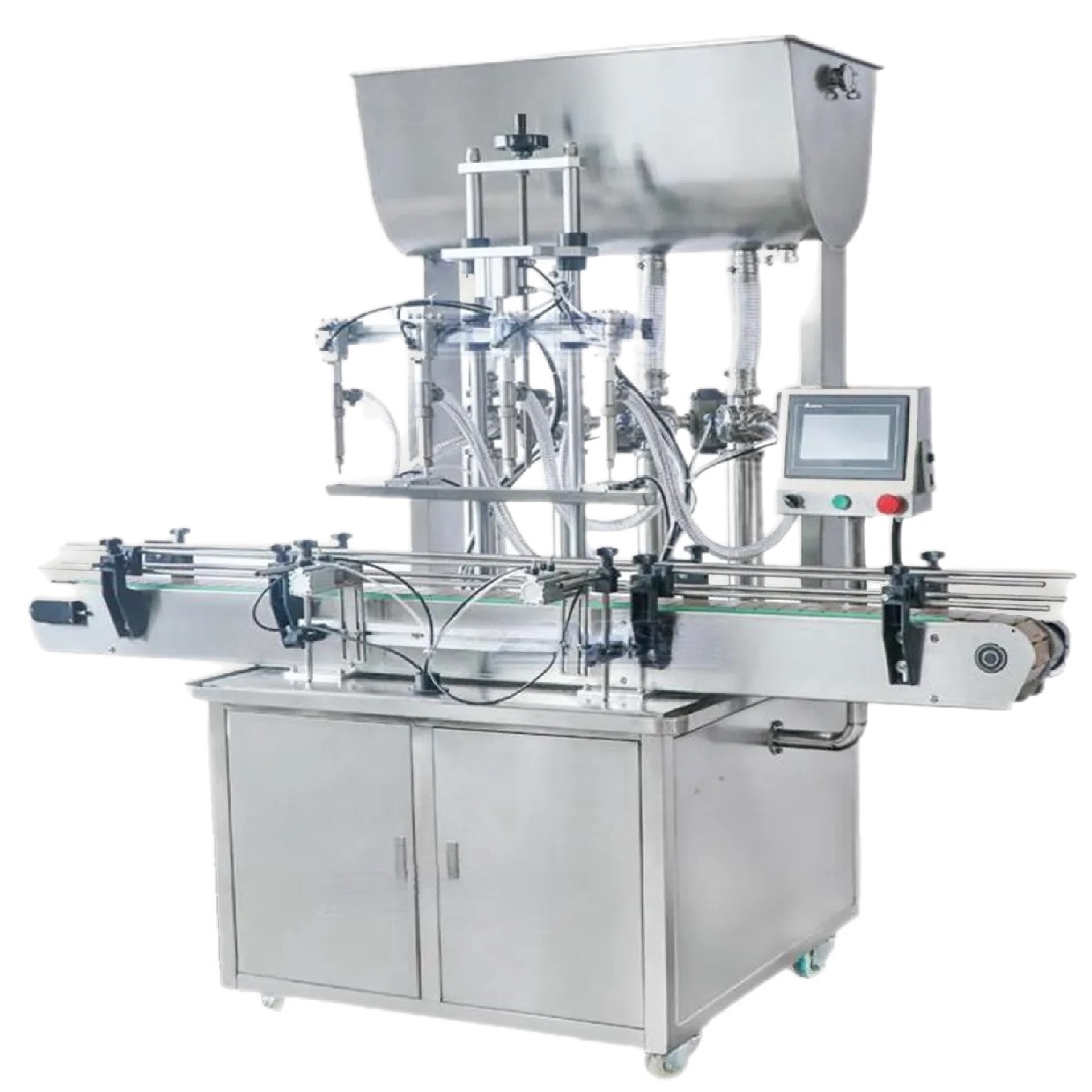
Typical products and packs
Compare the principles
Several dosing methods may fill the same nominal product. The practical choice is driven by accuracy, cut-off, cleaning, format range and sustained output.
Positive displacement through a selected cylinder size for liquid and viscous products.
Explore this routeControlled pump movement or timed flow for compatible free-flowing and medium-viscosity liquids.
Explore this routeA mechanical measuring cup doses repeatable quantities of suitable granules.
Explore this routeCompare dose-by-volume with live weight feedback where density variation or legal metrology matters.
Explore this routeBefore quotation
Beyond the filler
Machines you can compare
Specifications are reference points. Confirm the operating window using the intended product, container and line arrangement.
Automatic Volumetric 4-Nozzle
Four-nozzle automatic volumetric piston filler for sauces, honey, creams and lotions. Compare fill modules, anti-drip nozzles and line options.
See machine details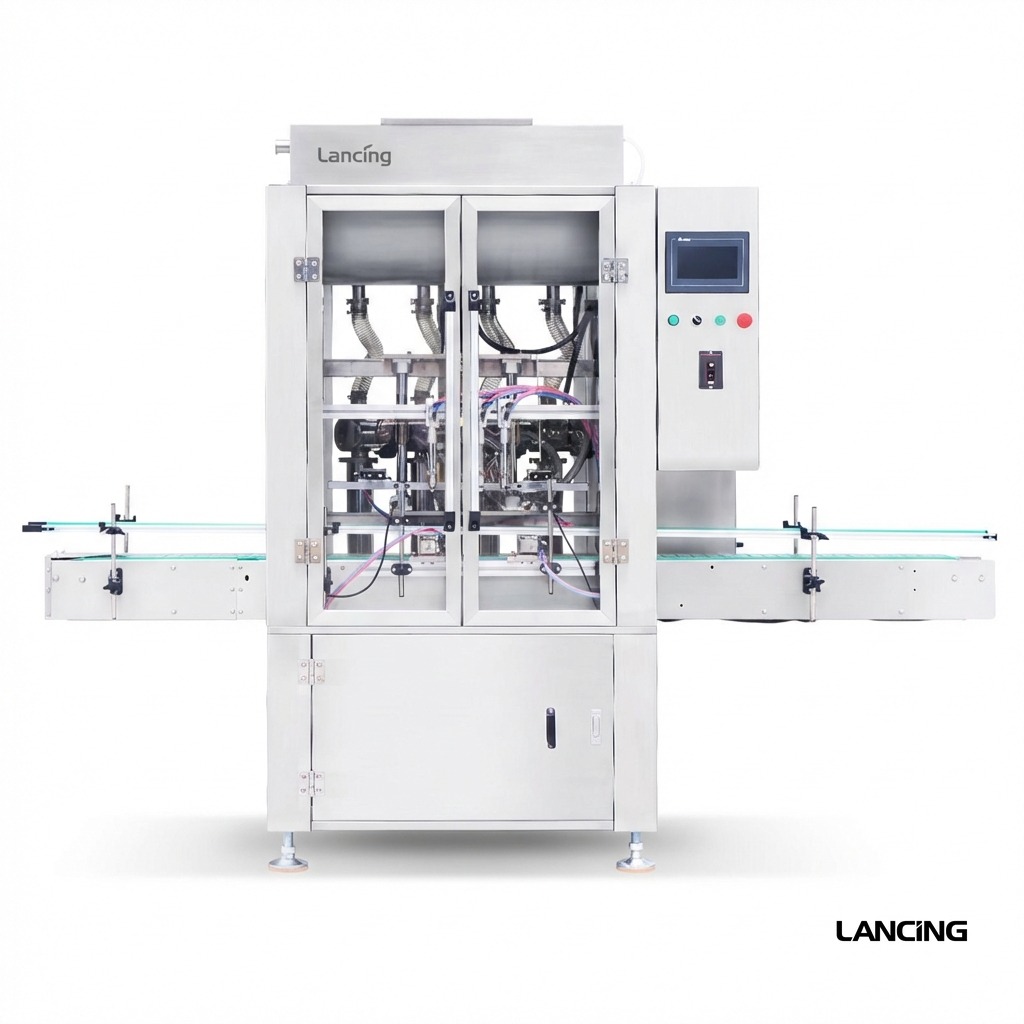
LU-SV4P
Four-head servo piston filling machine for honey, syrup, lotion and cream. Review fill range, bottle limits, accuracy and automatic-line integration.
See machine details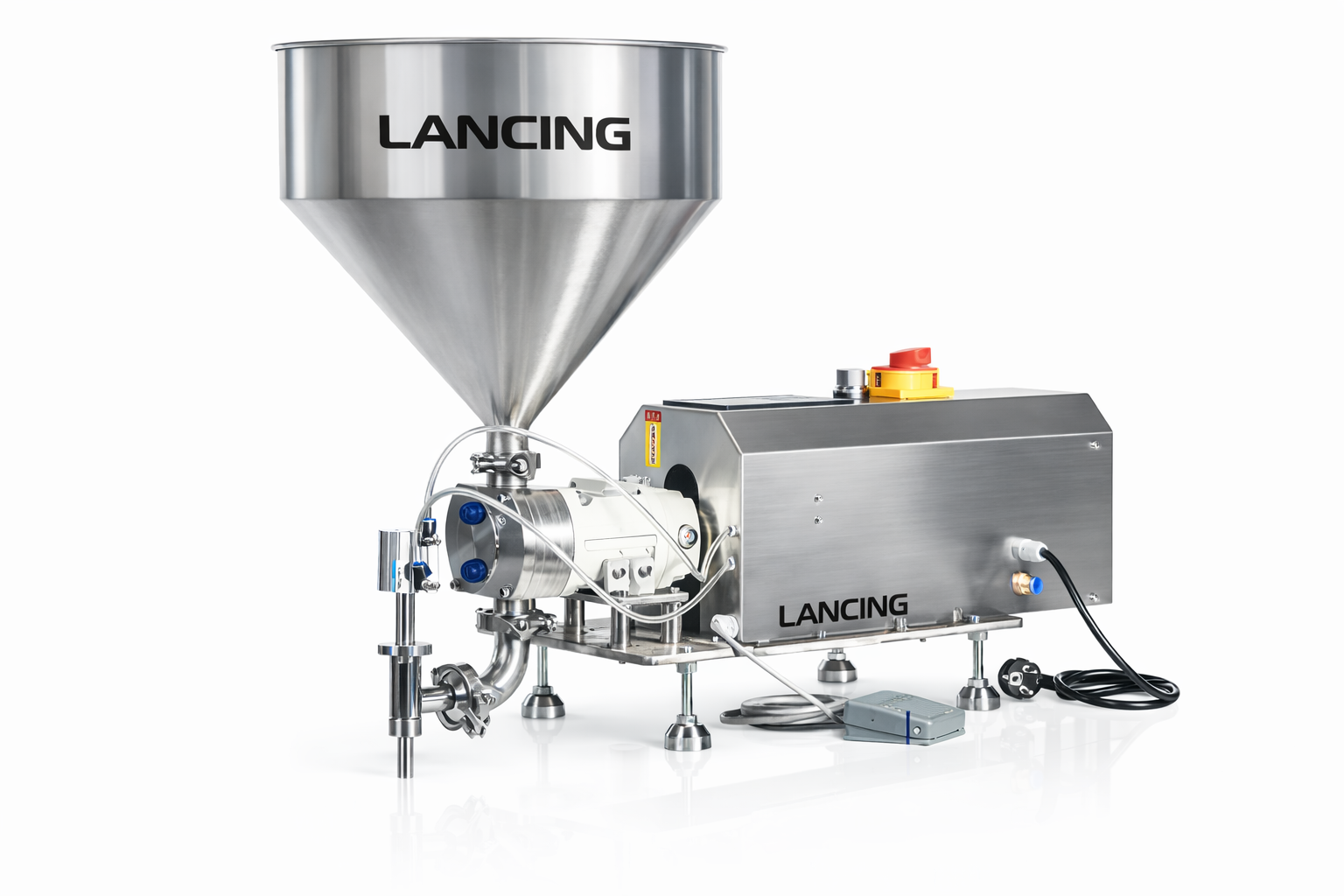
LU-RPGT900 / LU-RPG900
Semi-automatic rotor pump filler for jam, paste, sauces and products with suitable particles. Review 5–5000 ml range, hopper and speed guidance.
See machine detailsCompare your options
Piston filling machines for repeatable volumetric dosing of sauces, honey, creams, gels, oils and viscous liquids. Compare pneumatic and servo options.
See optionsCompare gear, rotor, magnetic, diaphragm and other pump filling machines for oils, detergents, sauces, gels and compatible chemical products.
See optionsGranule filling machines using volumetric cup or weigh dosing for beans, seeds, sugar, coffee, tablets and free-flowing dry products in the UK.
See optionsWeigh filling machines for oils, liquids, powders and granules. Compare net-weight, pump-and-scale and multihead weighing around accuracy and output.
See optionsUK filling machine buyer’s guide covering piston, pump, peristaltic, auger, weigh, vacuum, automation, trials, quotations and acceptance testing.
See optionsQuick answers
Typical applications include liquids and oils with repeatable flow, sauces, creams, gels and viscous pastes, free-flowing granules measured by cup. The final decision depends on the real product, dose, container and target output.
Start with the product behaviour, fill range, pack format and sustainable output. Then compare the dosing principle, contact materials, changeover and cleaning against measured-volume filling across several dosing technologies.
Yes. Filling can be planned with container infeed, conveyors, capping or closing, labelling, coding, sealing, inspection, accumulation and end-of-line handling.
Send product details and safety data where relevant, fill volumes, container and closure samples or drawings, target output, utilities, cleaning needs, footprint and any existing equipment to be integrated.
Ready to discuss your application?
Tell us what you fill, your fill range, container and target output. We will help you narrow the practical machine options before quotation.
Understand what the machine measures
Piston, pump and cup systems can all meter a defined volume in different ways. A robust specification separates the required volume from any weight-based legal or process check and identifies conditions that can change density or delivery.
| Variable | Why it matters to volumetric filling | How to control the comparison |
|---|---|---|
| Dose range | One cylinder, pump range or cup set may not cover every fill with the same resolution and cycle. | Test the minimum, maximum and commercially important intermediate doses. |
| Density | The same volume can have a different mass if formulation, temperature, aeration or solids distribution changes. | Record product condition and decide whether weight verification is part of acceptance. |
| Product feed | Inconsistent level, pressure, priming or refill can affect delivery even when the nominal set volume is unchanged. | Use the intended tank, hopper, pump or supply head during trials where possible. |
| Valve and nozzle cut-off | Drips, strings, product in flight or residual flow can alter the final pack result. | Observe the complete dose from refill through cut-off and container removal. |
| Change parts and settings | Different products or packs may require cylinders, screws, cups, tubing, nozzles or recipes. | Create a SKU matrix showing each physical and software change. |
| Calibration method | The result depends on how samples are taken, measured and adjusted. | Agree the sample size, instrument, product condition and treatment of start-up packs. |
Compare alternatives
If the required result is mass, compare weigh filling. If consistent visible level in variable internal-volume containers is central, compare vacuum or overflow filling. The right decision follows from the accepted pack result, not the technology name.
Specialist volumetric route
volumetricfillers.co.uk is the preferred Lancing specialist resource for piston, pump and cup filling systems, including semi-automatic and automatic formats.
Review a volumetric applicationFurther buyer questions
These answers clarify the practical boundaries that should be checked before a machine is selected or quoted.
A volumetric system meters volume. The corresponding weight depends on product density, which may change with formulation, temperature, aeration or suspended solids. Where mass is the acceptance criterion, density control or a weigh-based comparison may be needed.
The practical route is to test the minimum, maximum and important intermediate doses with the real product and pack. Change parts, cylinder or pump range, recipe settings, nozzle behaviour and the agreed measurement method should all be recorded.
Volumetric application proof
A volumetric machine should be tested at the required dose range with representative viscosity, temperature, feed level, air and container conditions. Where packs are controlled by mass, quantify density variation rather than assuming a fixed conversion.
Use the volumetric versus gravimetric guide to decide whether volume/displacement or direct mass is the most robust acceptance basis. State the target, tolerance, reference method and treatment of product on the outside of the pack.
Include start-up, low and high product level, replenishment, temperature change and pauses. Record head-specific results for multi-nozzle machinery and use the accuracy guide to prevent a selected short sample from becoming the only evidence.
Technical answers
A volumetric dose, visible liquid level and measured mass are different outcomes. Compare the required commercial result before selecting the process.
Separate presentation height from measured quantity.
Open the resourceCompare controlled volume or displacement with measured mass.
Open the resourceDefine the test product, measurement system and acceptance calculation.
Open the resource