Pneumatic piston fillers
Air-powered cylinders provide a robust semi-automatic or multi-head automatic route.
Explore this route
Positive-displacement filling
Piston fillers draw product into a cylinder and push the measured volume through a valve and nozzle. This positive-displacement principle is widely used for products ranging from oils to thick sauces because the dose is linked to cylinder displacement. The machine still needs the right valve, nozzle, feed arrangement and cylinder range for the product.
Typical products and packs
Compare the principles
Several dosing methods may fill the same nominal product. The practical choice is driven by accuracy, cut-off, cleaning, format range and sustained output.
Air-powered cylinders provide a robust semi-automatic or multi-head automatic route.
Explore this routeServo motion supports recipe control, fine adjustment and automated production lines.
Explore this routeFlexible operator-led workstations for smaller batches and frequent changeovers.
Explore this routeSeveral pistons and nozzles raise output when the conveyor and product feed are balanced.
Explore this routeBefore quotation
Beyond the filler
Machines you can compare
Specifications are reference points. Confirm the operating window using the intended product, container and line arrangement.
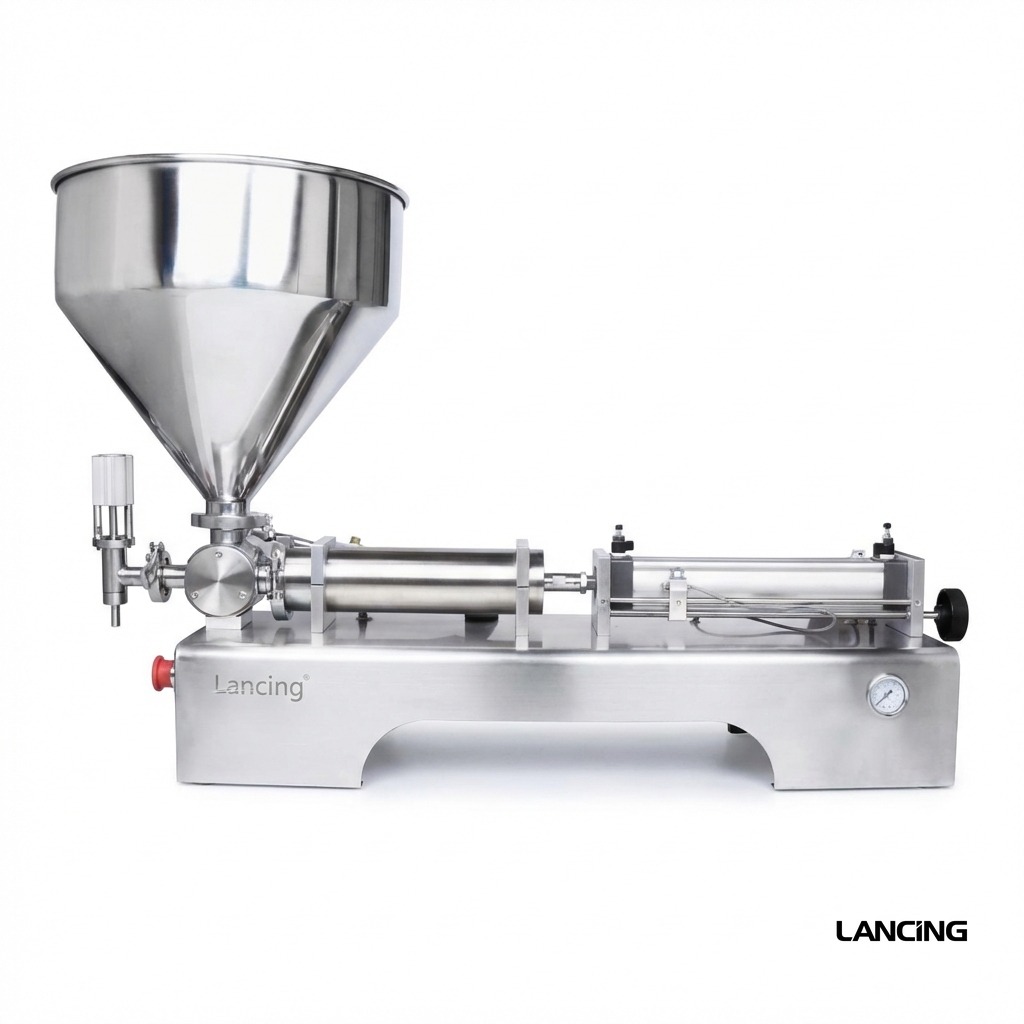
LU-GT1
Semi-automatic pneumatic piston filler for gel, shampoo, sauces, honey and viscous liquids. Review 10–5000 ml modules and operator output.
See machine details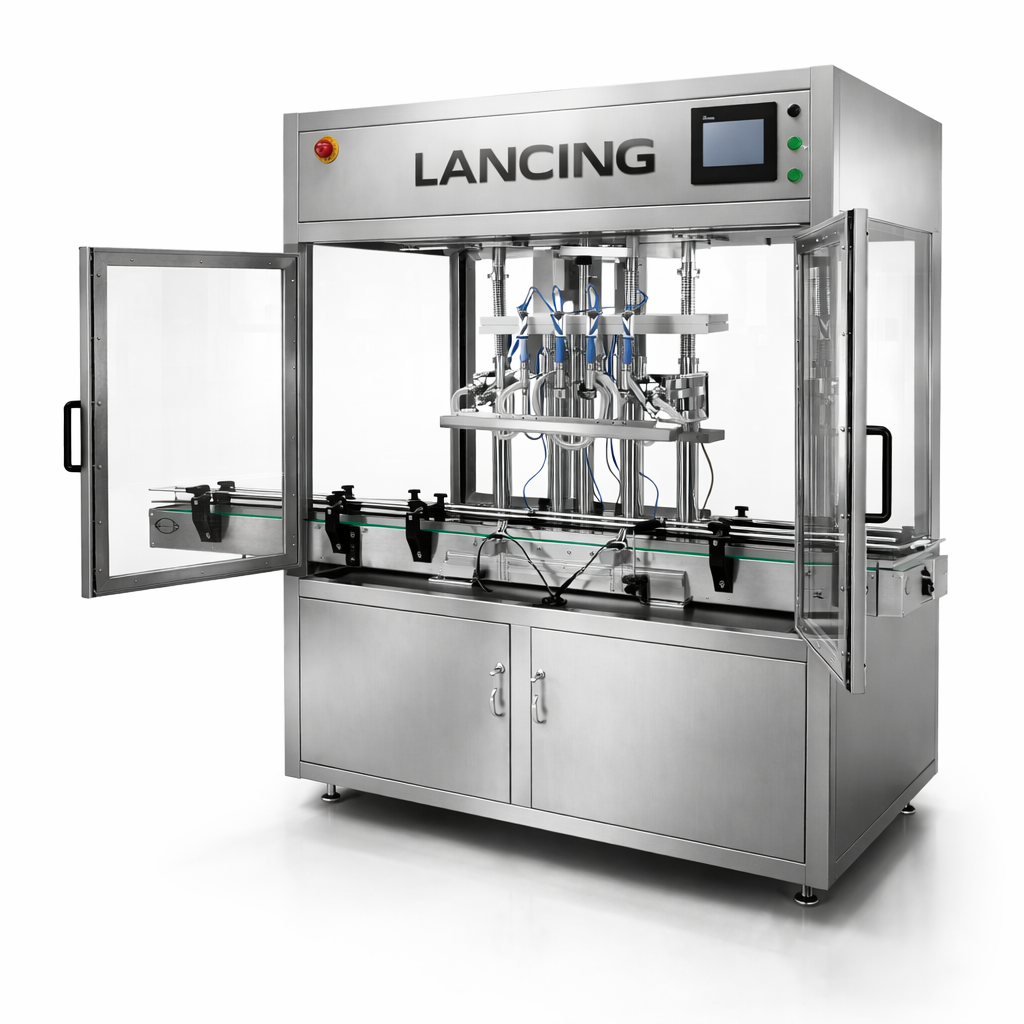
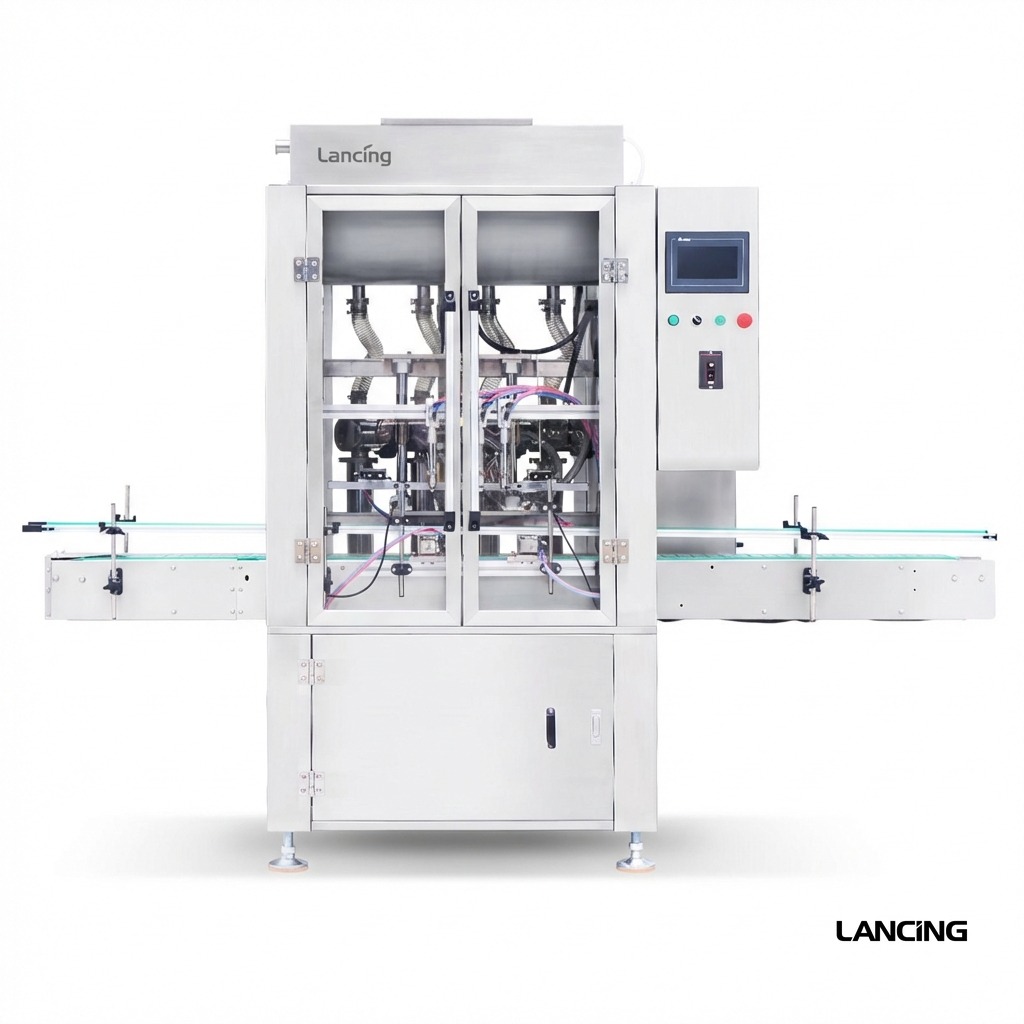
LU-YT6T-6P
Six-nozzle pneumatic piston filling machine for viscous liquids and pastes including honey, syrup, sauces and gels. Discuss range and configuration.
See machine detailsLU-SV4P
Four-head servo piston filling machine for honey, syrup, lotion and cream. Review fill range, bottle limits, accuracy and automatic-line integration.
See machine detailsCompare your options
Compare piston, servo and rotor-pump paste filling machines for sauces, honey, creams, gels, adhesives and other viscous products in the UK.
See optionsCompare volumetric filling machines using piston, pump or cup dosing for liquids, pastes, sauces, creams and granules. UK advice from Lancing Ltd.
See optionsSemi-automatic filling machines for liquids, pastes, powders and larger containers. Compare operator workflow, output, changeover and upgrade paths.
See optionsAutomatic filling machines for liquid, paste, powder and specialist applications. Compare multi-head fillers, conveyors, controls and line integration.
See optionsGuide to filling machine nozzles including anti-drip, shut-off, diving, bottom-up, overflow and wide-bore options for liquids, pastes and particles.
See optionsQuick answers
Typical applications include sauces, dressings, jam and honey, creams, gels, lotions and shampoo, oils and medium-viscosity liquids. The final decision depends on the real product, dose, container and target output.
Start with the product behaviour, fill range, pack format and sustainable output. Then compare the dosing principle, contact materials, changeover and cleaning against positive-displacement dosing across liquid and paste products.
Yes. Filling can be planned with container infeed, conveyors, capping or closing, labelling, coding, sealing, inspection, accumulation and end-of-line handling.
Send product details and safety data where relevant, fill volumes, container and closure samples or drawings, target output, utilities, cleaning needs, footprint and any existing equipment to be integrated.
Ready to discuss your application?
Tell us what you fill, your fill range, container and target output. We will help you narrow the practical machine options before quotation.
Piston actuation
Piston describes the positive-displacement dosing principle. Pneumatic or servo describes how the piston movement is actuated and controlled. A machine can therefore be both servo-driven and piston-based. Select the actuation route from the required control range, fill profile, recipes, utilities, maintenance and automation rather than treating “servo” and “piston” as alternative metering methods.
| Decision factor | Pneumatic piston route | Servo-driven piston route |
|---|---|---|
| Movement control | Air cylinder and valve controls; practical for many straightforward strokes. | Programmed motor motion can provide controlled position and speed profiles. |
| Utilities | Requires suitable compressed-air supply and treatment. | Requires electrical drive and control capacity; some pneumatic functions may still remain. |
| Recipes and change | May use mechanical or control adjustments depending on design. | Can support stored motion settings where the machine is designed and validated for them. |
| Maintenance focus | Air quality, cylinders, valves, seals and leak condition. | Drive, motor, feedback, mechanics, software and safety functions. |
| Application proof | Both routes still depend on cylinder range, valve passages, product feed, nozzle cut-off, container handling and representative trials. | |
Actuation does not determine the number of containers filled in parallel. Use the single-head versus multi-head guide to select head count separately.