Liquid filling machines
Find a filler for water-like liquids, oils, detergents, chemicals and beverages. Compare pump, piston, peristaltic and level-filling options around your product.
Find suitable options
Filling machinery matched to your application
Tell us what you are filling, the dose range, container and production target. We will help you choose a practical semi-automatic, automatic or complete-line solution.
Start with what you need to fill
The right machine depends on how your product flows, foams, strings, carries particles or creates dust—not only the nominal fill volume.
Find a filler for water-like liquids, oils, detergents, chemicals and beverages. Compare pump, piston, peristaltic and level-filling options around your product.
Find suitable optionsChoose piston, servo or rotor-pump filling for sauces, honey, creams, gels, adhesives and other viscous products, using your real fill range and packs.
Find suitable optionsMatch piston, pump or cup dosing to liquids, pastes, sauces, creams and free-flowing products where a repeatable measured volume is required.
Find suitable optionsFind an auger, weigh or specialist dosing system for food, supplement, cosmetic and chemical powders, including dusty or difficult-flowing products.
Find suitable optionsChoose net-weight, pump-and-scale or combination weighing for oils, liquids, powders and granules when weight control is central to the application.
Find suitable optionsPlan counter-pressure or isobaric filling for soda, sparkling drinks, beer and RTD products around temperature, CO₂, container and closing method.
Find suitable optionsA clear route to the right machine
Share the real product, container, closure, output and site constraints. We can compare dosing principles, nozzle arrangements and automation levels against what your production team actually needs.
Characterise product flow, foam, particles, temperature and materials compatibility.
Define every fill size, container, closure, target tolerance and output requirement.
Select a semi-automatic, automatic or line format around labour and growth.
Trial representative products and packs before fixing acceptance criteria.

Machine options
Compare representative configurations, then confirm performance using your product, container and required output.
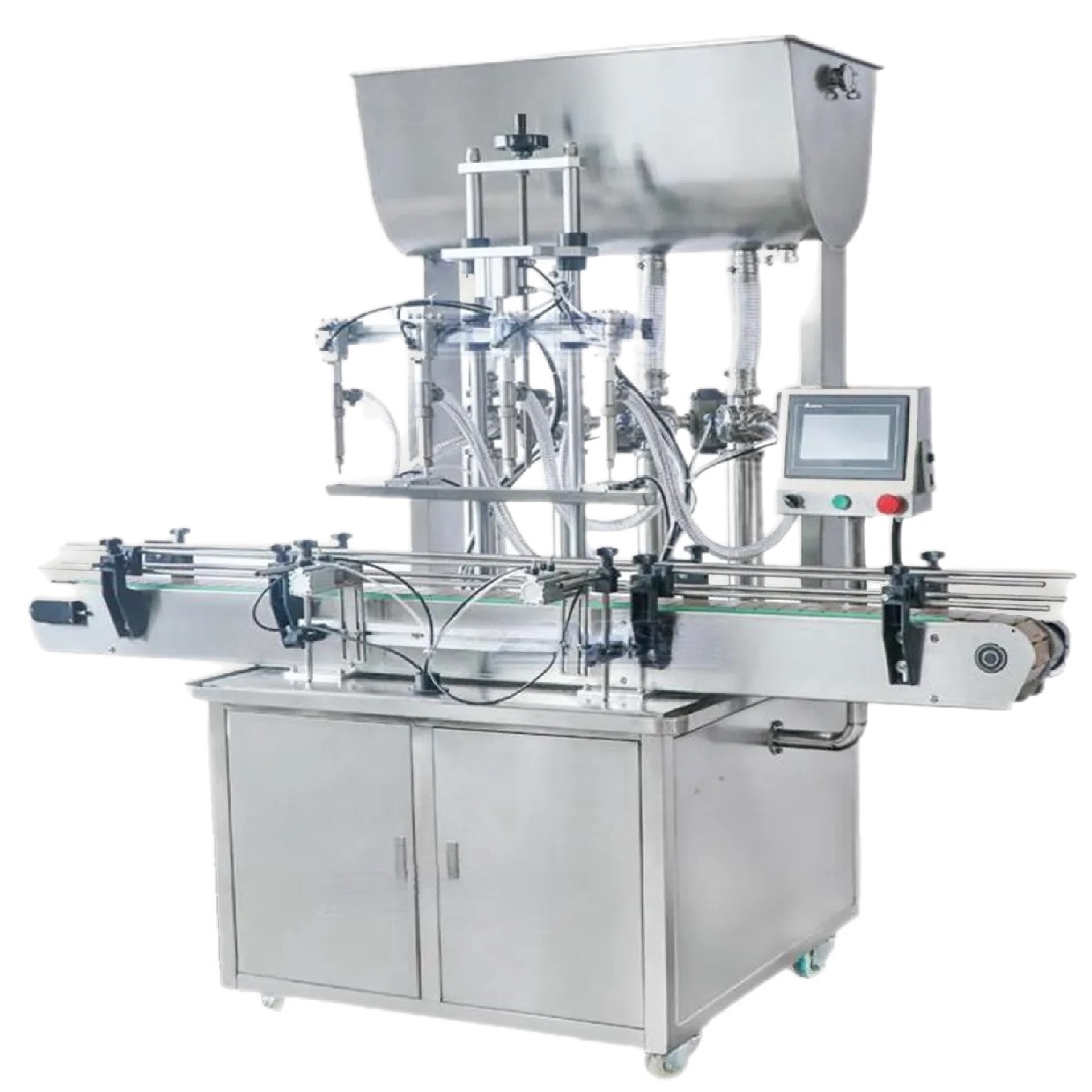
Automatic Volumetric 4-Nozzle
Four-nozzle automatic volumetric piston filler for sauces, honey, creams and lotions. Compare fill modules, anti-drip nozzles and line options.
See machine details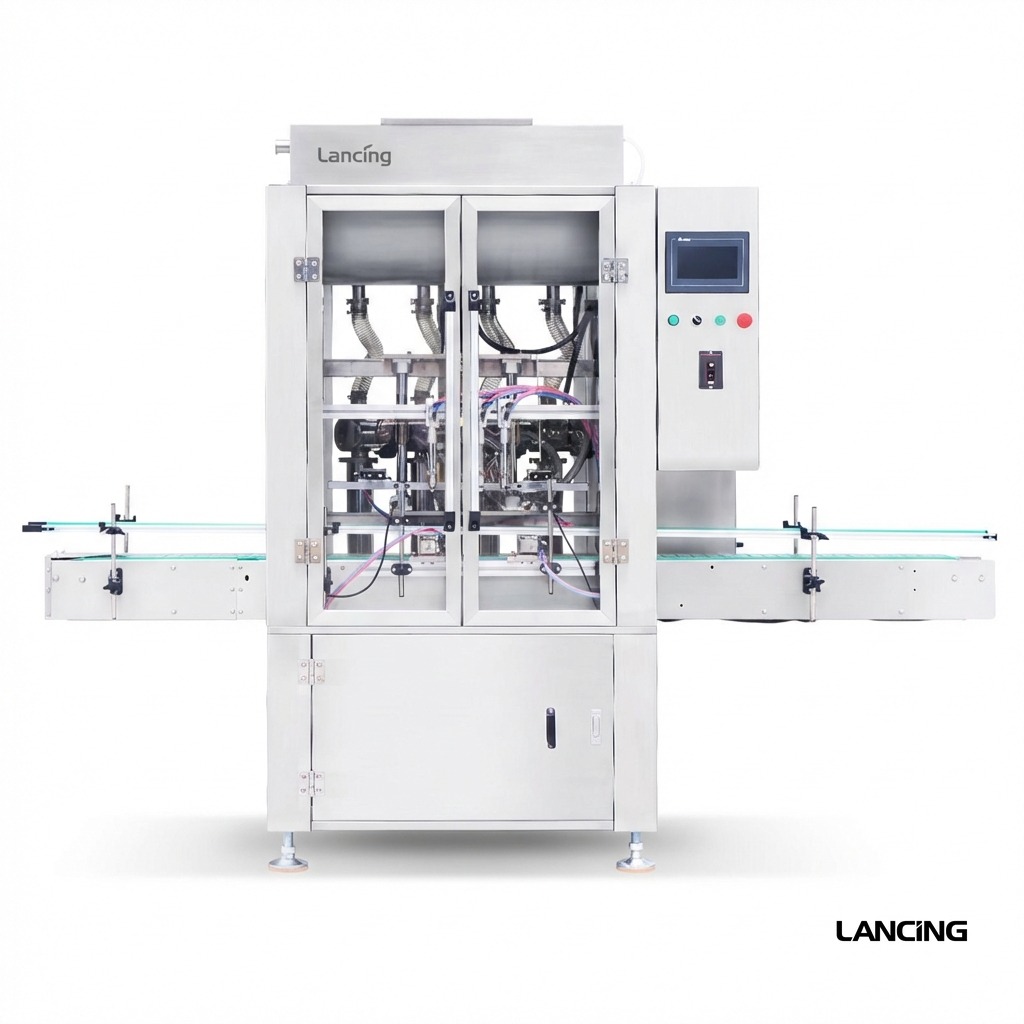
LU-SV4P
Four-head servo piston filling machine for honey, syrup, lotion and cream. Review fill range, bottle limits, accuracy and automatic-line integration.
See machine details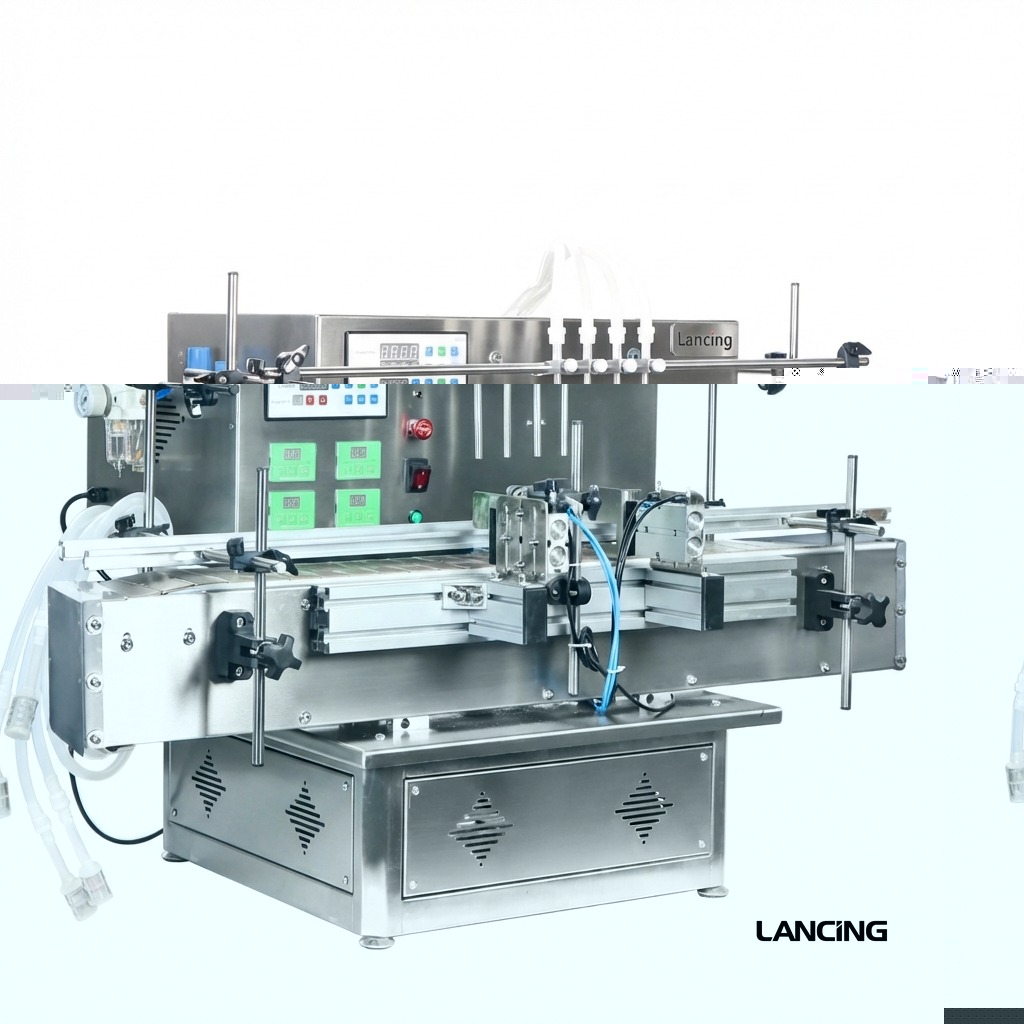
LU-DTPP4C
Four-channel peristaltic filling machine for small liquid doses, e-liquid, lotions and clean-change applications. Review flow, tubing and output.
See machine details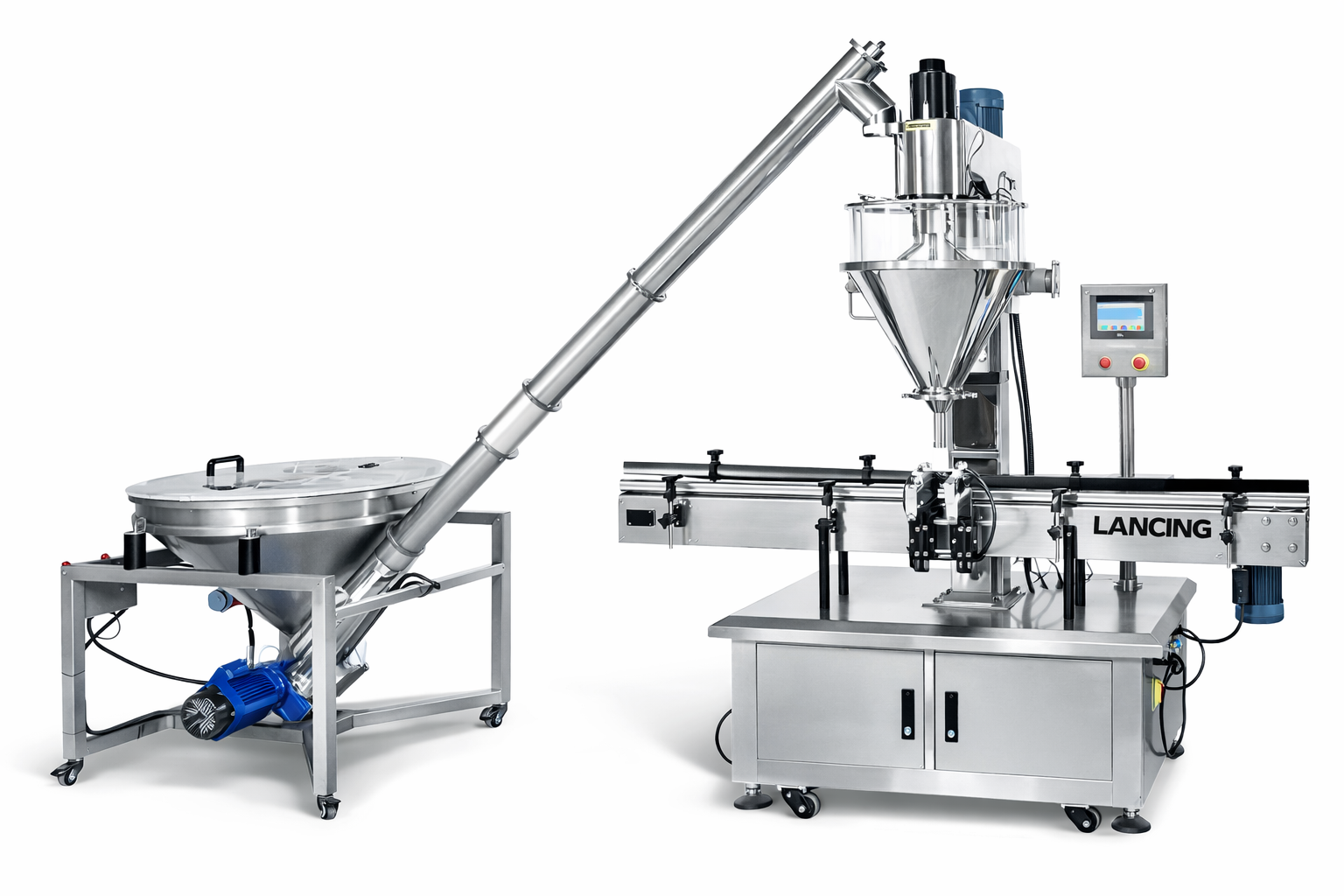
LU-FM5A
Servo auger powder filler with automatic screw feeder for jars and containers. Review 10–500 g reference range, hopper, utilities and output.
See machine details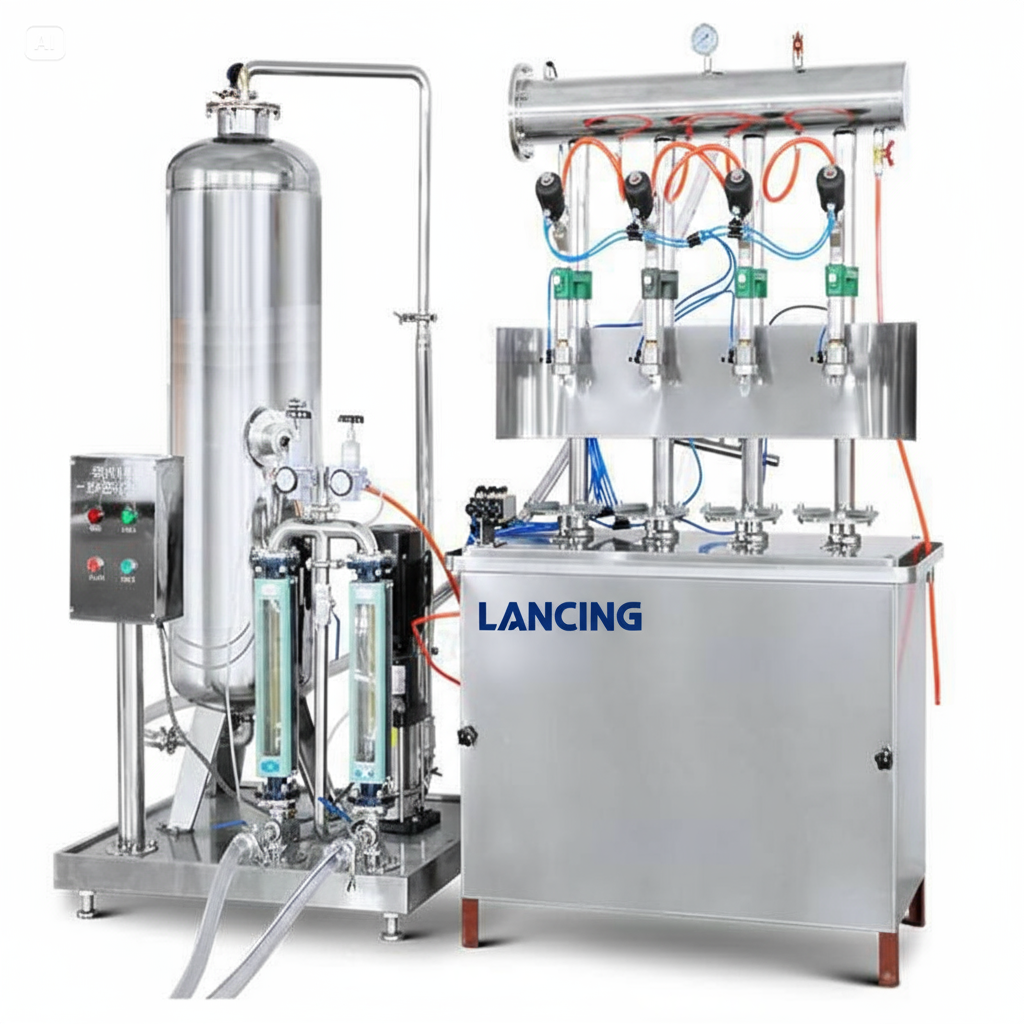
LUCF4A
Four-head counter-pressure can filler with mixer for soda, sparkling drinks and RTD products. Review 330–500 ml formats and 240–400 CPH.
See machine details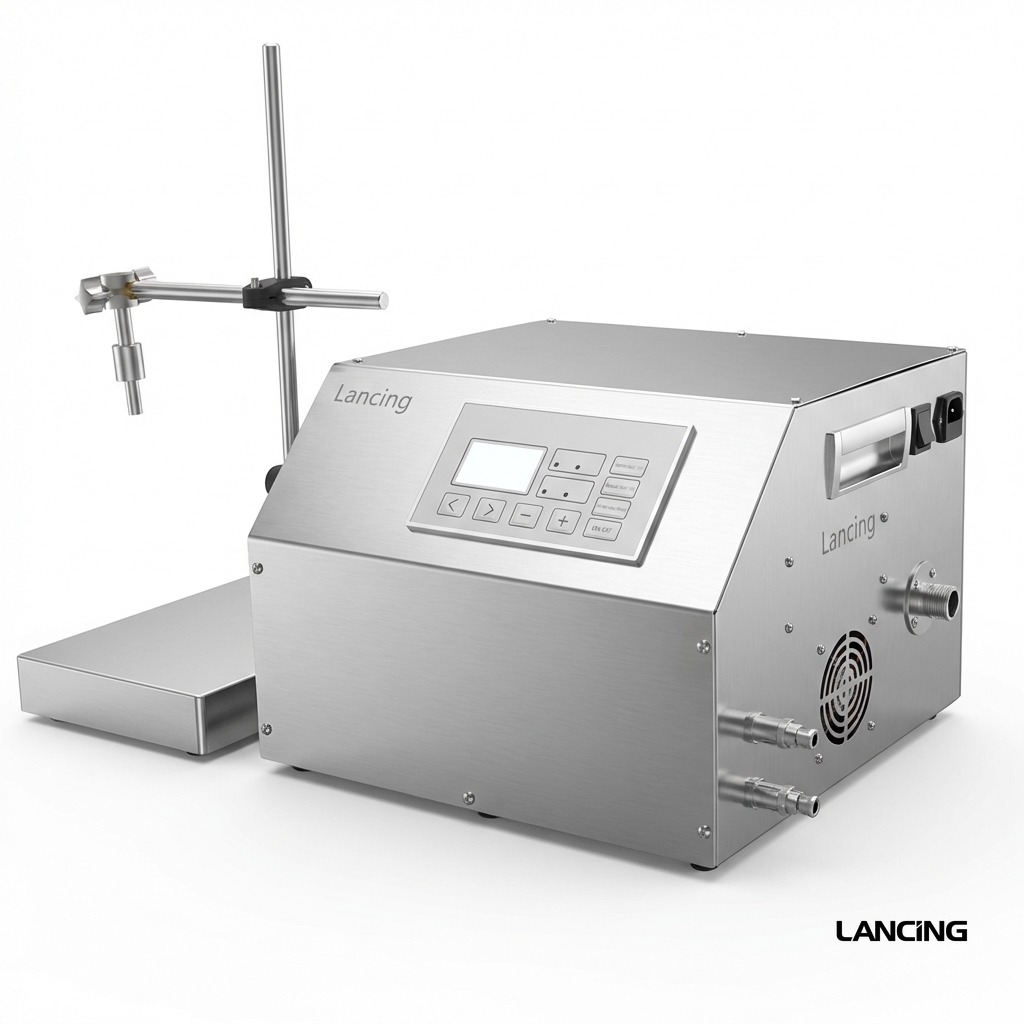
LU-GP261W
Semi-automatic gear-pump filler with weighing control for edible oil, engine oil, hydraulic fluid and compatible viscous liquids. Request a trial.
See machine detailsProduction environments
Product safety, hygiene, compatibility, fill presentation and cleaning can be as important as speed.
Food and beverage filling machinery for oils, sauces, honey, powders, granules, still drinks and carbonated products. Plan hygiene and line integration.
See optionsSpecify filling machines for sauces, ketchup, honey, jam, chutney and dressings. Compare piston, rotor-pump, heated hopper and nozzle options.
See optionsCosmetic filling machines for creams, lotions, gels, shampoo, serums and fragrances. Compare piston, peristaltic, pump and complete bottle lines.
See optionsChemical filling machines for detergents, cleaners, acids, alkalis, solvents and compatible industrial liquids. Plan materials, ATEX and containment.
See optionsFilling machines for edible oils, engine oil, hydraulic fluid and lubricants. Compare gear pump, weight, high-flow and large-container systems.
See optionsPharmaceutical and nutraceutical filling machinery for liquids, serums, powders and supplements. Plan dose control, cleanability, packs and records.
See optionsSemi-automatic to integrated production
Filling rarely operates alone. Container infeed, product supply, capping, sealing, labelling, coding, inspection, conveyors and accumulation must be balanced around the same sustained production rate.
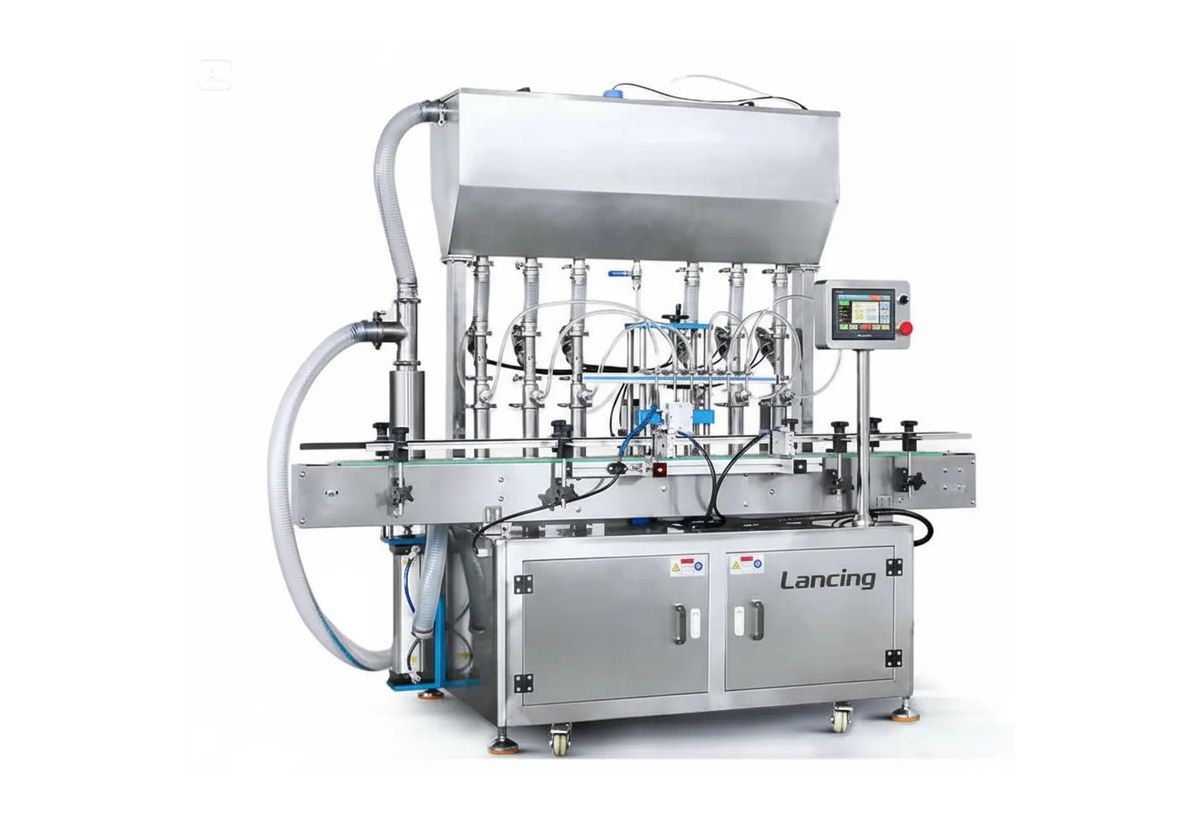
Use the wider Lancing machinery ranges when your project also needs bottle handling, capping, labelling, coding, sealing, conveyors or end-of-line equipment.
Use the wider Lancing network when your filling project also needs container handling, closing, labelling, coding or end-of-line equipment.
Quick answers
Start with product behaviour, minimum and maximum fill volume, container geometry, target output and cleaning needs. Those factors determine whether piston, pump, peristaltic, auger, weigh, vacuum or another filling principle should be shortlisted.
Yes. The range covers operator-led semi-automatic workstations, automatic conveyor fillers and complete lines with container handling, capping, labelling, coding and end-of-line equipment.
Representative product and container trials are strongly recommended when viscosity, foaming, particles, stringing, powder flow or unusual pack geometry could affect performance.
Provide product details, fill sizes, container and closure samples or drawings, target output, utilities, cleaning requirements, available space and the upstream or downstream machinery scope.
Ready to discuss your application?
Tell us what you fill, your fill range, container and target output. We will help you narrow the practical machine options before quotation.
A parent selector for filling equipment
Filling Machines UK is designed to help manufacturers define the application before moving into a specialist machine family. The strongest shortlist starts with the product and finished pack, then tests the dosing method, cleaning approach and automation level against real production conditions.
Record viscosity at the actual filling temperature, foaming, stringing, particles, shear sensitivity, dust, settling and any material-compatibility or safety constraints. A general product name is not enough to select the contact path.
Confirm the smallest opening, container stability, height range, base shape, neck finish and dimensional variation. Include the cap, plug, pump, foil or other closure because filling and closing must work as one pack process.
Define every required fill, whether the result is accepted by volume, weight or visible level, and how it will be measured. The minimum and maximum doses can require different cylinders, pumps, screws, weighing ranges or nozzles.
State filled packs per minute or hour for the real product and dose, not only an aspirational machine speed. Include shifts, batch sizes, replenishment, changeovers and the speeds of capping, labelling and packing operations.
Describe how often products change, whether cross-contamination is critical, which parts must be removed and how the product path is cleaned. Access, drainage, tooling and recipe control can matter as much as the dosing principle.
Map product supply, container infeed, filling, closing, labelling, coding, inspection, accumulation and end-of-line handling. Agree the interfaces and the station most likely to govern sustainable line output.
Clear ownership across the Lancing network
This domain provides the broad comparison. When the application is clearly liquid, paste, powder, volumetric, bottle-based or fully automatic, the relevant specialist Lancing site provides the deeper route without creating another competing page here.
| Confirmed requirement | Preferred specialist resource | What to confirm next |
|---|---|---|
| Free-flowing, foaming, oily or chemically compatible liquids | Liquid Fillers UK | Pump or dosing principle, contact materials, nozzle movement, feed pressure and cleaning. |
| Viscous sauces, creams, gels, adhesives or products that string | Paste Fillers UK | Piston or pump route, product feed, particles, shut-off, temperature and clean-down. |
| Powders, granules and dry products | Powder Fillers UK | Flowability, bulk density, dust, auger or weigh comparison, hopper feed and pack opening. |
| Measured-volume piston, pump or cup dosing | Volumetric Fillers UK | Volume range, product consistency, change parts, calibration and whether weight verification is needed. |
| Continuous multi-head filling and complete automated lines | Automatic Filling Machines UK | Sustainable output, container control, line balance, guarding, controls and acceptance testing. |
| Bottles with capping, labelling and coding requirements | Bottle Filling Machines UK | Bottle stability, neck entry, closure presentation, label area and the complete pack-handling route. |
Prepare a useful first review
A productive first discussion is based on representative information rather than a one-line request for a machine price. Include the product data, fill matrix, pack set and output requirement that define the difficult edges of the application.
Next practical step
Use the filling machine enquiry checklist, then review the dosing choices in the selection guide. A representative product and pack trial can then be planned around written acceptance criteria.
Send my filling requirementFurther buyer questions
These answers clarify the practical boundaries that should be checked before a machine is selected or quoted.
No. Viscosity is important, but the pack opening, dose range, product temperature, particles, foam, cleaning method, output target and downstream closing process can all change the best filling route.
Compare a weigh-based route when the accepted dose is defined by mass, when product density may vary, or when the pack and process make live weight feedback useful. A representative trial is still needed to establish the practical method.
State the required sustainable filled packs per minute or per hour for the real product and dose, together with shift pattern, changeover frequency and the speeds of upstream and downstream equipment. A headline machine cycle alone is not a complete line requirement.