
Direct answer
A filling cycle is more than opening and closing a nozzle
- The dosing element controls volume, displacement, mass or level according to the selected filling principle.
- The product-feed system must keep the dosing element supplied without introducing uncontrolled pressure, air or separation.
- Container handling must present the opening consistently and keep the pack stable during the fill.
- Nozzle motion and shut-off behaviour influence foam, drips, strings, splash and product left on the pack.
- Machine controls coordinate sensors, recipes, interlocks, alarms and the upstream and downstream line states.
The five functions inside an industrial filling machine
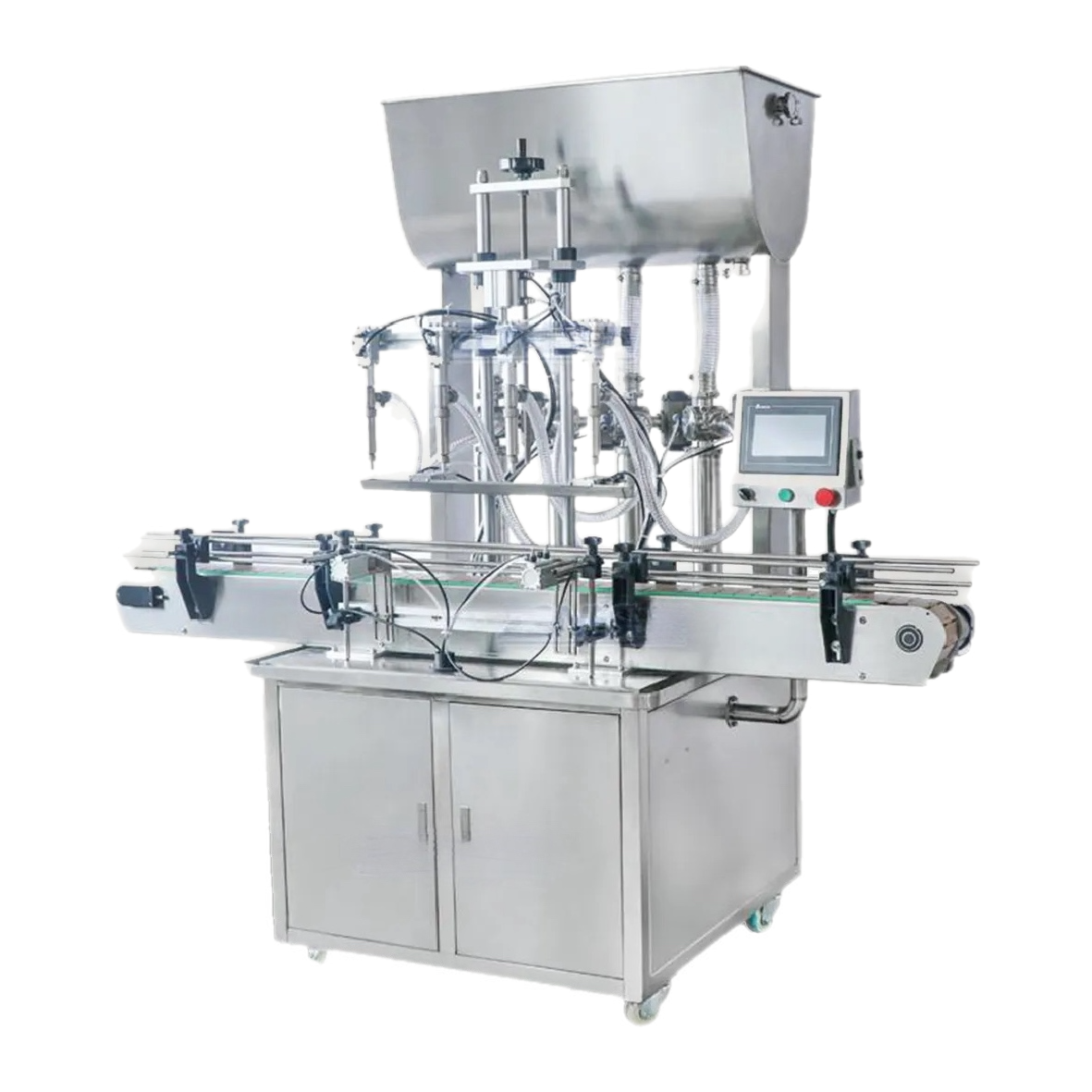
Industrial filling machines perform five linked functions: receive product, measure it, present an empty container, deliver the dose and release the filled container. A simple bench filler may ask an operator to present each pack, while an automatic line uses sensors, gates, conveyors and controls to manage the same sequence repeatedly.
The correct design begins with the real product and pack. Viscosity, trapped air, particles, temperature, foaming, container opening, stability and required dose range all influence which function is most difficult. A successful trial therefore checks the complete path rather than treating the dosing device in isolation.
| Process function | What it must achieve | Typical evidence to review |
|---|---|---|
| Product supply | Keep the dosing element supplied within a controlled operating condition. | Tank level, feed pressure, agitation, temperature and replenishment behaviour. |
| Metering | Measure the intended quantity using the selected physical principle. | Dose range, calibration method, repeatability and response to product change. |
| Container presentation | Place and support the opening beneath the correct nozzle. | Container drawings, samples, guides, pitch and stability. |
| Product delivery | Move product into the pack with acceptable foam, splash, drip and string control. | Nozzle geometry, fill profile, shut-off and product trial observations. |
| Cycle control | Sequence all actions and deal with missing packs, faults and line states. | Sensor logic, recipes, alarms, interlocks and restart behaviour. |
What is a filling machine?
A filling machine is equipment that transfers a controlled quantity of a liquid, paste, powder, granule or other product into a container or pack. The term covers manual-assist, semi-automatic and automatic systems. The controlled quantity may be defined by displacement, flow, mass, time or visible liquid level. The machine can also include product tanks, pumps, nozzles, container guides, conveyors and controls, but the exact boundary should be stated in the quotation and user requirement specification.
How does a filling machine measure the quantity?
A filling machine measures quantity with a dosing principle selected for the product and commercial requirement, such as piston displacement, pump control, peristaltic tubing, auger rotation, weigh measurement, vacuum level or timed flow. No one method is automatically best for every product. The useful comparison is whether the principle controls the required variable across the full dose range and whether the product can be fed, stopped and cleaned predictably. See the technology comparison guide before selecting by machine appearance alone.
How does product reach the filling heads?
Product can reach filling heads by gravity, a pump, a pressurised feed, a hopper or another controlled supply arrangement, depending on the product and machine design. The supply must not starve the dosing element or force product through it unpredictably. Tank head, hose length, pump response, temperature, agitation and replenishment can all change the condition at the inlet. The product-supply boundary should therefore be included in trials and acceptance tests rather than assumed to be a separate issue.
How are containers positioned for filling?
Containers are positioned by an operator, guides and stops, indexing gates, screws, stars, pucks or other handling devices that locate the opening relative to the nozzle. The method depends on pack stability, neck position, shape, line speed and changeover range. A pack can look stable while empty yet deform, tip or move when a nozzle enters or product impacts the base. Representative empty containers and drawings are needed to prove support and pitch. The container-handling guide explains the wider line implications.
What controls the start and stop of the fill?
The filling cycle starts and stops through a combination of operator commands, container sensors, recipe values, actuator positions and safety or process interlocks. Automatic equipment should prevent filling when a container is absent or incorrectly presented, and it should reach a defined safe state when a fault occurs. The restart sequence matters because containers may already be inside the machine. The control description should cover normal running, blocked and starved states, stop, fault, recovery and recipe change.
Information that makes the working principle easier to specify
- Product samples from the least and most difficult expected batches.
- Smallest and largest dose, including the commercial tolerance or inspection method.
- Representative containers, closures and dimensioned drawings.
- Product-feed method, tank arrangement, temperature and replenishment plan.
- Target accepted-pack output and the upstream and downstream machine states.
- Cleaning, changeover, operator-access and product-contact requirements.
Final suitability depends on the real product, pack, environment and integrated process. Use representative samples and agree the acceptance method before the machine design is fixed.